The history of alchemy, tracing its evolution into modern science, is captivatingly explored in Philip Ball’s recent book, titled *Alchemy: An Illustrated History of Elixirs, Experiments, and the Birth of Modern Science*. Ball recounts how early scientific endeavors, including the groundbreaking work of Ernest Rutherford and Frederick Soddy, led to the discovery of atomic transmutation, a concept that initially faced skepticism from the scientific community.
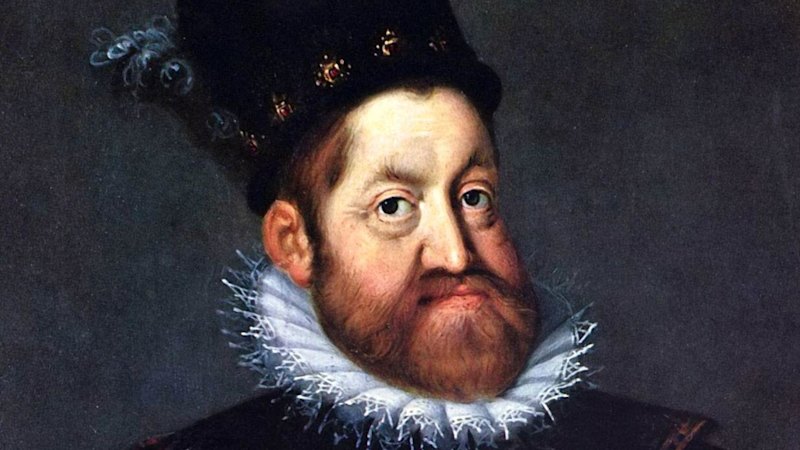
In a notable exchange from 1901, Rutherford urged Soddy not to refer to their findings regarding radioactive thorium transforming into radon gas as “transmutation.” His concern stemmed from the stigma associated with alchemy, a field historically dismissed as mere superstition. Despite the long-standing goal of alchemists to convert base metals into gold—a pursuit that captivated figures like the Holy Roman Emperor Rudolph II—the actual creation of gold from bismuth in 1980 marked a significant, albeit small, triumph in this ancient quest.
Ball’s work illustrates the roots of alchemy, originating from civilizations such as Ancient Egypt, China, Greece, and the Middle East. The most intriguing developments occurred during medieval and Renaissance Europe, where remarkable practitioners engaged in chrysopoeia, the art of creating gold. With an elegant narrative style, Ball introduces readers to a cast of characters, including both celebrated natural philosophers and dubious charlatans who frequented Rudolph’s court.
This period saw alchemy evolve from a pursuit fraught with greed and deception to one marked by genuine inquiry into the natural world. Ball encourages readers to consider the intellectual limitations faced by these early scientists, whose quests for the philosopher’s stone were informed by the prevailing teachings of the Church and ancient philosophers. The quest for wealth through alchemical means was just one facet of a broader range of experiments conducted by these early investigators, often fraught with danger.
The nature of alchemical practices poses significant risks. Many alchemists worked with toxic substances, including mercury and arsenic, and operated under hazardous conditions. Despite these dangers, some influential figures, such as the Swiss physician Paracelsus and English alchemist George Ripley, produced writings that would impact scientific thought for centuries. Ripley is notably remembered for the extensive Ripley Scroll, a six-metre-long manuscript detailing alchemical processes.
Ball seamlessly weaves together the narratives of prominent figures like John Dee, an enigmatic mathematician and advisor to Rudolph II, who later returned to England as the astrologer to Queen Elizabeth I. His connections and influence reflect the intersection of alchemy and early scientific inquiry. The court of Rudolph II was a hub for renowned astronomers like Tycho Brahe and Johannes Kepler, who contributed significantly to our understanding of planetary orbits, demonstrating that alchemy was often intertwined with the early foundations of modern science.
The evolution of scientific thought eventually rendered alchemy obsolete, but its legacy remains evident. As Arthur C. Clarke aptly noted, “Any sufficiently advanced technology will be seen as magic.” The achievements of figures like Rutherford and Soddy, and the eventual acceptance of atomic theory, can be traced back to the relentless pursuit of knowledge by alchemists centuries earlier.
Ball’s *Alchemy* serves as a beautifully illustrated guide through this complex history, combining erudition with a sense of wonder. It invites readers to appreciate the foundational work of these early experimentalists, whose often misguided but passionate inquiries paved the way for the scientific advances of today. The book not only captures the essence of alchemy but also highlights its role in shaping the very principles of modern science that we often take for granted.