




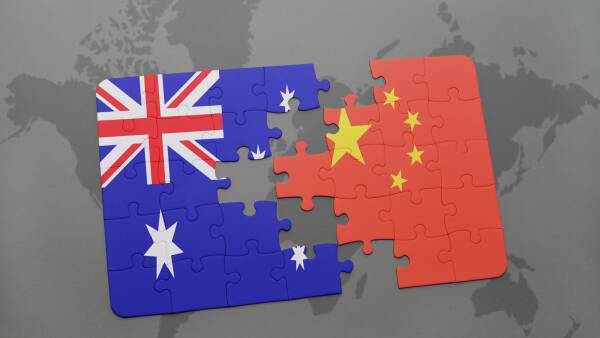
BREAKING: China has just announced a staggering 55% tariff on Australian beef imports exceeding quota levels, a move that threatens to cost Australia’s cattle industry a staggering $1 billion annually. This urgent development, effective immediately from January 1, 2024, aims to protect China’s domestic beef industry amid a supply glut, but has left Australian exporters shocked and devastated.
The Australian Meat Industry Council (AMIC) has denounced the tariff as “not fair, appropriate, or reflective” of the longstanding trade relationship between Australia and China. This decision is set to significantly reduce Australian beef exports to China by up to one-third compared to last year, impacting an industry that supports many jobs across Australia.
China, the world’s largest meat importer, is currently grappling with an oversupply of beef that has driven prices down to unsustainable levels for local producers. Tim Ryan, CEO of AMIC, expressed deep concerns, stating, “This decision will have a severe impact on trade flows to China and disrupt the longstanding relationships fostered under the China-Australia Free Trade Agreement.”
Nearly 80% of beef imported into China comes from South American countries, with Australian beef accounting for just 8% of China’s overall beef imports in 2024. The new tariffs are seen as a direct attack on Australia, which has consistently been viewed as a trusted supplier of high-quality beef to Chinese consumers.
Responding to this urgent situation, AMIC and Meat & Livestock Australia (MLA) have pledged to advocate strongly with both the Australian and Chinese governments regarding the severe implications of these new measures. They argue that Australian beef imports have not harmed China’s domestic market, and the sudden imposition of tariffs contradicts the collaborative spirit of the China-Australia Free Trade Agreement.
This sudden tariff announcement comes after extensive consultations with Chinese authorities, during which AMIC and MLA provided evidence to support the viability of Australian beef in the Chinese market. However, it appears that these efforts have been overshadowed by the current market dynamics in China, leading to a decision that many in the industry consider unjust.
As the situation unfolds, Australian beef exporters are bracing for a challenging year ahead, with fears of diminished access to the lucrative Chinese market. The implementation of the tariff is expected to trigger quota limitations by July, putting further strain on exporters already facing a difficult trading environment.
AMIC’s leadership has voiced strong opposition to the measures, indicating that Australia will continue to advocate for fair trade practices. The emotional impact on the Australian beef industry cannot be overstated, as livelihoods are at stake and the ripple effects of this decision will be felt across the sector.
In summary, this urgent development marks a significant escalation in trade tensions and highlights the vulnerability of Australian exporters in a rapidly changing global market. Stakeholders are closely monitoring the situation to gauge the long-term implications of this bold tariff move by China.
