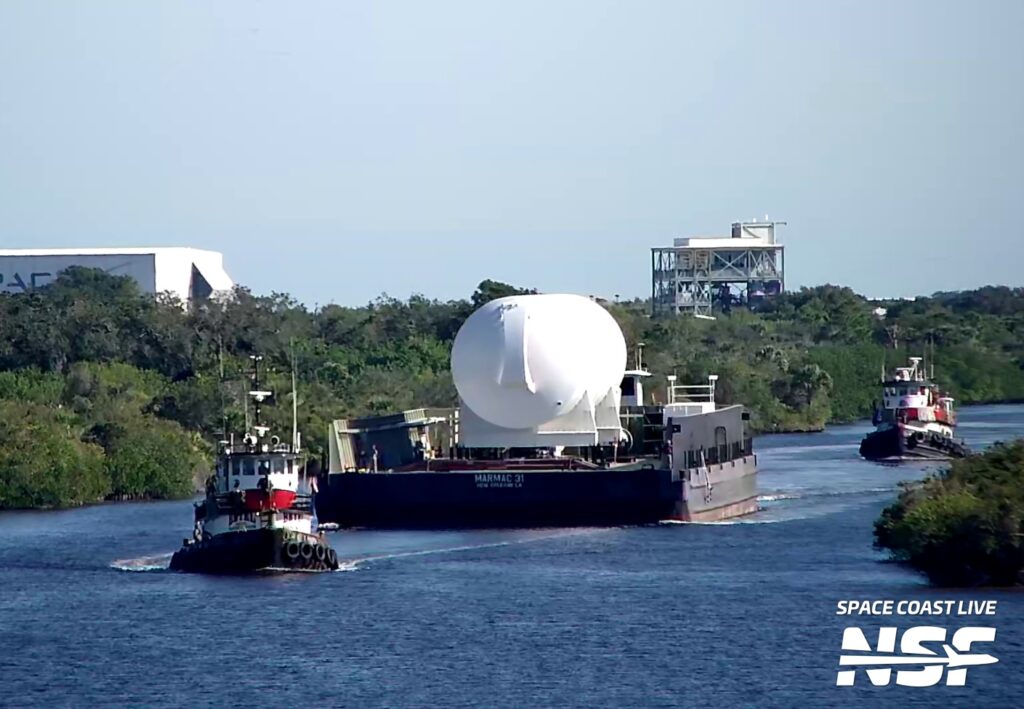
SpaceX has made significant strides in its Starship program with the confirmation of a successful trial run using a specialized transport barge, the Marmac 31. This vessel is designed to move massive Starship vehicles from the company’s Starbase facility in Texas to launch sites along Florida’s Space Coast. The announcement was made by Kiko Dontchev, SpaceX’s Vice President of Launch, following insights shared by Julia Bergeron from NASA Space Flight (NSF).
The development marks a key milestone after months of anticipation. In September 2022, Dontchev first outlined the transportation strategy, which sparked discussions about the feasibility of transporting the 237-foot-tall Starship vehicles horizontally by sea. This method is essential for successful transport, given the size and structure of the spacecraft. Elon Musk initially confirmed the shipping plan on social media, predicting that the first vehicle transport could occur as early as the second quarter of 2026.
Details of the Trial Run
During the trial run on December 30, 2025, the Marmac 31 was observed delivering hardware to the turn basin near Starbase. Bergeron identified the vessel and quickly reached out to Dontchev, who confirmed the sighting. He remarked, “Good eye. Still needs a little work before we put the name on it, but it was a good first trial run of a transport.”
The Marmac 31, measuring 260 feet by 72 feet, is typically used for heavy industrial loads but has undergone modifications for its new role. These changes include additional work on “skirts” to securely cradle the cylindrical tanks and fuselage sections during maritime transit. This trial represents the first dedicated test for transporting full Starship vehicles, although SpaceX has previously transported tank sections and other components by barge.
Maritime transport of rocket stages is not a new concept. The practice dates back to the Apollo era, continuing with the Shuttle External Tank and later modifications for the Space Launch System (SLS). United Launch Alliance (ULA) also employs maritime transport for its rocket stages to the East Coast.
Future Logistics and Operations
As SpaceX aims for frequent launches from both Starbase and Cape Canaveral’s historic Launch Complex 39A, establishing a reliable supply chain between Texas and Florida is crucial. The company is expanding its facilities at Roberts Road, including the Gigabay and a new East Coast Starfactory, which will enable vehicle assembly closer to launch sites.
The successful trial of the Marmac 31 represents an important step toward creating a reusable and efficient logistics system for the Starship program. As preparations continue, questions arise regarding which vehicles will embark on the inaugural maritime journey. SpaceX might choose to send either a new booster, such as Booster 21 or 22, or a previously recovered Booster 12. The decision will likely follow the first flights of the Block 3 Starship, with Flight 12 expected no earlier than March 2026.
In addition to its logistical implications, the Marmac 31 could receive a name consistent with SpaceX’s other vessels. Suggestions have included humorous options such as “You’ll Thank Me Later” and “Size Matters,” reflecting the company’s playful culture.
As SpaceX prepares for more intricate flight tests and aims for orbital refueling demonstrations in 2026, the efficiency of its logistics will be vital to sustaining momentum. The successful trial run of the transport barge is a significant, albeit understated, advance toward making the Starship system a fully operational and reusable platform for future space missions.