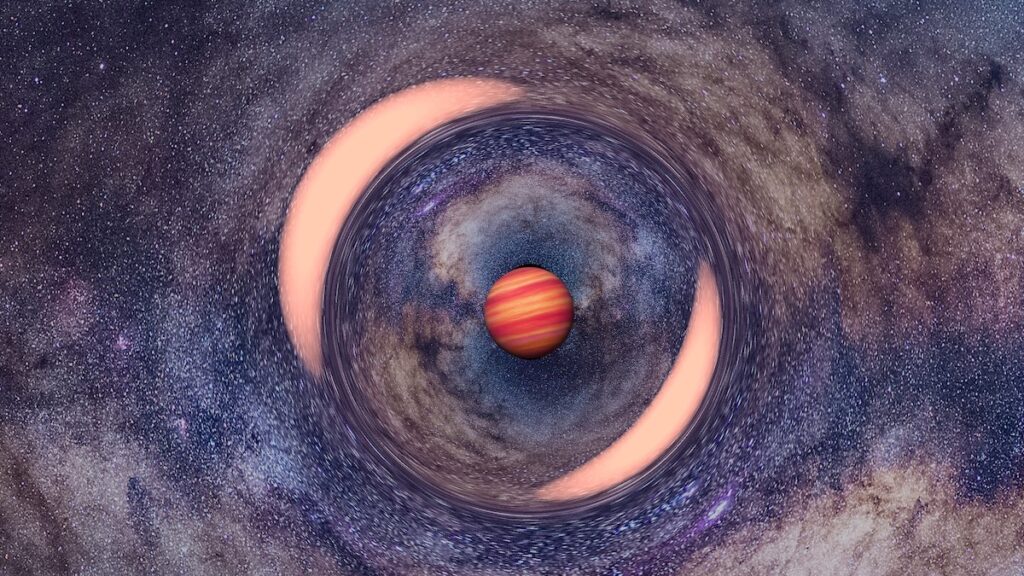
Astronomers have achieved a significant milestone by measuring the mass and distance of a rogue planet that orbits the galaxy without a host star. This planet, which has approximately 22 percent the mass of Jupiter, is located about 9,785 light-years from Earth towards the center of the Milky Way. Such measurements pave the way for a deeper understanding of how these solitary worlds are formed and evolve.
Unveiling the Secrets of Rogue Planets
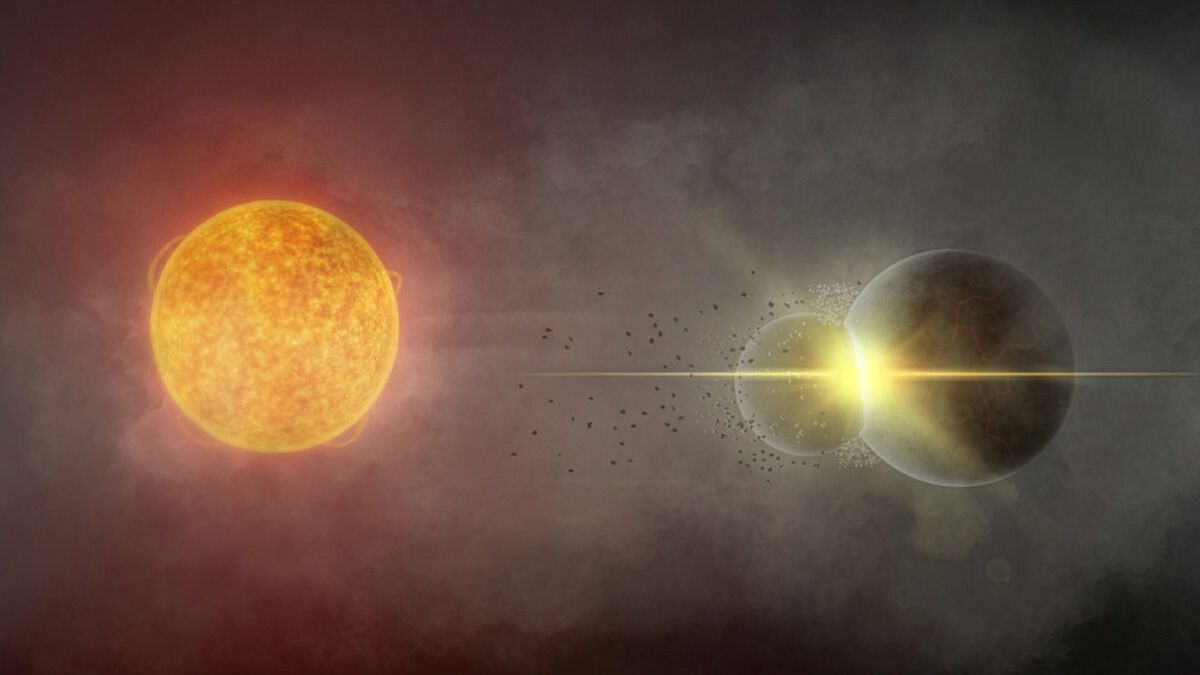
Unlike planets in our Solar System, which are part of a stable system with a star, rogue planets roam freely through space. The newly measured planet likely originated in a planetary system before being ejected due to gravitational interactions, sometimes described as a game of gravitational billiards. These planets are typically small and dim, making direct observation challenging.
Instead of spotting them directly, astronomers rely on gravitational lensing, a phenomenon that occurs when a planet passes in front of a distant light source, such as a star. This gravitational influence bends and magnifies the light, allowing scientists to infer the planet’s presence. However, accurately calculating the mass of such an object usually requires knowing its distance, which can be difficult for solitary planets.
On May 3, 2024, a serendipitous alignment allowed astronomers to gather crucial data. The initial lensing event was independently detected by multiple ground-based telescopes stationed in Chile, South Africa, and Australia. Additionally, the now-retired Gaia Space Telescope observed the event six times over a span of 16 hours from a vantage point 1.5 million kilometers from Earth. This provided a unique perspective that enabled the researchers to estimate the distance to the lensing planet.
Implications for Future Research
The combined observations created a more comprehensive view of the event, similar to how human eyes work together to perceive depth. The team successfully calculated that the rogue planet is located approximately 9,785 light-years away and confirmed its mass at about 22 percent that of Jupiter.
In a related commentary, astrophysicist Gavin Coleman from Queen Mary University of London highlighted the significance of these findings. He noted that such coordinated observational strategies could enhance the study of rogue planets, particularly with the upcoming launch of the Nancy Grace Roman Space Telescope in 2027. This advanced telescope is expected to survey the sky at a pace 1,000 times faster than the Hubble Telescope, increasing the likelihood of detecting further gravitational lensing events.
The research detailing these groundbreaking measurements has been published in the journal Science, contributing vital knowledge to the field of astrophysics and our understanding of the universe.