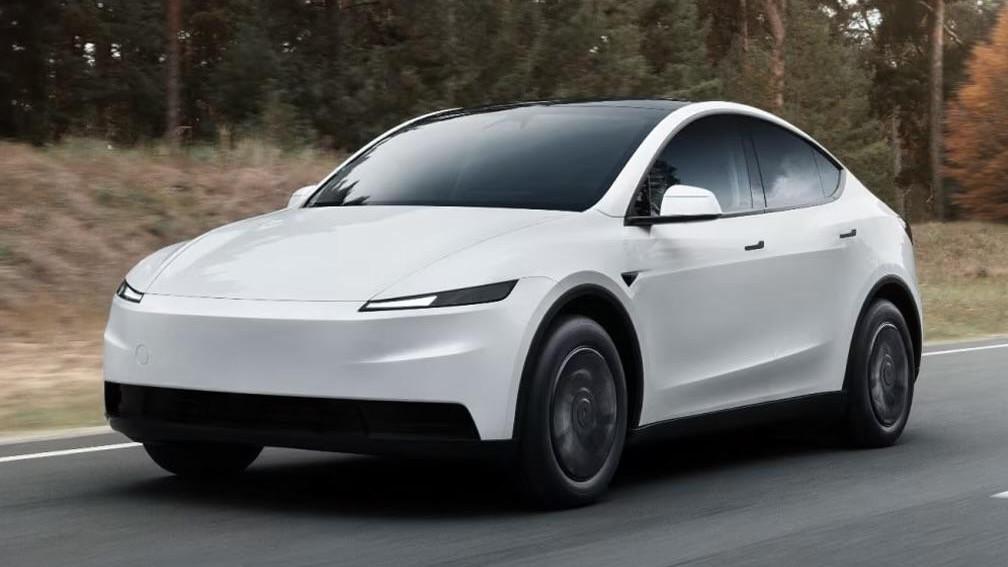
Tesla reported a significant decline in global sales for 2025, marking a second consecutive year of reduced sales for the electric vehicle manufacturer. The company anticipates sales of approximately 1,640,752 vehicles for 2025, down from 1,704,093 in 2024, representing a 3.7 percent annual decrease. This downturn has led to Tesla ceding its position as the world’s top electric vehicle maker to China’s BYD.
Tesla’s sales figures illustrate a challenging year for the company, which has faced various operational and market pressures. The latest report indicates that the sales decline is even steeper than the 1.1 percent drop recorded in 2024. The October–December 2025 quarter saw Tesla’s sales fall by 16 percent year-on-year, totaling 423,000 vehicles.
Market Challenges and Future Projections
Tesla’s challenges this year were compounded by a range of factors, including production changes for the updated Model Y and Model 3. The company also experienced a 37 percent decrease in income during the July–August period, following its worst quarterly loss in a decade during the April–June timeframe.
Despite these setbacks, Tesla’s CEO Elon Musk has expressed optimism for the future. He projects sales will rebound to 1.75 million units in 2026 and aims for a target of four million vehicles by 2027. This optimistic outlook comes as Tesla navigates increased competition from BYD, which reported sales of 4.6 million vehicles globally in 2025, including 2.2 million electric vehicles.
Tesla’s operational issues have not been confined to production. The company faced challenges from automotive tariffs affecting its manufacturing facilities in China, Germany, and the United States. Additionally, significant sales declines were reported in Europe and Australia, partly attributed to public backlash against Musk’s involvement with the U.S. government.
Controversies and New Initiatives
Musk’s leadership has not been without controversy, as reports surfaced regarding attempts by board members to remove him as CEO, a role he has held since 2008. In November 2025, shareholders approved a contentious $1 trillion (approximately A$1.5 trillion) compensation package for Musk, despite some opposition.
In a bid to innovate, Tesla launched its first robotaxi operation in mid-2025, beginning in Austin, Texas, and later expanding into San Francisco. However, the rollout fell short of earlier commitments, with only 500 robotaxis expected in Austin and 1,000 in San Francisco.
Tesla also introduced its Full Self-Driving (Supervised) feature in Australia and New Zealand in September 2025, available for select Model 3 and Model Y variants. Despite recent challenges, the latest data from the EV Council indicates that Tesla remains a strong competitor in Australia, leading BYD by over 5,000 vehicles with a total of 26,271 sales as of November 30, 2025. Nevertheless, this figure is significantly below the 38,347 Teslas sold in Australia in 2024, which represented a 16.9 percent drop compared to 2023.
The Model Y is on track to be the top-selling electric vehicle in Australia, having recorded 20,241 sales to date, nearly double that of the next-best BYD Sealion 7, which sold 10,864 units.
As Tesla navigates these turbulent waters, the future of the company hinges on its ability to adapt and innovate in an increasingly competitive electric vehicle market.