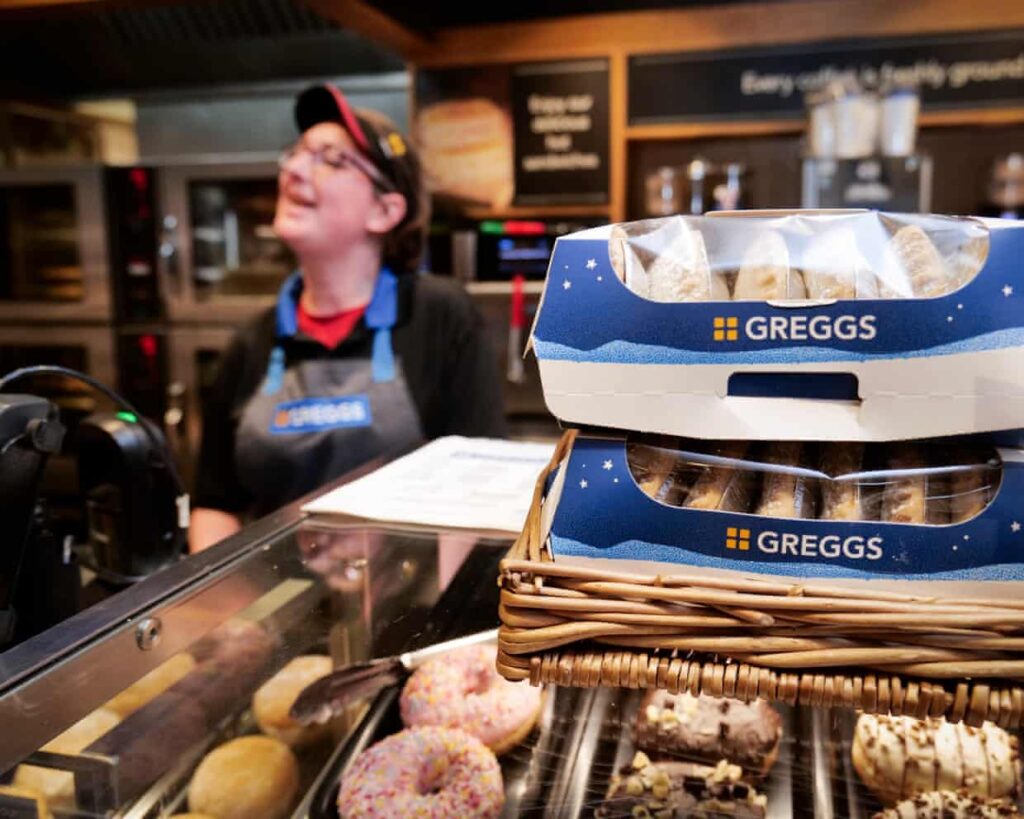
Greggs is undertaking significant expansion plans, even as concerns about market saturation and declining sales growth emerge. The bakery chain, known for its sausage rolls and vegan options, is set to open new production sites in Derby and Kettering, with an estimated capital expenditure of £300 million planned for 2025. This move aims to increase its store count to 3,500 locations across the UK, an increase of 800 from its current tally of 2,675 outlets.
At the heart of this expansion is the company’s Newcastle upon Tyne factory, where production operates on a large scale, churning out the equivalent of 1 million sausage rolls daily. The factory recently added a fourth production line, reflecting Greggs’ commitment to meet the UK’s strong demand for its baked goods. Despite this, analysts have raised questions about the sustainability of further growth, especially given the 40% drop in the company’s share price over the last year.
In July, Greggs’ CEO, Roisin Currie, expressed confidence in the company’s growth potential, stating, “I absolutely don’t believe we have reached peak Greggs.” However, financial analysts from Panmure Liberum suggest that the chain is now at a “crossroads,” with some investors urging a reevaluation of its strategy.
The company’s rich history began in 1939 when founder John Gregg started delivering fresh yeast and eggs by bicycle. Over the decades, Greggs has evolved from its humble beginnings into the largest bakery chain in the UK, employing 33,000 people. Its shift in focus during the 2010s under previous CEO Roger Whiteside towards food-to-go offerings, such as breakfast and lunch items, marked a turning point that propelled the brand into the public eye.
In 2018, Greggs reported annual sales exceeding £1 billion, buoyed by the launch of its vegan sausage roll, which garnered significant media attention. The chain’s innovative marketing strategies, including collaborations with brands like Primark, contributed to its growing popularity. By 2024, Greggs had doubled its annual turnover to £2 billion and opened its 2,600th store.
Despite these successes, 2025 has posed challenges. Sales growth shrank, attributed in part to adverse weather conditions and shifting consumer preferences during warmer months. Analysts now speculate on whether the company can sustain its ambitious target of 120 net store openings for the year, particularly as it grapples with competition and changing market dynamics.
The recent criticism from Lauro Asset Management, a Singapore-based hedge fund, emphasizes the need for Greggs to manage costs effectively to avoid becoming a target for acquisition. Market comparisons with competitors like Subway, which operates around 2,000 outlets, suggest that Greggs may be nearing its maximum feasible number of locations.
Consumer sentiment also plays a crucial role as inflationary pressures lead to rising prices. A sausage roll that cost 66p in 2012 now retails at approximately £1.30 in Newcastle city centre, impacting how often customers choose to indulge. Analysts at Jefferies have noted that Greggs’ sandwiches are now 6% more expensive than the previous year, while key hot items have increased by 4.5%.
In an effort to adapt to changing consumer habits, the company has introduced healthier options, including fruit pots and salads. Furthermore, Greggs is exploring new retail formats, such as smaller outlets in high footfall areas, with the first “Bitesize Greggs” opening at Sevenoaks railway station in November.
As the festive season approaches, Greggs will report sales figures for its seasonal products, including festive bakes and mince pies, on January 8, 2026. According to Dan Coatsworth, head of markets at AJ Bell, this announcement will be pivotal for the company’s future direction. He emphasized, “Greggs is at a massive strategic turning point and the bosses need to do something.”
The bakery chain remains a beloved staple in its home city of Newcastle, where customers enthusiastically queue for their favourite products. While its expansion ambitions are clear, the road ahead may require a careful balancing act between growth and sustainability in a competitive market.