




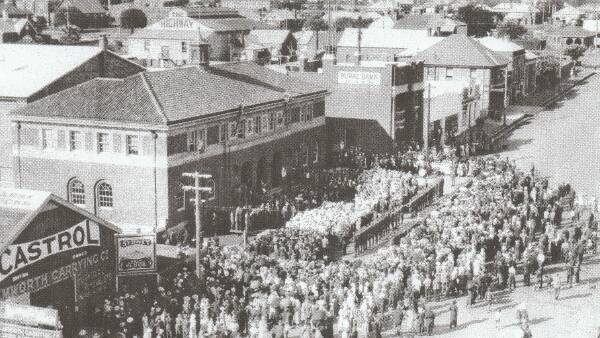
UPDATE: Tamworth’s rich architectural history is being unveiled in an exciting new series, “Tamworth then and now,” highlighting the fascinating stories behind the city’s iconic buildings. This urgent release from the Tamworth Historical Society, featuring insights from archivist Melinda Gill and photographer Peter Hardin, reveals how these landmarks have shaped the community.
New reports confirm that Tamworth, known as Australia’s First City of Light, owes its title to the establishment of the original Powerhouse electric plant, which opened on November 9, 1888. This plant was initially intended to be a gasworks, but a visionary councillor returned from overseas in the 1880s, persuading his peers to invest in electric power instead. The Powerhouse Museum now stands on the site of this historic plant, showcasing rare steam engines and machinery that symbolize Tamworth’s pioneering spirit.
The transformation of Tamworth’s public buildings continues to inspire residents. For instance, the Church of England Girls’ School, established in 1919, has evolved into Calrossy Girls’ School, maintaining its heritage while adapting to modern educational needs. The school’s primary campus, a heritage-listed building built in 1878, underscores the community’s commitment to preserving its educational legacy.
In another significant development, the St Paul’s Anglican Church showcases the community’s resilience. Originally constructed in the 1850s, the church was rebuilt using concrete blocks created by local volunteers when funding fell short for commercial materials. The new structure, consecrated in 1958, features a historic pipe organ and stands as a testament to community spirit, now recognized as a heritage site.
Tamworth’s cultural narrative also includes the launch of 2TM, which began broadcasting on 1300 AM in 1935. This station played a pivotal role in branding Tamworth as the “Country Music Capital of Australia,” culminating in the Golden Guitar Awards initiated in 1973. Earlier this year, 2TM transitioned to 95.5 FM, continuing its legacy of community engagement.
Additionally, the old West Tamworth Station, once a bustling junction, is now the subject of restoration efforts by Transport NSW. This heritage-listed building, initially a manse in 1877, has fallen into disrepair but is set for revitalization, highlighting the ongoing commitment to preserving Tamworth’s historical assets.
These stories not only celebrate Tamworth’s architectural heritage but also underscore the emotional connections residents have to these landmarks. As the series unfolds, it invites the community to reflect on the past while looking toward the future.
Stay tuned for more updates as Tamworth continues to reveal the rich tapestry of its history through its buildings. Share these remarkable stories today and join the conversation about what makes Tamworth truly unique!
