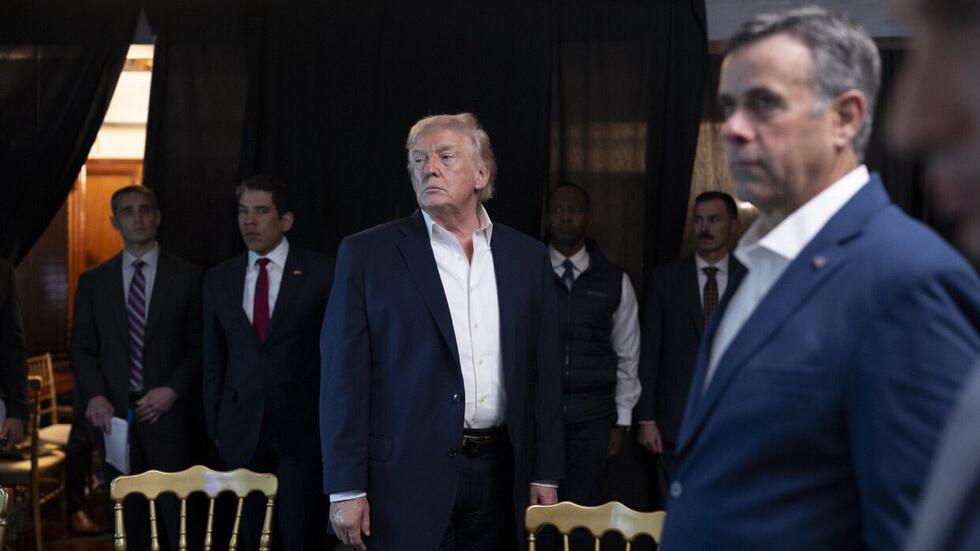
US President Donald Trump has had Venezuelan President Nicolas Maduro and his wife taken to the US
The U.S. military has successfully captured Venezuelan dictator Nicolás Maduro under the direction of President Donald Trump, marking a significant moment in American foreign policy. The operation, dubbed Operation Absolute Resolve, was publicly announced by Trump during a press conference, where he emphasized the swift action taken by U.S. forces and the operation’s objectives. This move is seen as an attempt to curb drug trafficking and re-establish control over Venezuela’s oil resources, which Trump claims were “stolen.”
Trump’s announcement included a provocative image of Maduro’s capture on Truth Social, alongside a photo of himself with the caption “FAFO,” an acronym for a phrase implying consequences for those who cross him. The president’s direct acknowledgment of his involvement in the operation is notable, as he expressed clear motives regarding the military action.
The operation comes in the context of Maduro’s long history of governance characterized by economic turmoil and human rights violations. Under his regime, Venezuela has faced profound challenges, including rampant inflation and widespread poverty. By 2020, estimates indicated that one in three Venezuelans—over nine million people—were food insecure, and approximately 82 percent lived in poverty. Despite these issues, Maduro maintained alliances with powerful nations such as China, Russia, and Iran, relying on oil exports to service debts and maintain his grip on power.
Global Reactions and Future Implications
The international response to Trump’s military action has been cautious. World leaders are assessing the implications of this extreme move, particularly regarding the stability of the region and the reactions of Maduro’s allies. Observers note the difficulty in filling the power vacuum created by Maduro’s ousting, as the situation in Venezuela remains complex. While many agree that Maduro’s removal is a positive outcome, the long-term effects on Venezuelan society and governance remain uncertain.
Countries like Australia have voiced concerns over the situation in Venezuela, recognizing the dire conditions faced by its citizens under Maduro’s rule. The nation, once considered a beacon of high living standards in Latin America, has fallen into a political and economic crisis, now ranked among the worst in the world for corruption.
In 2020, a U.S. federal court indicted Maduro on charges of narco-terrorism, underscoring the severity of his regime’s actions. Five years later, he dismissed the results of a presidential election showing dwindling support, further illustrating the disconnect between his leadership and the will of the Venezuelan people.
The aftermath of Operation Absolute Resolve leaves many unanswered questions. As global powers navigate the consequences of this intervention, the future of Venezuela hangs in the balance. The world will be watching closely to see how the situation unfolds and what steps will be taken to address the humanitarian crisis that has persisted under Maduro’s leadership.