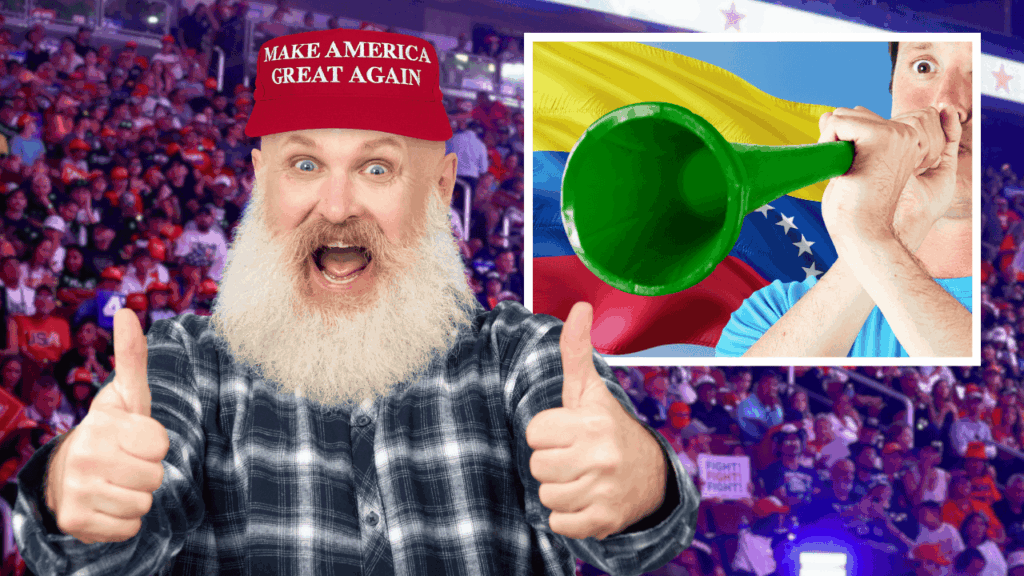
Supporters of former U.S. President Donald Trump are voicing their backing for potential U.S. intervention in the fictional nation of Vuvuzela, particularly following the recent capture of Venezuelan leader Nicolás Maduro. This expressed support reflects a broader sentiment among a segment of Trump’s base regarding international politics and U.S. involvement abroad.
One vocal supporter, Cleetus Drayton, articulated his stance during a recent interview. Drayton stated that he endorses any action Trump decides to take in Vuvuzela, emphasizing his belief that the country and its people are disruptive. “I’m not racist or anything, I just think they’re loud and annoying and shouldn’t be allowed in America,” he said, referencing a negative experience he had at a soccer match where he encountered Vuvuzela’s supporters. Drayton’s comments illustrate a lack of familiarity with geography, as he admitted to not being “one for geology” and expressed indifference regarding the complex motivations behind U.S. foreign policy, whether related to oil or other resources.
Drayton’s support extends beyond Vuvuzela. When asked about Trump’s intentions regarding other South American nations, such as Colombia and Ecuador, he remarked, “Trump can do whatever he wants above or below the Ecuador, or in any of the four hemispheres for that matter.” This statement highlights a significant disconnect with the political realities and implications of U.S. involvement in foreign conflicts.
The enthusiasm for intervention among some Trump loyalists raises questions about the broader implications of U.S. foreign policy. As supporters rally behind their leader’s decisions, it reflects an understanding—or misunderstanding—of the complexities involved in international relations. The narrative surrounding intervention in Vuvuzela serves as a lens through which to examine these attitudes, as well as the willingness of some constituents to endorse military or political action without fully grasping the ramifications.
While Trump’s stance and the opinions of his supporters continue to evolve, the situation underscores a significant divide in how Americans perceive foreign nations and their sovereignty. As discussions about intervention unfold, the voices of constituents like Drayton reveal a critical aspect of the political landscape that may influence future policy decisions.