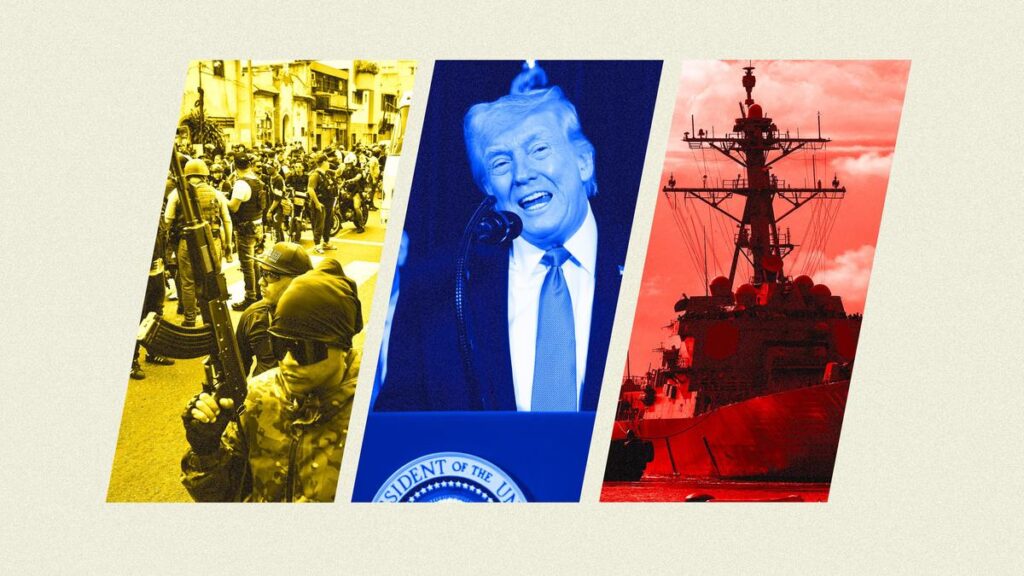
The political landscape is shifting dramatically as the world enters 2026, largely influenced by Donald Trump and his recent actions. The U.S. President’s approach to international relations has taken a decisive turn, particularly following the reported capture of ousted Venezuelan leader Nicolas Maduro by U.S. forces. This bold military operation underscores Trump’s black-and-white worldview, defining allies and adversaries in stark terms.
In Trump’s perspective, Maduro exemplifies the negative aspects of global leadership, having presided over years of repression, corruption, and human rights abuses in Venezuela. Following the operation, Trump expressed pride in the U.S. military’s actions, stating he would “fix” a “broken country.” The implications of this event are complex and raise questions about future diplomatic relations, especially concerning U.S. allies like Australia.
Global Reactions and Concerns
Australian Prime Minister Anthony Albanese emphasized the need for dialogue and diplomacy to ensure regional stability, highlighting Australia’s longstanding concern over the situation in Venezuela. “We continue to support international law and a peaceful, democratic transition in Venezuela that reflects the will of the Venezuelan people,” Albanese stated.
Conversely, Treasurer Jim Chalmers adopted a more critical tone, urging the United States to clarify the legal basis for its military actions. His comments reflect a broader unease about the precedent set by Trump’s decision to intervene in Venezuela, raising concerns about the rule of law and the principles guiding international relations.
Trump’s rhetoric has escalated beyond Venezuela. He has publicly criticized Colombia, referring to its leadership in unflattering terms, and has extended threats towards countries such as Cuba, Iran, and North Korea. This aggressive stance could have far-reaching ramifications, particularly in how global leaders perceive U.S. military interventions.
Implications for Global Leaders
The actions taken by Trump may alter the calculations of leaders like Xi Jinping of China and Vladimir Putin of Russia. Analysts speculate that Putin might draw parallels between Trump’s removal of Maduro and Russia’s invasion of Ukraine. Such comparisons could encourage adversarial actions by other nations, including Xi’s ambitions regarding Taiwan.
The unpredictability of Trump’s foreign policy raises concerns among global leaders. They may view his approach as a signal to tread carefully, fearing that his next moves could be equally unconventional or aggressive. This uncertainty poses a significant challenge for nations that have relied on stable U.S. leadership in international affairs.
Australia, in particular, may find itself navigating a new foreign policy landscape shaped by Trump’s presidency. The Albanese government will need to make critical decisions that balance national security interests with the need to uphold democratic values and international law.
Trump’s actions illustrate a departure from the established world order, compelling nations to reassess their strategies and alliances. As the global community grapples with these changes, it remains to be seen how long-standing partnerships will adapt to the evolving geopolitical climate. The necessity for U.S. military support remains vital for many nations, including Australia, as they confront the implications of a changing world order.