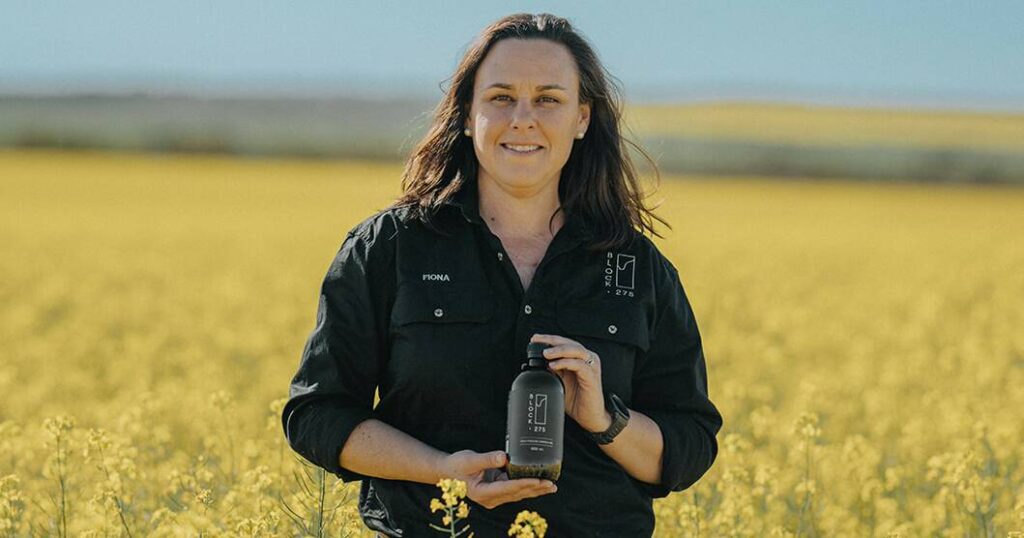
A family in Western Australia is redefining agricultural potential by turning their canola crop into a premium oil brand. Fiona Mann and her husband, Liam Mann, launched their venture, BLOCK 275, in 2020, aiming to create a high-quality product from their non-genetically modified (GM) Trophy canola. This initiative not only showcases their farming capabilities but also addresses the challenges of remote food production.
Fiona Mann, who previously worked as an agronomist, explained how the family’s journey into farming began. “My parents were in a position to purchase a very small parcel of land where we are, which we have leased off them for the last ten years,” she said. This opportunity led them to lease a **678-hectare** property known as **Midoxgate**, where they started their farming journey without any machinery or infrastructure.
“We had to start from scratch,” Mann noted, emphasizing the challenges they faced in establishing their operation. The couple’s commitment led to the creation of Mann Farming Co., which also includes a contracting business. To mitigate risks associated with seasonal fluctuations in agriculture, they sought ways to add value to their canola crop, ultimately leading to the establishment of BLOCK 275.
In 2017, the Manns imported their oil press and filter, but financial constraints delayed their plans. “It literally sat in a box for a couple of years because we just didn’t have the money,” Fiona recalled. Over time, they invested in their machinery and began the process of producing premium cold-pressed canola oil. Their product stands out due to its minimal processing, contrasting sharply with the heavily processed oils commonly found in supermarkets.
“Our oil has no heat applied. The only heat that comes out of the press is mechanical friction,” said Mann. This approach results in a product that is pressed, filtered, and packaged without the extensive refining processes that commercial oils undergo. While they aspire to convert all their canola into oil, much of their crop still goes to **CBH**, receiving the same price as GM canola, despite the challenges of producing a non-GM product.
The production process is intensive, requiring constant attention during pressing operations. Mann described the workflow: “We press around **800 litres** at a time, filter it, and store it in stainless steel vats until I’m ready to package it.” Their oil is available at local stores in **Geraldton** and select locations in **Perth**, alongside direct sales to chefs and restaurants, including notable establishments like **Gibney Cottesloe** and **Mandoon Estate**.
As they navigate the complexities of running a business in a rural area, Fiona Mann believes their success can inspire others. “If more people can do small businesses in the bush, it brings that resilience to the community,” she stated. The couple aims to expand their brand exposure, particularly through the **AgriFutures Rural Women’s Award**, which they hope will facilitate connections and growth opportunities.
Looking ahead, the Manns are also considering interstate expansion and even international markets, with interest in areas like **Singapore**. “Getting our brand footprint out there for people to get curious and want to try it is really important,” she said, emphasizing the unique characteristics of their product.
Every conversation they engage in is viewed as a potential opportunity for exposure. Mann aims to share their story to encourage others in similar situations, highlighting that success in rural entrepreneurship is achievable and beneficial for the community.
Ultimately, the Manns aspire to ensure that all their canola is converted into oil, which would necessitate hiring more staff and positively impacting their local school system. Fiona Mann’s vision reflects a commitment not only to their business but also to bridging the gap between urban and agricultural communities.