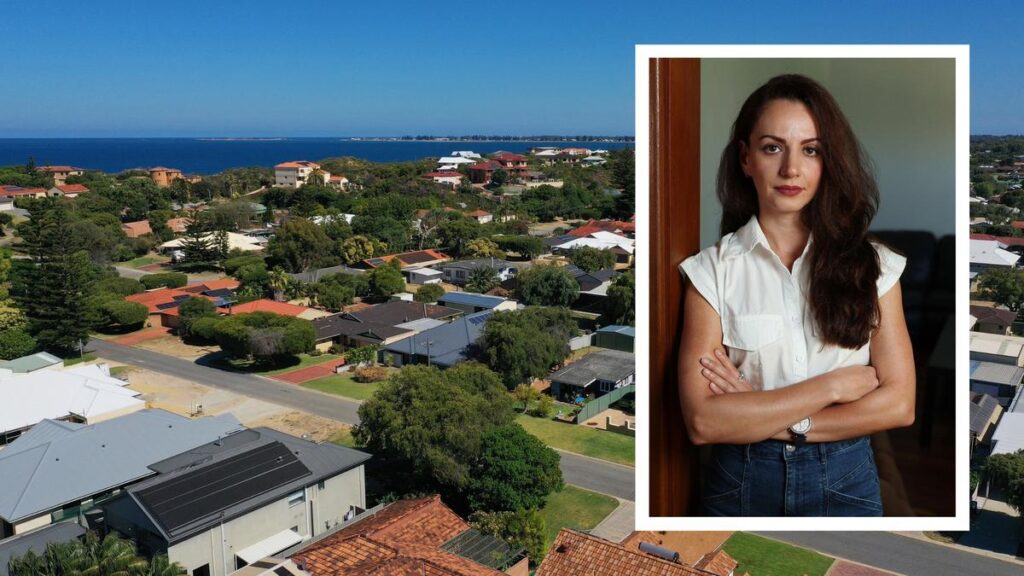
Accountant Reihaneh Kargar is among those missing out, having tried to buy since 2020.
The real estate market in Perth has reached a historic low, with only 1,881 properties available for sale at the end of December 2025. This figure includes 1,148 houses, 409 units, and 324 parcels of land, according to the latest report from the Real Estate Institute of WA (REIWA). In contrast, there were 4,395 listings at the same time last year, highlighting a significant decline in available housing options.
The current inventory represents a staggering 59 percent drop in the number of houses compared to December 2024 and an astonishing 84 percent decrease from six years ago. This dramatic reduction has intensified competition among buyers, particularly young West Australians, as demand far exceeds supply.
As the market tightens, prices are climbing, and REIWA’s chief executive, Suzanne Brown, predicts that if these conditions persist into 2026, the average property price could rise by more than 10 percent. “We are witnessing a resurgence of FOMO (fear of missing out),” Brown stated. “Our members report strong competition for homes, with many properties selling well above asking prices and in record timeframes.”
Properties in Perth are selling at unprecedented speeds, with the median time on the market for houses and units now just nine days, down from sixteen days a year ago. Certain neighborhoods are particularly hot; houses in Parkwood are selling in just three days, while homes in Warnbro and Girrawheen are attracting buyers within four to five days.
The seasonal decrease in listings typically observed in December has been exacerbated by a six-month trend of significantly lower new listings compared to long-term averages. “Historically, active listings decrease in December,” Brown explained. “However, the ongoing high demand has created an imbalance that pushes prices higher.”
Real estate agent Shane Beaumont noted that competition is fierce, particularly in areas like Gosnells, where a three-bedroom house now sells for between $750,000 and $800,000. Beaumont recalled that in 2008, he would have had approximately forty listings in Gosnells, compared to just seven today. “If a property is correctly priced and marketed, there can be between seven to twenty offers,” he added.
Among those struggling to secure a home is accountant Reihaneh Kargar, who has been searching since 2020. “It’s a mental strain like no other,” Kargar expressed. She described the overwhelming competition and rising prices as disheartening, stating, “I feel like there’s no point going to home opens anymore.”
Former REIWA chief Damian Collins echoed these sentiments, asserting that for the market to stabilize, at least 13,000 properties would be necessary. He believes that, barring a significant economic downturn, achieving this balance will take years due to ongoing population growth and building industry constraints. “Prices will continue to rise, and I expect at least another 10 percent growth in 2026,” he projected.
Brown noted that current homeowners are hesitant to sell, fearing they may struggle to find a new place amid the fast-moving market. “People want to sell but worry about finding somewhere to live,” she said. The limited availability of short-term rentals adds to this uncertainty, particularly for those needing to stay in specific areas for work or schooling.
In the Ellenbrook region, the median price for a four-bedroom home has surged to approximately $900,000, up from $500,000 in 2022. Brown highlighted that the high costs of moving, including potential increases in mortgage payments and stamp duty, deter many homeowners from listing their properties.
To address this, REIWA has called for a $10,000 stamp duty concession for eligible downsizers in the upcoming 2026-27 State Budget. This measure aims to encourage mobility within the market, allowing homeowners to transition into more suitable properties. Many potential downsizers express a preference for medium-density housing options, such as villas and townhouses, rather than apartments.
The shortage of properties is not limited to buyers; renters are also facing challenges. At the end of December, only 1,716 homes were available for rent, a decrease of nearly 25 percent from November. The average rental period for properties has shortened to just 16 days, with the median weekly rent for a house in Perth now standing at $700, significantly up from $370 six years ago.
The demand for social housing is also reaching critical levels, with 23,168 people on the public housing waitlist and an average wait time of 99 weeks. Anglicare chief Mark Glasson emphasized the need for sustainable solutions to address the housing crisis, advocating for a WA Housing Future Fund to create a long-term pipeline of housing.
In response, WA Housing Minister John Carey affirmed the government’s commitment to increasing housing supply. Since 2021, the Cook Government has allocated a record $6.3 billion to housing initiatives. Recent measures include plans for apartment construction near train stations and a new $50 million Housing Innovation Fund aimed at boosting modular and alternative construction methods.
As Perth grapples with a housing shortage, the interplay of supply and demand continues to shape the market, leaving many aspiring homeowners and renters in a challenging position.