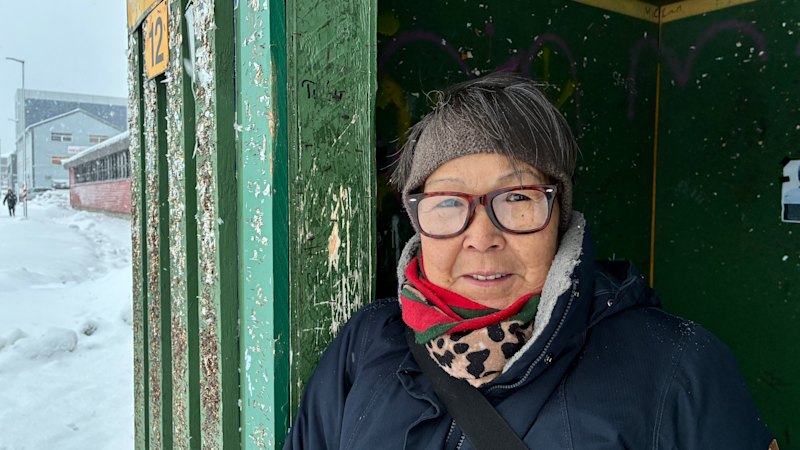
In a firm repudiation of Donald Trump’s controversial proposal to purchase Greenland, residents of the Arctic territory have expressed their unwavering stance: they do not wish to become part of the United States. The idea, which has sparked both intrigue and outrage, was met with widespread disapproval from the people of Nuuk, the capital of Greenland, who emphasize their desire for autonomy and cultural identity.
During a recent visit to Nuuk, retail worker Ruth Søholm, 65, articulated the sentiments shared by many when she described Trump as “insane” for suggesting that the territory could be turned into an American possession. “We don’t belong to America. We are Inuit. We don’t want to be Americans,” she stated decisively.
Trump’s ambition to acquire Greenland has been characterized by aggressive rhetoric. On a recent occasion, he declared, “We are going to do something on Greenland whether they like it or not,” citing concerns over potential Russian or Chinese influence in the region. This statement highlights his administration’s view of Greenland as a strategic asset rather than a community with its own governance and identity.
The White House has reportedly discussed offering up to $100,000 (approximately $150,000) to each resident as part of a proposed deal. However, the response from locals indicates that financial incentives alone are unlikely to sway their opinions. A group of youths in Nuuk voiced their disdain for Trump, with one mimicking a gun gesture, underscoring the strong emotional reaction to his overtures.
The historical context of U.S. interest in Greenland is significant. America has contemplated acquiring the territory since at least 1867, with a more serious secret offer made in 1946. Trump’s recent comments have reignited discussions about Greenland’s vast natural resources and its geopolitical importance. His administration views the acquisition as a “large real estate deal,” emphasizing the potential commercial benefits.
Concerns extend beyond financial offers. Aviaq Fontain Markussen, an 18-year-old grocery store worker, expressed her fears about the possibility of coercive measures being used. “We want Greenland to be Greenland, and not be bought,” she said, reflecting a common desire for peace and self-determination.
The population of Greenland is approximately 57,000, and a recent poll indicated that 85% of residents oppose joining the United States. Only 6% expressed support for the idea, demonstrating a clear preference for maintaining their independence. Both Danish Prime Minister Mette Frederiksen and Greenland Prime Minister Jens-Frederik Nielsen have publicly rejected Trump’s plans, aligning with the sentiments of their constituents.
Current diplomatic efforts involve discussions between U.S. Secretary of State Marco Rubio and Danish Foreign Minister Lars Løkke Rasmussen. These talks, however, are unlikely to yield results that would lead to U.S. control over Greenland. The five political parties in the Greenlandic parliament issued a joint statement reaffirming their commitment to self-governance and cooperation with international partners, while firmly rejecting any notion of being subjugated by outside forces.
As discussions continue, the residents of Nuuk remain resolute in their belief that Greenland’s future should be determined by the Greenlandic people. “We’re trying to be independent,” said Susan Bech, a local resident. “I hope we’ll be independent one day.” The collective voice of Greenlanders signals a powerful assertion of identity and sovereignty that will likely shape future interactions with external powers.