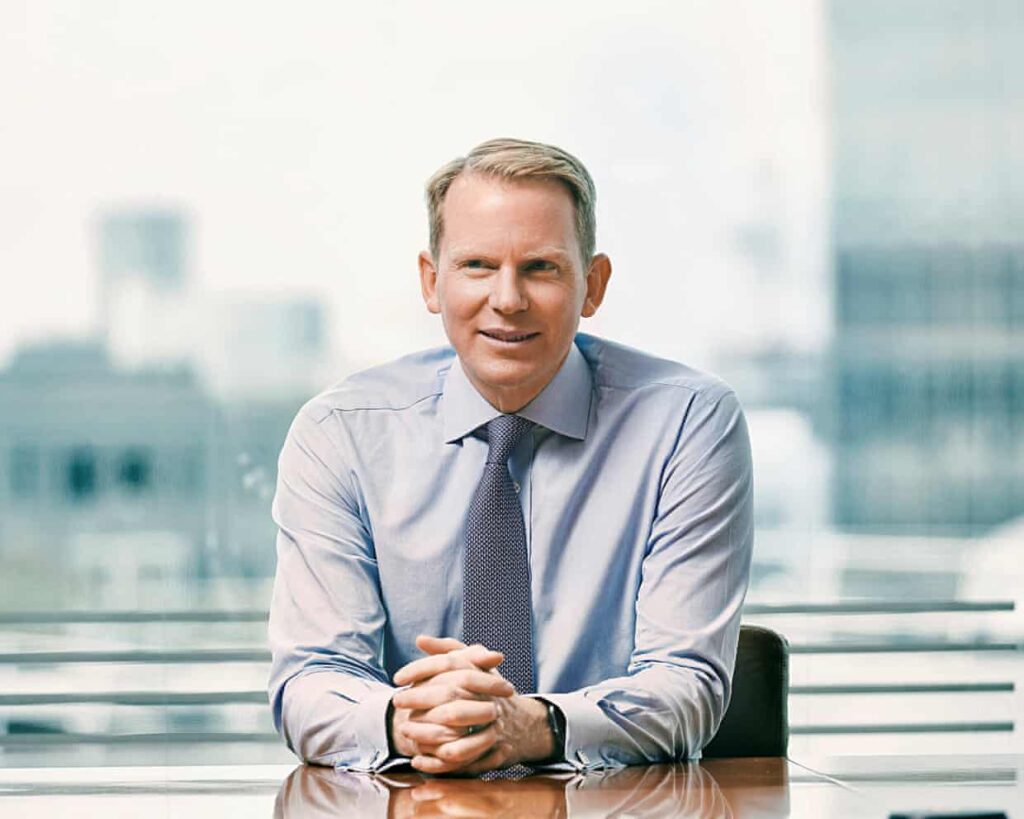
Charlie Nunn, the chief executive of Lloyds Banking Group, stands to receive a significant pay increase, potentially exceeding £13 million. This development follows the UK’s recent decision to lift restrictions on banker bonuses, allowing for larger compensation packages across the financial sector. The bank’s remuneration committee is currently drafting a new three-year executive pay policy that would enable Nunn to benefit from this relaxation of rules.
The proposed changes align Lloyds with rivals such as Barclays and HSBC, which have already adjusted their executive pay structures. For instance, CS Venkatakrishnan, CEO of Barclays, saw a 45% increase in maximum pay last year, bringing his potential earnings to £14.3 million if he meets specific performance targets. Similarly, Georges Elhedery of HSBC received a 43% pay boost, allowing for a maximum payout of approximately £15 million. Meanwhile, Paul Thwaite of NatWest Group can now earn up to £7.7 million, following a shareholder-approved increase.
If Lloyds implements a 45% rise for Nunn, his potential pay package would increase from a current maximum of £9.1 million. These proposals will be presented to shareholders for approval at the upcoming annual general meeting scheduled for this spring. As part of the new compensation strategy, Lloyds has indicated that Nunn’s fixed salary might be significantly reduced to provide a higher performance-related variable reward opportunity.
This shift stems from the government’s decision to remove a cap on banker bonuses, originally introduced in 2014 to mitigate risky behavior in the financial sector. The cap limited bonuses to twice a banker’s salary, aiming to prevent the reckless practices that contributed to the 2008 financial crisis. Critics argue that eliminating the cap has resulted in inflated salaries rather than a balanced approach to compensation. They assert that banks have less control over pay, complicating their ability to adjust bonuses based on annual financial performance.
The former UK Chancellor, Kwasi Kwarteng, championed the removal of the bonus cap in 2022, leveraging post-Brexit regulations. UK regulators responded by repealing the cap in 2023 as part of broader changes to enhance the appeal of the City to financial firms. Proponents of higher pay argue that competitive compensation packages are necessary to attract top talent, particularly in the face of lucrative offers from the United States. For example, Jamie Dimon, CEO of JPMorgan, earned $39 million (£29 million) last year.
Shareholders have largely supported these pay increases, a stark contrast to the backlash against excessive compensation seen in the years following the financial crisis. In November 2023, the UK’s largest asset managers cautioned pay committees to avoid simply matching the pay rises of competitors, a concern that could prompt hesitation among Lloyds shareholders regarding Nunn’s proposed increase.
A spokesperson for Lloyds Banking Group stated that the new pay policy would reflect market developments and regulatory changes, ensuring a strong link between performance and remuneration. The spokesperson added, “Overall, the new policy will align with new regulatory requirements, while offering competitive remuneration that appropriately rewards delivery of long-term value for customers and shareholders.”
As the financial landscape evolves, attention will also focus on the annual reports for NatWest, HSBC, and Barclays, expected in late February. These reports will provide insights into how the removal of the bonus cap has impacted executive compensation across the sector. Already, lower-ranking employees at Barclays and HSBC have begun to see the benefits of the relaxed bonus rules, with some top bankers receiving their highest payouts in a decade. In 2024, payouts for their most expensive staff surged over 50%€20 million (£16.6 million), marking a significant change since the cap’s removal.
This evolving pay landscape reflects ongoing shifts in the UK’s banking sector, setting the stage for potential new norms around executive compensation in the years to come.