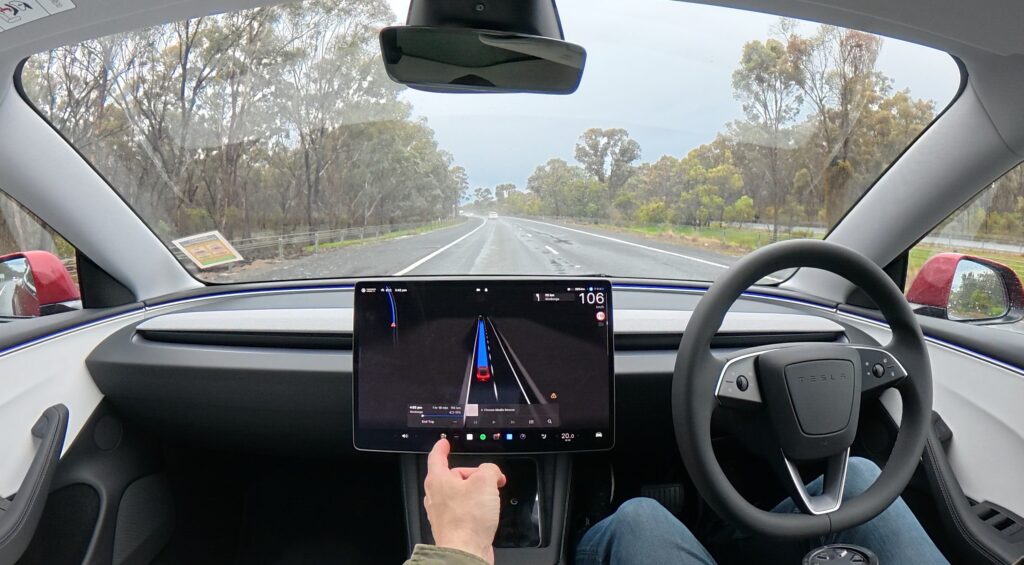
Tesla has announced a significant change in its sales strategy for the Full Self-Driving (FSD) software package. Starting from February 14, 2026, the company will no longer offer FSD as a one-time purchase. Instead, customers will have to subscribe to the service, a move that could redefine the financial landscape for Tesla owners.
This update was confirmed in a recent social media post by Elon Musk, which has prompted various interpretations regarding its implications. One prevailing theory suggests that Tesla believes the value of FSD is set to increase due to enhancements in functionality, making a subscription model more financially beneficial over the long term. Currently, the cost of FSD stands at A$10,100 in Australia and US$8,000 in the United States.
The transition to a subscription-only model appears to apply globally, raising questions about how this will affect FSD availability across different regions. While the FSD software is reportedly maturing in preparation for the launch of the robotaxi service, known as the Cybercab, many countries, including Australia, have yet to see the rollout of FSD V14. This raises a critical question: does discontinuing outright purchases make sense in these markets?
Historically, during Autonomy Day, Musk indicated that the value of FSD would rise as its capabilities improved. Although the purchase price remained stable for an extended period, the introduction of a subscription model offers Tesla owners a more accessible entry point. This approach also benefits Tesla by creating a steady revenue stream similar to Software as a Service (SAAS) models.
From February 14, prospective buyers will no longer weigh the costs of purchasing versus subscribing. If Tesla is confident enough in FSD’s performance to deploy vehicles without traditional controls and assume liability for accidents, it suggests a major milestone has been reached. While development of the software will continue, the core functions may be considered complete.
A key point of interest is whether personal vehicles equipped with FSD can participate in the robotaxi fleet, allowing owners to earn income by providing rides. This long-standing vision would require a Tesla vehicle and an active FSD subscription, but further details on enrollment in the fleet remain unclear. It was previously suggested that having FSD would grant free access to the fleet, but specifics are still forthcoming.
If FSD Unsupervised becomes available to consumers and enables them to generate revenue, its value could far exceed the current price. Many owners, including those who purchased FSD for their Tesla models as early as 2020, are still waiting to fully utilize the promised features. Presently, FSD (Supervised) V12 is operational in the United States but is not available for any HW3 vehicles in Australia.
As excitement builds around the maturation of the software, several significant questions remain unanswered. Where is FSD V14 for HW3 vehicles? When will Australian HW4 cars receive this update? Will there be a cost associated with enrolling vehicles in the robotaxi fleet? Additionally, inquiries about the future of features like Smart Summon and Cybercab charging locations continue to circulate.
Perhaps the most pressing concern for existing Tesla owners following this announcement is whether subscription prices will increase. The shift to a subscription-only model could alter the cost dynamics significantly. As the community grapples with these changes, the implications for Tesla’s business model and customer experience are poised to unfold in the coming months.