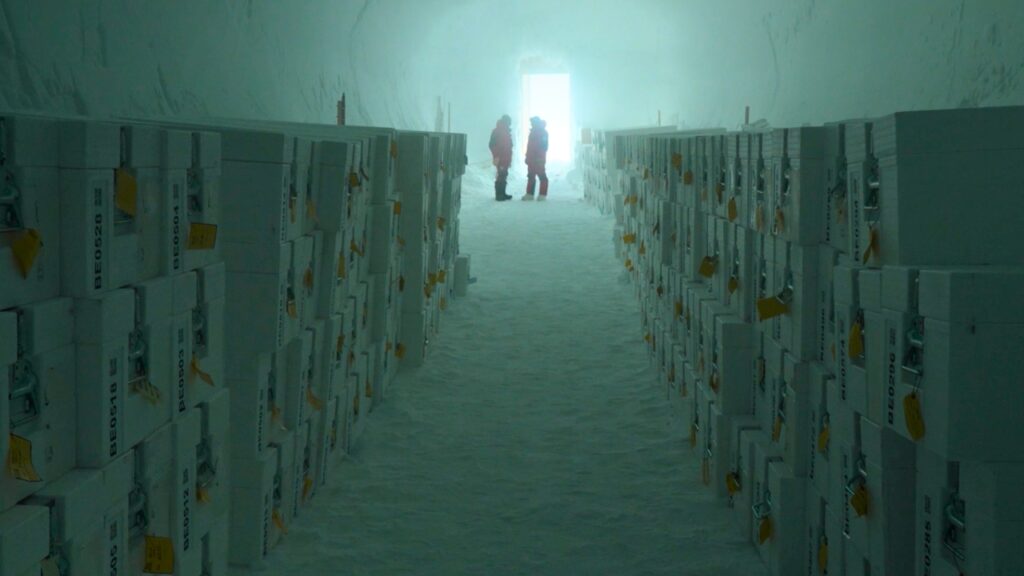
On March 15, 2024, scientists achieved a significant milestone by sealing ancient glacial ice cores in Antarctica, establishing the world’s first sanctuary dedicated to preserving Earth’s climatic history. This initiative aims to safeguard these vital records of past climates, which are rapidly disappearing due to climate change.
The two ice cores, sourced from the Alps, are now housed in a specially constructed snow cave at Concordia Station, located at an altitude of 3,200 meters (10,500 feet). This sanctuary is designed to maintain a natural cold storage environment at minus 52 °C, eliminating the need for artificial refrigeration. The project represents nearly a decade of effort and collaboration among international scientists.
Significance of the Ice Cores
Ice cores serve as critical indicators of ancient climate conditions, providing insights into weather patterns and atmospheric changes over millennia. Each core contains layers of ice that trap dust and other climatic indicators, allowing scientists to reconstruct historical weather phenomena. For instance, a layer of clear ice signifies a warm period when the glacier melted and refroze, while low-density layers suggest precipitation levels.
“To safeguard what would be otherwise irreversibly lost… is an endeavour for humanity,” said Thomas Stocker, a Swiss climate scientist and chair of the Ice Memory Foundation, which spearheaded this initiative.
Future research utilizing these ice cores could yield insights that are currently beyond our understanding, according to Carlo Barbante, an Italian climate scientist and vice-chair of the Ice Memory Foundation. He emphasized that advancements in technology will enable scientists to uncover secrets embedded in the ice that remain hidden today.
Logistical and Diplomatic Challenges
The establishment of the sanctuary was not only a logistical feat but also involved navigating diplomatic complexities. The cave, measuring 35 meters long and 5 meters wide and high, was excavated approximately 10 meters beneath the surface, ensuring a stable environment for the ice samples. On the day of inauguration, scientists celebrated the placement of core samples from Mont Blanc and Grand Combine into the icy vault.
Plans are underway to expand the archive with glacial ice from regions such as the Andes, Himalayas, and Tajikistan. However, the project’s success hinges on ensuring that the cores remain politically neutral and accessible solely on scientific merit. The sanctuary is situated on land governed by an international treaty, safeguarding it from political interference.
The director of the Ice Memory Foundation, Anne-Catherine Ohlmann, noted the absence of a legal framework governing such initiatives, highlighting the need for future regulations. “It is crucial that this heritage is governed so these ice cores will be available in a few decades, perhaps even a few centuries, for the right beneficiaries for the right reasons,” she stated.
As global temperatures continue to rise, scientists warn that thousands of glaciers are expected to vanish each year in the coming decades. The urgency to preserve these ice cores is underscored by recent reports indicating that 2025 was the third hottest year on record, driven largely by human activities, including the burning of fossil fuels.
Ultimately, this groundbreaking project represents a proactive step in the race against time to protect invaluable records of our planet’s climate history. The efforts at Antarctica’s ice sanctuary could provide future generations with vital data to understand and address the challenges posed by climate change.