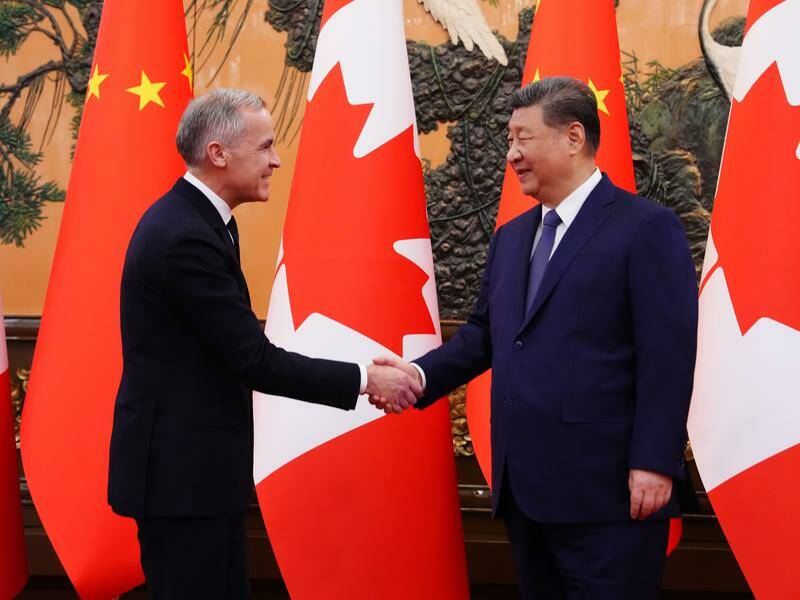
Canada has announced a significant trade agreement with China, marking a departure from its previous alignment with the United States on tariff policies. In a deal finalized after two days of discussions with Chinese leaders, Prime Minister Mark Carney revealed that Canada will eliminate its 100 percent tariff on Chinese electric vehicles (EVs). In exchange, China will lower its tariffs on Canadian agricultural products, specifically reducing the tariff on canola seeds from approximately 84 percent to around 15 percent.
The agreement establishes an initial cap of 49,000 vehicles on Chinese EV exports to Canada, which will increase to 70,000 vehicles over the next five years. Carney made the announcement during a press briefing in Beijing, stating, “It has been a historic and productive two days.” He emphasized the need for Canada to focus on areas of alignment with other nations, especially in light of recent geopolitical tensions.
Strengthening Bilateral Relations
The discussions between Carney and Chinese President Xi Jinping also focused on improving bilateral relations, which have been strained in recent years. Xi expressed a willingness to enhance ties, noting that their previous meeting in October 2023 was a catalyst for renewed cooperation. “It can be said that our meeting last year opened a new chapter in turning China-Canada relations toward improvement,” Xi stated.
Carney’s visit marks the first time a Canadian prime minister has traveled to China in eight years. He highlighted the importance of fostering a new relationship that aligns with current global realities. The Prime Minister called for collaboration in various sectors, including agriculture, energy, and finance, as he described the existing global governance system as “under great strain.”
This trade agreement reflects a broader strategy by Canada to reduce its economic reliance on the United States. Carney has previously indicated that the Canadian government is seeking to navigate a time of “global trade disruption,” particularly in response to the tariffs imposed by the administration of former US President Donald Trump. Under previous Prime Minister Justin Trudeau, Canada had matched the US tariffs of 100 percent on Chinese EVs and 25 percent on steel and aluminum. In retaliation, China had levied tariffs on Canadian agricultural exports, including canola oil and pork.
Implications for Global Trade
The shift in tariff policy may signal a broader realignment in trade relationships, as China seeks to leverage the tensions between its allies and the United States. The US has suggested that countries like Canada might reconsider their foreign policy directions under pressure from American trade tactics.
Carney is scheduled to depart China on Saturday and will continue his travels to Qatar on Sunday before attending the annual gathering of the World Economic Forum in Switzerland next week. This visit underscores Canada’s commitment to engaging with international partners and addressing the challenges posed by a dynamic global trading environment.
As this trade agreement unfolds, it will be critical to monitor its impact on Canadian and Chinese economies and how it shapes the future of international trade dynamics.