




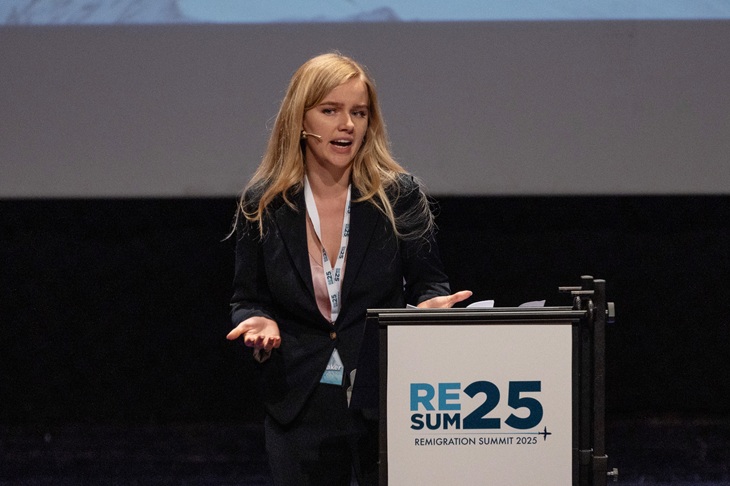
GALLARATE, ITALY - MAY 17: Dutch right-wing political commentator and activist Eva Vlaardingerbroek delivers a speech during the first "Remigration Summit" at Teatro Condominio on May 17, 2025 in Gallarate, Italy. Far-right activists from extremist groups across Europe are convening for a controversial summit to define and discuss 'remigration,' a concept often associated with xenophobic and racist viewpoints, which advocates for the large-scale repatriation or deportation of immigrants and individuals with immigrant backgrounds to their countries of origin. The summit has drawn strong condemnation from groups opposed to what they view as a hateful agenda. (Photo by Emanuele Cremaschi/Getty Images)
UPDATE: In a shocking move, British authorities have revoked the Electronic Travel Authorisation (ETA) of Eva Vlaardingerbroek, a prominent Dutch political commentator and activist, effectively banning her from entering the United Kingdom as of January 13, 2026. This decision has ignited a fierce debate about free speech and governmental power.
Vlaardingerbroek, known for her strong views on immigration and national sovereignty, took to social media to express her outrage, stating, “I’ve been banned from traveling to the UK. No reason given. No right to appeal.” This message, shared with her 1.2 million followers on X, highlights her frustration with the UK government’s justification: her presence is deemed “not conducive to the public good.”
The timing of this ban is particularly striking, as it follows closely after Vlaardingerbroek criticized UK Prime Minister Keir Starmer. Supporters argue that this politically motivated action is a direct attack on free speech, while critics maintain that governments have the right to restrict entry to individuals they believe pose a threat to public order.
The implications of this ban extend beyond Vlaardingerbroek’s case. It raises urgent questions about the limits of dissent in a democracy. Many view her as a champion of the right-wing youth movement in Europe, while others label her rhetoric as divisive and aligned with far-right ideologies.
Context: Vlaardingerbroek has gained significant traction in political discourse across Europe, often framing her arguments around the narrative that Western societies are under threat from globalist elites and unchecked immigration. Her rising platform places her in direct opposition to mainstream political figures in the UK and beyond.
Critics point out that the UK government’s decision could set a concerning precedent for civil liberties. As arrests continue under stringent hate speech laws, the chilling effect on political activism and public discourse is palpable. Supporters of Vlaardingerbroek assert that this ban infringes on fundamental rights of expression, a core tenet of democratic societies.
As the political landscape becomes increasingly polarized, this incident serves as a stark reminder of the delicate balance between national security and freedom of speech. The controversy surrounding Vlaardingerbroek is not just about one individual; it encapsulates the broader struggle over the future of democratic discourse in the face of growing governmental control.
Next Steps: Observers are closely watching how this situation evolves. Will Vlaardingerbroek’s supporters rally for her reinstatement? How will this impact other activists facing similar restrictions? The conversation around free speech, political dissent, and governmental authority is far from over, and the implications of this ban may resonate well beyond the UK.
In a climate where the stakes are high, the fight for free expression remains critical. As Vlaardingerbroek’s case unfolds, it serves as a rallying point for advocates of free speech worldwide, urging citizens to scrutinize the actions of their governments and defend their rights. The urgency of this matter cannot be overstated, as it goes to the heart of what it means to live in a democratic society.
