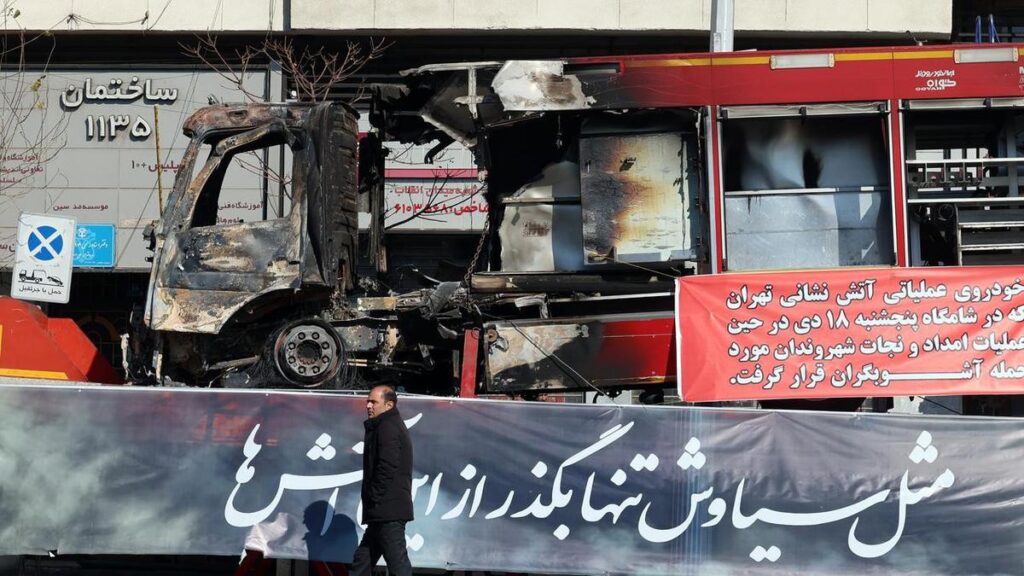
Protests in Iran have significantly diminished following a severe crackdown by authorities. According to residents and rights groups, as communication restrictions have eased, the immediate threat of further violence appears to have reduced. The situation comes amid ongoing tensions and military posturing from the United States, which has warned of serious consequences if violence continues.
In a notable shift, President Donald Trump indicated that reports of killings in Iran were declining. This statement came as the United States began to deploy additional military assets to the region. US allies, including Saudi Arabia and Qatar, have engaged in extensive diplomatic efforts this week to dissuade a US military strike, fearing broader regional ramifications.
During a press briefing on March 15, 2024, Trump remarked, “Iran cancelled the hanging of over 800 people,” expressing respect for the decision. The unrest initially erupted on December 28, 2022, primarily due to economic hardships, and rapidly escalated into widespread demonstrations against clerical rule, culminating in violent clashes.
According to official sources, protests peaked last Thursday, leading to significant vandalism and violence, including damage to public institutions, banks, and the destruction of 53 mosques. Opposition groups estimate that more than 2,000 individuals have died in the confrontations, marking the most severe internal unrest since the 1979 Islamic Revolution.
Residents in Tehran reported a notable decrease in public demonstrations over the past few days. One resident noted that drones were flying overhead, but there were no signs of substantial protests on Thursday or Friday. Another individual from a northern city by the Caspian Sea echoed this sentiment, describing the streets as calm. Many of these residents spoke on condition of anonymity for their safety.
As the internet blackout began to lift, more accounts of violence surfaced. One woman recounted the tragic loss of her 15-year-old daughter during a protest. “She was not a terrorist, not a rioter,” the mother stated, describing how Basij forces pursued her child as she attempted to return home.
Although Iranians regained the ability to make international phone calls on March 15, incoming calls remain blocked, complicating communication with the outside world. The lack of global internet access limits users to domestic websites. One Iranian noted that she was using the local search engine Zarebin, which offers filtered results.
Iranian authorities reported that at least 3,000 individuals have been detained during the protests, a figure that starkly contrasts with estimates from human rights organizations. A security source stated, “Security officials have announced that 3,000 members of terrorist groups and individuals who played a role in recent disturbances have been arrested so far,” according to the Tasnim news agency, linked to Iran’s Revolutionary Guard. In contrast, the US-based organization HRANA reports that the number of arrests exceeds 19,000.
The Iranian-Kurdish rights group Hengaw noted there have been no protest gatherings since Sunday, although the security environment remains highly restrictive. “Our independent sources confirm a heavy military and security presence in cities and towns where protests previously took place,” Hengaw stated.
As the situation continues to evolve, the international community remains watchful of Iran’s response to the ongoing unrest and the implications it may have on regional stability.