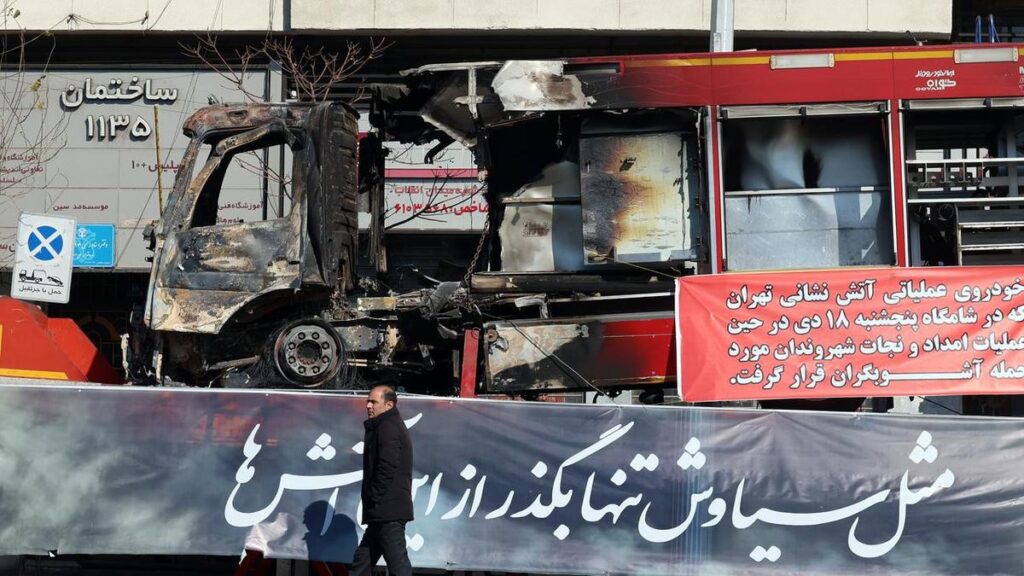
Iran’s government has significantly diminished anti-government protests following a violent crackdown, as reported by both local residents and rights organizations. The demonstrations, which erupted on December 28, were initially sparked by economic hardships but escalated into widespread calls for an end to clerical rule. The unrest witnessed mass violence, culminating in the deaths of over 2,000 people, marking the most severe domestic turmoil since the 1979 Islamic Revolution.
As the Iranian authorities imposed communication restrictions, signs of a quieter atmosphere emerged in Tehran and other cities. Several residents reported that, after days of unrest, the capital has remained comparatively calm for the past four days. Drones have been spotted overhead, yet there have been no indications of significant protests in the city on Thursday or Friday. A resident from a northern city on the Caspian Sea noted that streets there also appeared unusually tranquil.
The United States has maintained a military presence in the region alongside its diplomatic efforts to prevent further escalation. President Donald Trump stated that he had been informed that the killings in Iran were subsiding. While the prospect of a U.S. military intervention has lessened, military assets continue to arrive in the area, indicating ongoing regional tensions. U.S. allies, including Saudi Arabia and Qatar, engaged in intense diplomacy this week, warning of potential repercussions for the wider region that could ultimately affect U.S. interests.
The White House has articulated that there would be “grave consequences” for the Iranian government if bloodshed continues. Trump remarked on the cancellation of executions for over 800 individuals, expressing respect for this decision as he prepared to leave the White House for a weekend at his estate in Florida.
As communication restrictions have begun to ease, more accounts of the violence have emerged. One woman from Tehran shared that her daughter was killed during a demonstration near their home. “She was 15 years old. She was not a terrorist, not a rioter. Basij forces followed her as she was trying to return home,” she stated, referring to a branch of security forces often deployed to suppress unrest.
Despite some easing of internet restrictions, incoming international calls remain blocked, limiting contact with the outside world. Reports indicate that since the restrictions began, Iranian citizens can only access domestic websites, severely curtailing their online communication. One woman mentioned using the Iranian search engine Zarebin, which offers filtered results.
Iranian authorities claimed that at least 3,000 people have been detained during the protests, a figure that contrasts sharply with estimates from rights groups that indicate over 19,000 arrests have occurred. A security source cited by the Tasnim news agency, linked to Iran’s Revolutionary Guard, stated that those detained included “members of terrorist groups.”
The Iranian-Kurdish rights group Hengaw reported no protest gatherings since Sunday but noted that “the security environment remains highly restrictive.” They confirmed a heavy military presence in cities and towns where protests previously took place, as well as in several areas that had not experienced significant demonstrations.
As the situation continues to unfold, the international community remains watchful of Iran’s internal dynamics and the broader implications for regional stability.