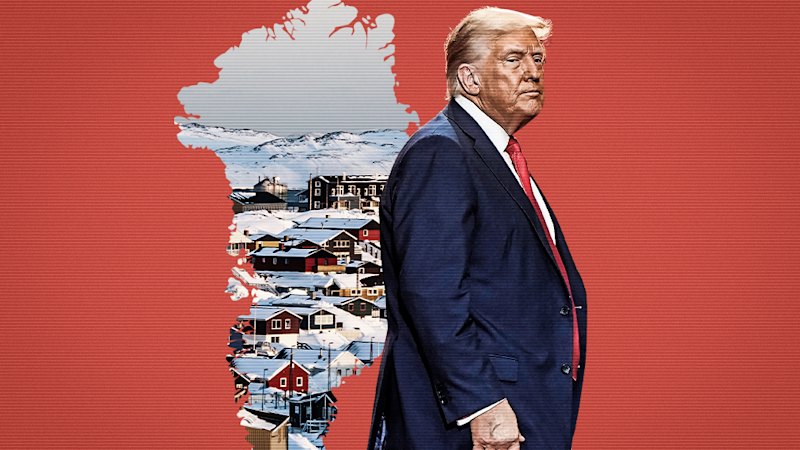
US President Donald Trump is intensifying his rhetoric over Greenland, using tariff threats as a means to exert pressure on Denmark. His aim appears to be to bring the territory under US control, even as many observers question the feasibility and legality of such ambitions. Trump has publicly stated his desire to see Greenland become part of the United States, yet the methods he employs to achieve this—threatening tariffs—are unlikely to yield the desired results.
While Trump has refrained from deploying military options, he is no stranger to unpredictable tactics. His approach often involves leveraging economic pressure to achieve political goals. The latest threats regarding tariffs echo similar strategies he has used in international trade relations. Nevertheless, this method may not be as effective in the case of Greenland.
Challenges Facing Trump’s Greenland Ambitions
Trump’s statements about Greenland have included dire warnings, such as claims that “world peace is at stake” and that the situation poses a “very dangerous” threat to global security. However, experts and local residents alike dismiss these assertions as exaggerated. The reality is that Greenland is not only geographically and politically complex but also predominantly opposed to American ownership. A survey indicates that approximately 85 percent of Greenland’s population is against the idea of being annexed by the United States.
As the situation stands, the US already has a military base at Pituffik, formerly known as Thule, in northern Greenland. The US could expand its existing military presence without needing to purchase or annex the territory. Local opinions reflect a desire for collaboration rather than ownership, with residents acknowledging that the US can establish military bases if needed.
Four Key Reasons Tariff Threats Are Ineffective
Trump’s past use of tariff threats has diminished their impact due to frequent repetition. He has previously threatened tariffs against Russia and China, as well as European nations, without achieving significant results. Each time he employs this tactic, it undermines the credibility of his claims. The UK and EU are likely to view capitulation to these threats as an invitation for future conflicts.
Economic analyses, such as those conducted by the think tank Bruegel, suggest that tariffs can hurt American consumers alongside European producers. For instance, it was predicted that last year’s trade war would shrink the US economy by 0.7 percent, while the EU would experience a 0.3 percent decline. As mid-term elections approach, Trump may find it more beneficial to campaign on economic growth rather than territorial acquisitions.
Another significant hurdle is the political landscape in Denmark. The Danish government provides essential services to Greenland, funded by an annual grant of 3.9 billion Danish krone, approximately $900 million AUD. This financial obligation raises questions about the practicality of American ownership, especially as US voters may not favor footing the bill for Greenland’s maintenance.
Finally, Danish Prime Minister Mette Frederiksen is preparing for an election that must occur by October 31. Rather than yield to Trump’s demands, she might leverage his threats to galvanize support against perceived external pressures. This political backdrop complicates Trump’s ambitions and adds another layer of difficulty to his Greenland aspirations.
As the situation evolves, the potential for conflict within the NATO alliance remains a concern. Trump’s unpredictable nature could lead to unforeseen consequences, particularly regarding international relations. For now, he continues to rely on tariff threats, but the path to acquiring Greenland remains fraught with challenges.