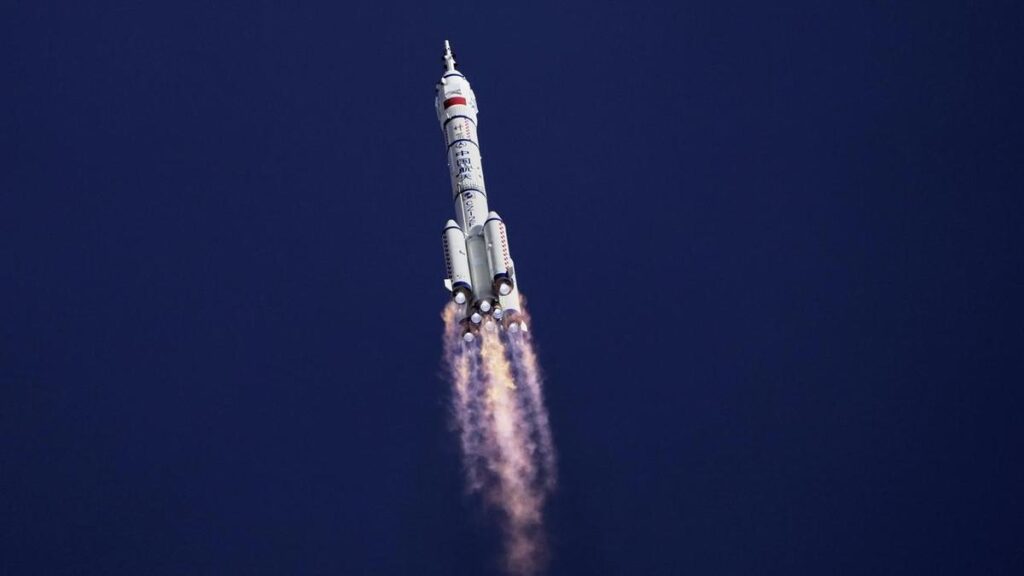
The damaged return capsule of China’s Shenzhou 20 spacecraft has successfully landed in the Gobi Desert on November 20, 2023. This mission, which did not carry any astronauts, marked a significant achievement for China’s space program, especially considering the complications it faced prior to its return.
According to the state news agency Xinhua, initial inspections of the capsule revealed that it appeared normal, and the onboard supplies were in good condition. Officials have since declared the return mission a “complete success.”
The Shenzhou 20 spacecraft was originally scheduled to return on November 5. However, a delay occurred due to cracks found in the capsule’s window. Chinese space experts attributed this damage to a collision with small pieces of space debris, a growing concern in the realm of space exploration.
The three-person crew of the Shenzhou 20 returned safely to Earth in mid-November, utilizing the same spacecraft that had transported their successors on the Shenzhou 21 mission to the Tiangong space station. This highlights a critical aspect of modern space travel: the impact of orbital debris, which consists of defunct satellites, spent rocket stages, and fragments from previous missions. The increasing presence of such materials in space poses risks to both current and future missions.
As nations continue to explore and utilize space, addressing the issue of orbital debris becomes increasingly vital. The successful return of the Shenzhou 20 capsule underscores China’s resilience and capability in navigating the complexities of space exploration, even in the face of unforeseen challenges.
This mission not only reflects the advancements in China’s space technology but also serves as a reminder of the ongoing need for international collaboration and innovation in ensuring the safety of space travel. As the global community looks to the future of space exploration, the lessons learned from missions like Shenzhou 20 will play a crucial role in shaping strategies to mitigate the risks posed by space debris.