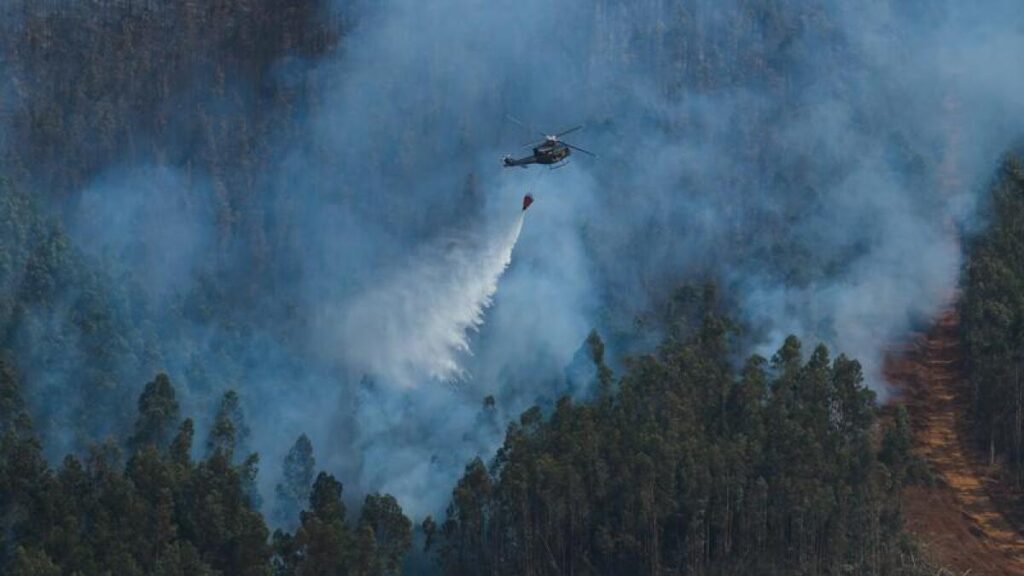
Wildfires in Chile have resulted in the tragic loss of 19 lives, primarily in the coastal city of Penco, located just north of the regional capital, Concepcion. The fires, described as “uncontrollable,” have devastated communities, prompting urgent responses from local authorities as extreme heat warnings remain in effect across central and southern regions of the country.
The Chilean government is currently grappling with a series of wildfires that have destroyed approximately 325 homes and left another 1,100 residences under assessment. As of Monday afternoon, the National Forestry Corporation, known as CONAF, reported that firefighters were actively battling 34 fires nationwide. The most significant blazes are located in the Nuble and Bio Bio regions, where President Gabriel Boric has declared a state of catastrophe in response to the escalating situation.
Emergency Response and Impact
In Penco, thousands of residents have begun to sift through the debris of their homes, while firefighters continue their efforts to extinguish nearby flames. According to reports, over 35,000 hectares of land have already been scorched, with one particularly large fire exceeding 14,000 hectares on the outskirts of Concepcion. The ongoing high temperatures, which are projected to reach as high as 37°C, exacerbate the fire risk, raising concerns that additional blazes could ignite throughout the region.
Miguel Castillo, a professor and researcher at the University of Chile’s Forest Fire Laboratory, highlighted several factors contributing to the deadly nature of these fires. He noted that the accumulation of dry materials and a series of consecutive days with temperatures above 30 degrees Celsius have created conditions conducive to rapid fire spread. “One or two days are common, but not four or five,” Castillo explained, indicating that the prolonged heat has created an unprecedented situation.
Challenges in Controlling the Fires
The challenges facing firefighters are compounded by strong, shifting winds, which make it increasingly difficult to contain the flames once they reach a certain scale. Castillo remarked, “With those extreme conditions, it practically becomes an uncontrollable monster.” He pointed out that while many fires typically last only two or three days, the risk of multiple active fires merging before they can be managed significantly increases with such conditions.
As the situation continues to develop, authorities and local communities are working tirelessly to mitigate the damage caused by these wildfires. The loss of life and property underscores the urgent need for effective fire management strategies in the face of climate-related challenges.