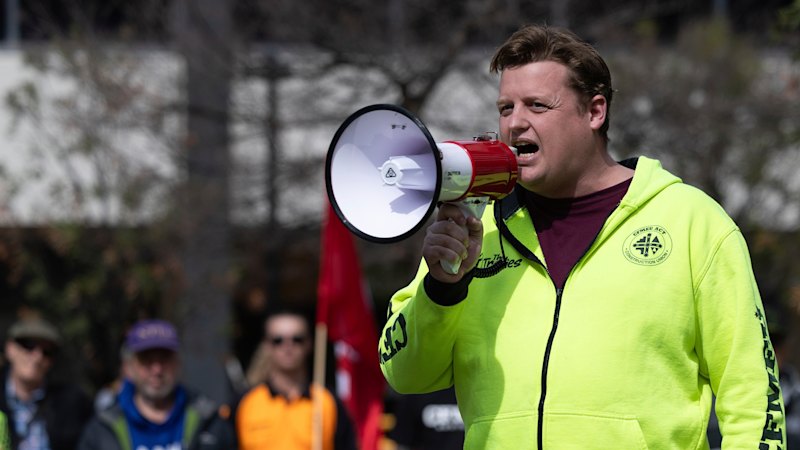
The construction union CFMEU faces uncertainty following the unexpected resignation of its leader, Zach Smith, who cited personal reasons for stepping down. His departure comes as a surprise to many within the union movement, especially given his backing from the Australian Council of Trade Unions (ACTU) and the federal government led by Prime Minister Anthony Albanese. Smith was appointed in late 2024 to help reform the union after it faced serious allegations of corruption and connections to organized crime.
Smith’s tenure has been marked by significant challenges. He took charge amidst a crisis, notably under the oversight of administrator Mark Irving, KC. His leadership was controversial, with critics pointing to his connections with former Victorian secretary John Setka and a reported meeting with notorious gangland figure Mick Gatto to negotiate an industrial dispute.
Despite these controversies, Smith implemented important reforms aimed at limiting the influence of organized crime within the union. He oversaw the dismissal of several high-profile union officials, including John Perkovic, who was alleged to have accepted up to $3 million in questionable payments from building companies. Smith’s actions included demanding that union members cease dealings with figures associated with outlaw motorcycle gangs, which placed him in personal jeopardy.
Smith’s leadership style drew mixed reactions from union members. While some praised his integrity and the difficult reform program he pursued, others criticized his decision-making. For instance, promoting Perkovic to a significant role shortly before his dismissal raised questions about Smith’s judgment.
In a statement following his resignation, the union’s remaining leadership commended Smith for his hard work in maintaining the strength of the CFMEU. One veteran figure within the union described him as “principled and courageous,” emphasizing that his efforts were crucial for the union’s long-term survival amid calls for deregistration from conservative political circles.
In an internal email, Smith expressed that personal matters prompted his decision to resign and indicated a desire to focus on his family. His departure left a mixed response among union members; while some felt “gutted” by the news, others believed that his leadership had not solidified effectively and welcomed the change.
Smith’s connections within the ACTU and the Labor Party suggest that he may continue to play a role in the labor movement after this unexpected exit. His future involvement remains to be seen, but he is likely to attract attention given his past contributions and the complexities of union leadership in a challenging environment.