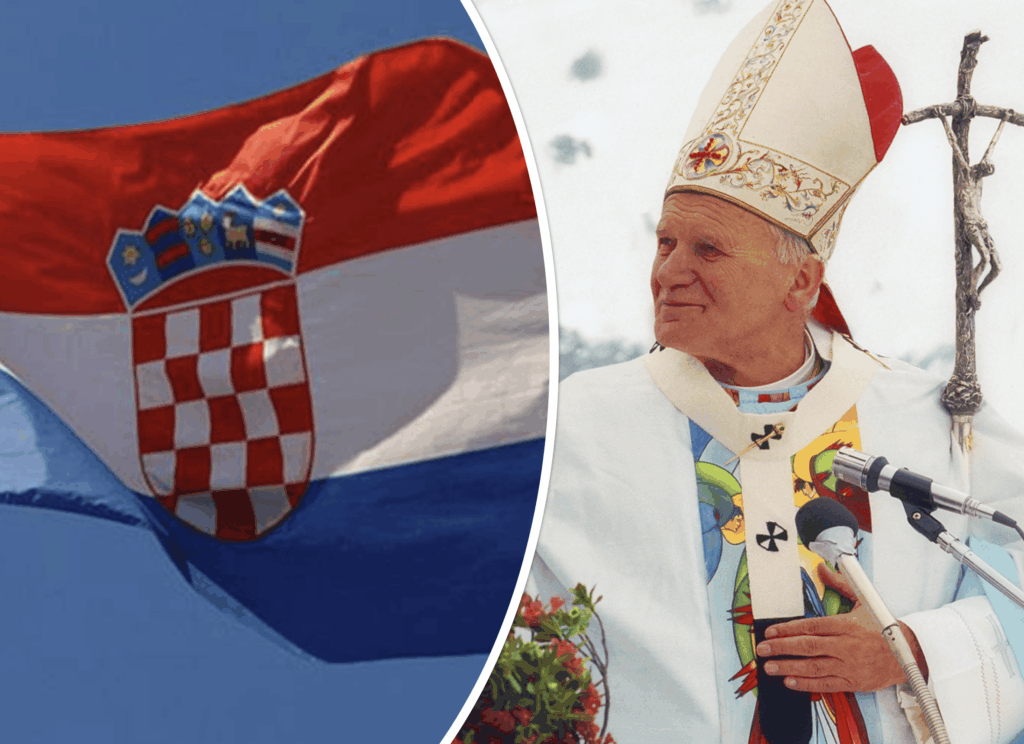
On January 13, 1992, the Vatican officially recognized the Republic of Croatia as an independent and sovereign state. This pivotal decision, made under the leadership of Pope St. John Paul II, marked a significant milestone in Croatia’s quest for international recognition amid a turbulent period of war and uncertainty. The Holy See’s support not only provided political legitimacy but also affirmed Croatia’s aspirations for statehood.
The recognition came at a critical juncture. Croatia was grappling with the consequences of conflict and aggression, with its future precariously hanging in the balance. The Vatican, leveraging its extensive diplomatic history and moral authority, chose to act decisively, sending a strong message to the international community about Croatia’s right to exist as an independent nation.
Two days later, on January 15, 1992, the European Community formally recognized Croatia, with twelve member states, including Germany, France, and the United Kingdom, acknowledging its sovereignty. By the end of February 1992, a total of 44 countries had extended recognition to Croatia, illustrating a rapid shift in international attitudes towards the nascent republic.
The Impact of Vatican Recognition
The Vatican’s recognition was more than just a diplomatic gesture; it held profound political and symbolic significance. As a seasoned actor on the international stage, the Holy See’s endorsement boosted Croatia’s standing in its efforts to gain wider acceptance among global powers. It was a decisive moment that underscored the Vatican’s commitment to promoting human rights and self-determination at a time when many nations hesitated to act.
Pope John Paul II’s involvement was crucial throughout this process. His support was acknowledged by Croatian leaders, including President Franjo Tuđman, who expressed gratitude in a letter to the pontiff. The official communiqué from the Vatican recognizing Croatian sovereignty has since become an integral part of the nation’s historical narrative.
The road to recognition was paved with extensive diplomatic endeavors. One notable figure in these efforts was Otto von Habsburg, whose lobbying played a vital role in strengthening Croatia’s international position. The Vatican’s early commitment to Croatian statehood, announced publicly on October 3, 1991, demonstrated its resolve when many were still uncertain.
A Broader Context for Recognition
Croatia’s plea for international recognition began well before the Vatican’s decision. The first acknowledgments came from nations that themselves were not yet recognized, such as Slovenia and Ukraine, between June and December 1991. Iceland was the first internationally recognized country to acknowledge Croatian independence on December 19, 1991, coinciding with Germany’s recognition, which only took effect on January 15, 1992.
Following the European Community’s acknowledgment, a wave of countries recognized Croatia, including Argentina, Turkey, Russia, and the United States, further solidifying its status on the world stage. Croatia’s diplomatic initiatives had begun even before formal recognition, with the establishment of representative offices in key cities such as Tokyo and Washington in 1991.
Croatia’s integration into international frameworks continued swiftly after gaining recognition. On May 22, 1992, Croatia was admitted to the United Nations, marking a crucial step in its journey towards becoming an active participant in global affairs.
The legal foundation for Croatia’s statehood was laid through significant historical events, including the adoption of the Constitution on December 22, 1990, and the declaration of independence on June 25, 1991. These milestones underscored the nation’s commitment to establishing itself as a legitimate sovereign entity.
Croatia has since built extensive diplomatic relations worldwide, joining various international organizations. It became a member of the Council of Europe in 1996, joined NATO in 2009, and entered the European Union as its 28th member on July 1, 2013. Each of these milestones represents a significant step in Croatia’s integration into the global community.
The Vatican’s recognition of Croatia on January 13, 1992, remains a landmark event in modern Croatian history. It illustrates the power of moral leadership and diplomatic courage in shaping the fate of nations. Over three decades later, the significance of that day endures, reminding us that the recognition of independence is not merely a formality but a vital affirmation of a people’s right to self-determination and statehood.