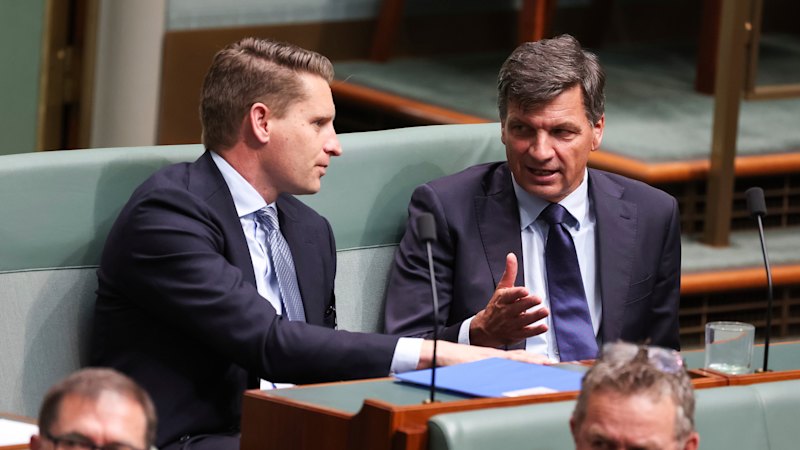
Liberal leadership contender Andrew Hastie has declined an invitation from Angus Taylor to serve as his deputy in a conservative alliance aimed at unseating Opposition Leader Sussan Ley. This development occurred during a phone call on January 21, 2026, while Taylor was in Europe and Hastie was based in Perth. Multiple sources familiar with the conversation, who requested anonymity due to the sensitivity of the discussions, confirmed the details.
During the call, Taylor suggested that serving as his deputy could position Hastie for future leadership. However, Hastie, backed by a coalition of right-wing MPs, made it clear that he is determined to pursue the leadership independently. He indicated that he would only reconsider his ambitions if there were strong opposition from his colleagues, which did not appear to be the case.
As tensions within the party escalate, Hastie chose not to comment on the conversation when approached by reporters. Taylor’s office also refrained from confirming the details but described the discussion as less significant than it has been portrayed.
The ongoing struggle for leadership has created a stalemate that currently benefits Ley. Political dynamics suggest she may remain in her position, albeit in a weakened state, as both Hastie and Taylor struggle to unite their factions. Taylor’s absence from Australia complicates efforts to resolve the impasse.
Political Landscape and Leadership Challenges
The challenge for both Hastie and Taylor is the significant support Ley retains among moderates and some right-wing members. Reports indicate that while Hastie has the backing of the right faction, Taylor is gaining traction among moderates who prefer him over the more hardline stance represented by Hastie.
In the wake of a recent Coalition split, Ley has been engaging with her colleagues to assess her leadership position. Sources close to her have stated that she remains calm and confident, dismissing claims of widespread anxiety within the party. One ally remarked, “There’s not a sense of worry – quite the opposite,” suggesting that Ley’s leadership is being overhyped by dissenters.
Ley has been in close contact with former Prime Minister John Howard, seeking his advice on navigating the current crisis with the Nationals. Despite the challenges, she has opted to delay any reshuffling of her shadow ministry until David Littleproud, the Nationals leader, announces his unofficial “shadow cabinet” next week.
Future of the Coalition and Potential Reunification
Ley’s strategy appears to be focused on maintaining the potential for reconciliation with the Nationals. Key figures within the Nationals, including deputy leader Kevin Hogan and others, continue to engage in discreet discussions with Liberals about a possible reunification.
Yet, many Nationals members are hesitant to unseat Littleproud, a condition that could complicate any potential alliance with the Liberals. As the political landscape evolves, both parties are likely to face significant challenges in resolving their differences and achieving stability.
As the situation develops, political observers note that the internal dynamics within both the Liberal and Nationals parties will play a critical role in shaping the future of the Coalition. The coming days may prove pivotal in determining whether a unified front can be established or if divisions will deepen further.