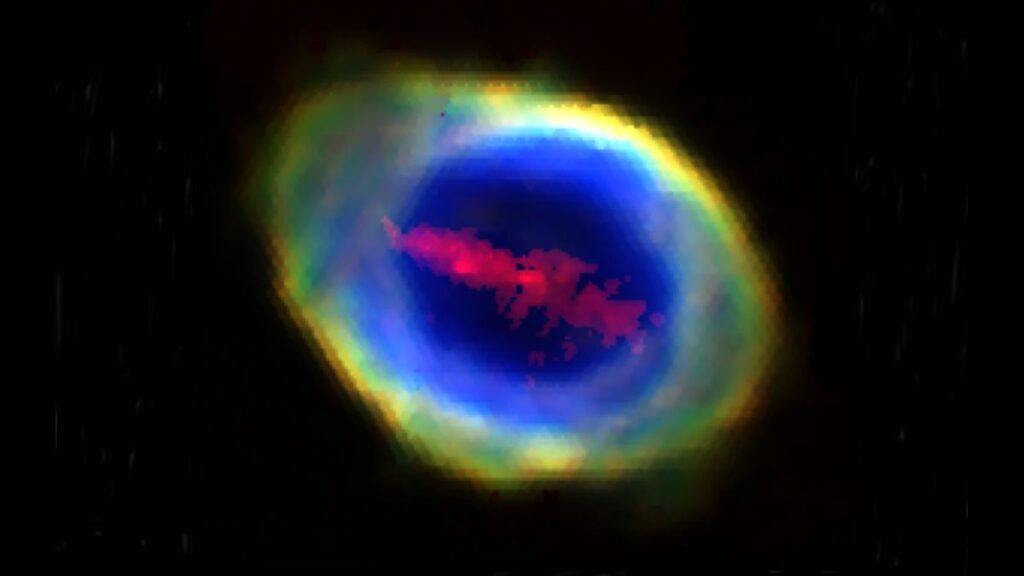
A recent discovery has ignited excitement in the astronomical community as researchers have found a remarkable structure within the iconic Ring Nebula, located approximately 2,570 light-years from Earth in the constellation of Lyra. A team led by Roger Wesson from Cardiff University has identified a giant, bar-shaped cloud of glowing, ionized iron atoms at the nebula’s core, a phenomenon that has never been observed in a nebula before.
The Ring Nebula, first documented in 1779 by French astronomer Charles Messier, is a well-studied planetary nebula known for the ejected materials from dying stars. As these stars reach the end of their life cycle, they shed their outer layers, which can create stunning cosmic displays. While many similar nebulae have been cataloged, the presence of this linear iron structure introduces a significant enigma.
Using the Large Integral Field Unit (LIFU) mode of the new WHT Enhanced Area Velocity Explorer (WEAVE) instrument on the 4.2-metre William Herschel Telescope, the team was able to capture comprehensive spectroscopic observations of the nebula. Wesson commented, “Even though the Ring Nebula has been studied using many different telescopes and instruments, WEAVE has allowed us to observe it in a new way, providing so much more detail than before.”
The bar of ionized iron stands out due to its unusual properties, leading astronomers to question its origin. Previous observations primarily utilized slit spectroscopy, which examines thin slices of the nebula. This method likely contributed to the iron structure’s elusive nature, as it would have only been detected if the observation slit aligned perfectly with the bar’s orientation.
Initial assessments of the iron bar suggest it is not a jet of material erupting from the associated white dwarf star. Instead, the white dwarf is offset from the bar’s center, and the motion of the bar indicates it is moving uniformly away from Earth. The emission lines detected along the length of the bar reveal that it does not conform to expected patterns for jets, complicating the analysis further.
The composition of the iron bar is another puzzling aspect. It contains a mass equivalent to about 14 percent of Earth’s mass, raising questions about how such a large quantity of bare, glowing iron atoms could exist in a nebula. Typically, iron in these environments is found within dust particles rather than in an ionized state.
One hypothesis suggests that the iron may have resulted from the destruction of a substantial amount of dust, aligning with observations made by the James Webb Space Telescope (JWST), which detected dust on either side of the iron bar. However, there is a lack of evidence indicating the necessary conditions—such as powerful shocks or extreme temperatures—required to ionize the iron.
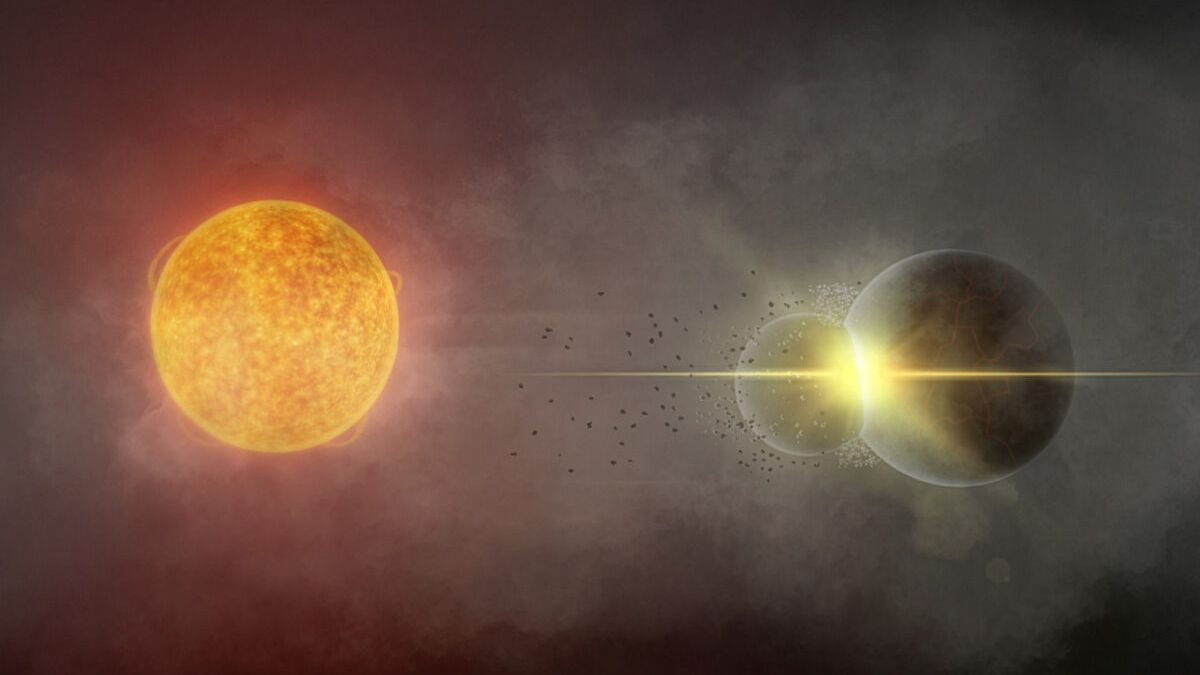
An alternative explanation proposed is that the iron bar could be debris from a torn-apart planet. Yet, this scenario also presents challenges, as the debris would not likely form a neat, straight bar and would contain other elements that have not been observed.
As Wesson pointed out, the three-dimensional shape of the iron cloud remains uncertain. It may extend beyond the current line of sight, complicating the understanding of its structure.
“This is just the beginning of a big, squishy question mark with no easy answers,” Wesson stated. He expressed hope that further observations of other nebulae will reveal more examples of similar iron clouds, which could ultimately help astronomers understand their origins.
The findings have been published in the Monthly Notices of the Royal Astronomical Society, marking a significant step in unraveling the complexities of the cosmos.