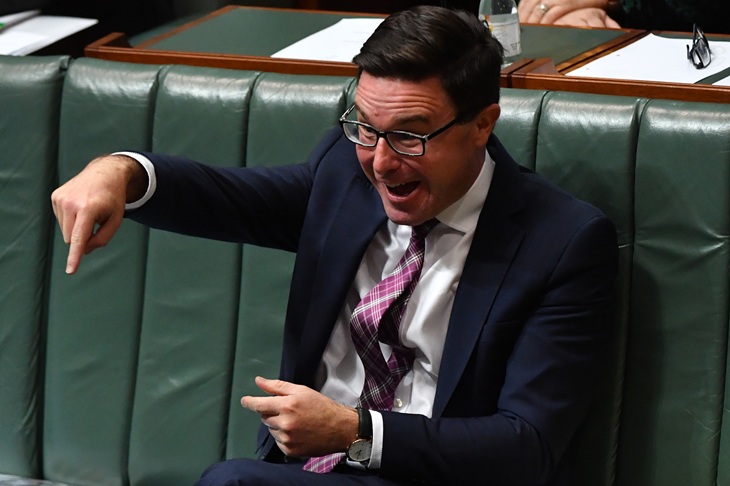
CANBERRA, AUSTRALIA - JUNE 22: Minister for Agriculture David Littleproud reacts during Question Time in the House of Representatives at Parliament House on June 22, 2021 in Canberra, Australia. Barnaby Joyce has been sworn in as Deputy Prime Minister by Governor-General Hurley today after Joyce deposed former Nationals leader Michael McCormack during a spill called yesterday by Senator Matt Canavan. Joyce is re-elected as leader of The Nationals in a leadership contest with at least 12 votes in the 21-member partyroom. (Photo by Sam Mooy/Getty Images)
The viability of the Coalition between the National Party and the Liberal Party is facing renewed scrutiny as financial pressures mount. As the National Party grapples with the potential loss of government salaries and associated benefits, there are indications that it may seek to restore its alliance with the Liberal Party. This situation mirrors previous instances when the National Party shifted its stance in response to economic realities.
Recent developments suggest that the National Party’s leadership is already evaluating its position within the Coalition. The typical pattern has emerged, characterized by public displays of defiance followed by private negotiations. This cycle raises questions about the integrity and motivations of the National Party’s current leadership.
While there are exceptions, such as Senator Matt Canavan, they do not represent the broader sentiments of the party. The question arises: Why does the Liberal Party continue to regard the Nationals as an equal partner in this political arrangement? A more pragmatic approach, similar to how the Australian Labor Party engages with the Greens, could be considered.
Rather than maintaining a formal coalition, the Liberal Party might benefit from treating the National Party as a transactional ally, engaging them only when necessary for votes and preferences. This would effectively end a relationship described as a “protection racket.” The Nationals often claim electoral success, but this raises another point: could this success be attributed to a lack of competition from the Liberal Party in many regions?
Historical patterns indicate that Liberals have successfully contested seats held by Nationals, particularly when incumbents retire. The current composition of the National Party is starkly different from its past iterations. Iconic figures like John Anderson and Tim Fischer have been succeeded by leaders such as Barnaby Joyce and David Littleproud, whose focus appears to be more on political theatrics rather than substantive governance.
Critics argue that the current leadership is more interested in maintaining relevance and exerting influence than in fulfilling their responsibilities to govern effectively. The question remains: who benefits from the Coalition’s continuation? The National Party enjoys increased relevance and influence, while the Liberal Party seems to bear the collateral damage of the National Party’s more sensationalist politics.
The strain on the Liberal Party’s brand is evident, as repeated National Party crises and public disputes contribute to a perception of disunity and ineffectiveness. What value does the National Party bring to the Coalition beyond demands for increased funding for their constituencies?
As the Liberal Party reassesses its position, it may be time to reconsider the Coalition not as a historical obligation but as a strategic decision based on current realities. The costs of maintaining this alliance are becoming increasingly apparent, while the benefits appear diminished. A thorough evaluation of this partnership’s utility could lead to a recalibrated approach to Australian politics.