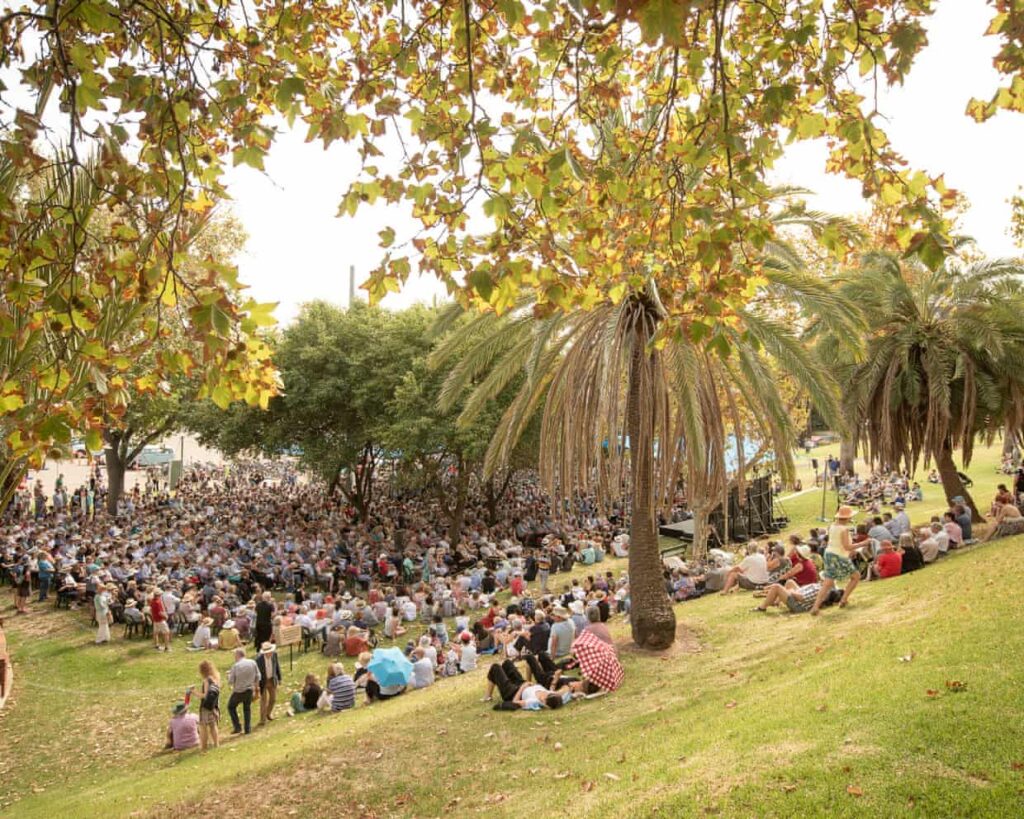
A group of authors, publishers, and booksellers in Adelaide have swiftly organised a new literary festival called Constellations, following the recent cancellation of Adelaide Writers’ Week (AWW). Scheduled to take place from 28 February to 5 March 2024, this festival, informally dubbed “Not Writers’ Week,” aims to fill the gap left by AWW, which was cancelled amid controversy surrounding the disinvitation of Randa Abdel-Fattah, a Palestinian-Australian author.
The decision to cancel AWW was prompted by the festival board’s contentious choice to withdraw Abdel-Fattah’s invitation following her comments about Israel and Gaza, which were deemed provocative after a recent terror attack in Bondi. The backlash from the literary community was swift, with over 100 authors, including Jennifer Mills, chair of the Australian Society of Authors, withdrawing from the event in protest.
Mills expressed her pride in the community’s response, stating, “It’s gone from a big disappointment and heartbreak to a really strong community response very quickly.” She emphasised that literary festivals provide crucial financial support and networking opportunities for writers, which will be particularly important during this absence of AWW, an event that has been a staple since 1960.
Community-Driven Effort
The Constellations festival represents a collective effort among writers and publishers, with support from the not-for-profit organisation Writers SA. It will feature dozens of free events and is designed as an “umbrella festival,” relying on community ideas, donations, and volunteers to facilitate activities. Mills noted that the festival is a significant community initiative, stating, “It’s a massive community effort to put something like this together, and it’s taking a lot of people and energy, but the spirits are very strong.”
While the main events will be announced shortly, organisers are inviting local bookshops, libraries, schools, and community venues across Adelaide and South Australia to contribute their own literary events as part of the festival. Participants can independently organise events or submit proposals, allowing the festival to assist with author engagements and logistics. Volunteers are also being recruited to help with various tasks, including setting up venues and ushering.
Mills remarked, “A lot of people are already putting their hands up to volunteer, which is really fantastic to see.” A small committee will curate the festival, ensuring that every event is free to attend or by donation, with profits directed towards compensating writers for their participation.
Financial Support for Writers
The financial implications of literary festivals are significant for authors, many of whom earn an average of $18,200 annually. Mills highlighted the importance of appearance fees and book sales, noting, “We’re not in this for the money. Appearance fees are very meaningful to writers, as are book sales, as are the professional connections that you make.”
On 19 January 2024, a special meeting of the Adelaide City Council was convened, where councillors approved the use of council-owned venues for Constellations events. However, a proposal for up to $250,000 in funding was rejected, a request that Mills clarified was not sought by the festival. “We’re not receiving or asking for any funding from any level of government,” she stated.
The cancellation of AWW and the subsequent turmoil stemmed from the board’s decision to disinvite Abdel-Fattah, which ignited widespread criticism. This led to a mass withdrawal of authors and threats of boycott from performers, including the festival’s opening act, Pulp. Following Louise Adler’s resignation as AWW director in protest, the entire festival board was replaced, and the new board promptly apologised to Abdel-Fattah, inviting her to participate in AWW in 2027.
Mills explained that the guidelines for Constellations aim to foster an inclusive and respectful environment. Participants are encouraged to create “a safe space that celebrates writers and reading,” promoting open discourse while rejecting harmful ideologies. As for the future of literary festivals in Adelaide, Mills expressed hope that AWW would return stronger next year, stating, “We’re not trying to replace it, or shut it down. It’s a lot of work for a lot of people at the moment, but I think it’s going to be a really positive thing for the city to see.”