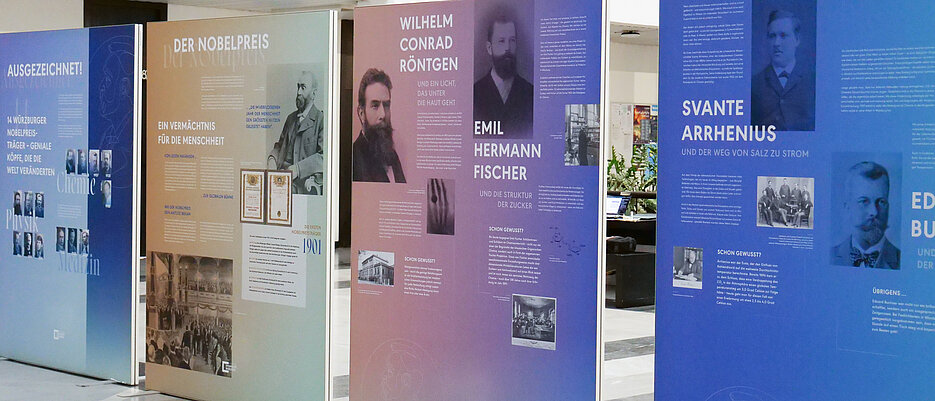
A new exhibition in Würzburg showcases the achievements of the university’s Nobel Prize winners, commemorating a rich history of scientific excellence. Titled “Excellent! 14 Würzburg Nobel Prize Winners – Ingenious Minds that Changed the World,” the exhibition highlights the contributions of 14 laureates affiliated with the University of Würzburg (JMU), starting with the first recipient, Wilhelm C. Röntgen, who was awarded the Nobel Prize 125 years ago.
The exhibition, opening in 2026, aims to present the groundbreaking research conducted by these Nobel laureates, which has had lasting impacts across various fields, including medicine, technology, and the natural sciences. University President Paul Pauli emphasized the significance of this initiative, stating, “With this exhibition, we are honouring an extraordinary success story. It is representative of the excellent research at our university, of scientific curiosity and of the courage to try new approaches.”
Exhibition Details and Highlights
The exhibition features twelve informative panels that simplify complex research findings, making them accessible to a broad audience. In addition to Röntgen, it also spotlights notable figures such as Svante Arrhenius, a renowned chemist who laid essential groundwork for modern electrochemistry, and Harald zur Hausen, whose work on human papillomaviruses (HPV) directly contributed to the development of a vaccine for cervical cancer.
Another important aspect of the exhibition is its exploration of the history of the Nobel Prize and its implications for research at JMU, both past and present. It also addresses the underrepresentation of women among the university’s laureates, prompting discussions about the barriers faced by female researchers.
The exhibition will be accessible free of charge throughout various locations in Würzburg during 2026. It will commence in January and February in the atrium of the Neue Universität at Sanderring 2, followed by displays at the Mozartareal from March 16 to April 10, the Central Lecture Hall from April 13 to May 7, and the Rudolf Virchow Centre from June 15 to June 26. Additional venues will be announced later on the University of Würzburg’s website.
Looking Ahead: A Commitment to Excellence
The exhibition not only reflects on the university’s historical achievements but also looks toward its future ambitions. JMU is currently competing in the Excellence Strategy, a rigorous scientific initiative in Germany aimed at securing funding as a “University of Excellence.” This competition is expected to provide millions in support for cutting-edge research over the coming years.
“I am delighted that the Nobel Laureate Exhibition marks the start of this important year,” Pauli remarked. “It shows that excellent research has a long tradition in Würzburg and is also the basis for the scientific work of the future.”
Würzburg’s Head Mayor Martin Heilig echoed this sentiment, expressing hope that the exhibition may inspire future generations of researchers. “May this exhibition inspire many people. And who knows: perhaps someone is studying or researching at this university who will soon be honoured as the 15th Nobel Prize winner from Würzburg?”
In November 2025, JMU submitted its application for funding as a University of Excellence following a commitment from the German Research Foundation for two research alliances in quantum physics and nucleic acid research. The next significant step in this competitive process will involve an on-site visit by an international panel of experts in mid-April, determining the university’s future as a leader in scientific research.