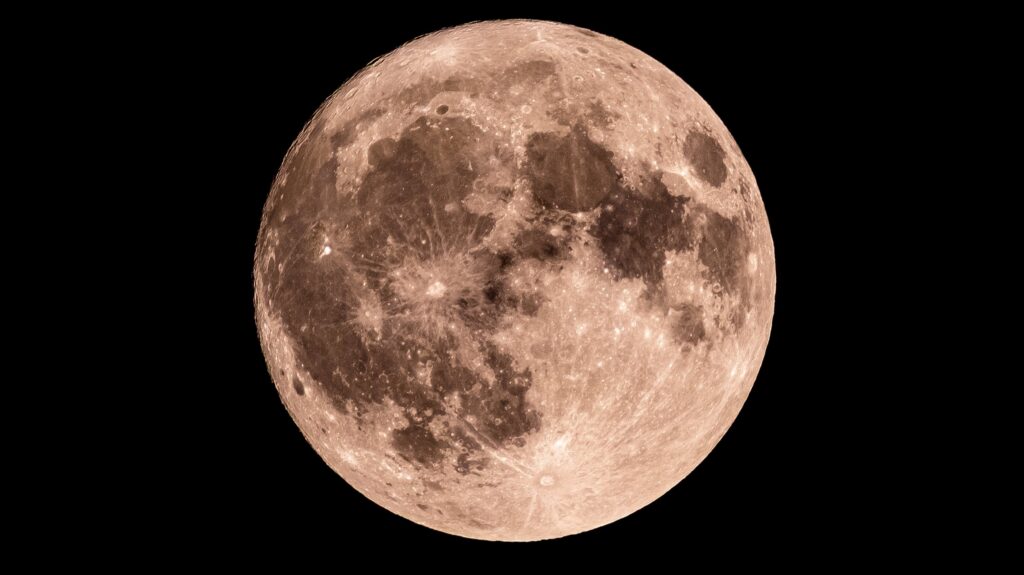
The night sky offers a spectacular view tonight as the Moon reaches its Full Moon phase on February 1. Known as the Snow Moon, this lunar event provides an opportunity for stargazers and casual observers alike to explore the surface features of Earth’s natural satellite. According to NASA’s Daily Moon Guide, the Moon will be fully illuminated, making it an ideal time for observation.
With the Moon shining brightly, several prominent features can be spotted without any visual aids. Observers may notice the Kepler Crater, the Aristarchus Plateau, and the Mare Serenitatis with the naked eye. For those equipped with binoculars, the Posidonius Crater and the Apennine Mountains become visible, revealing more details of the lunar landscape. Utilizing a telescope allows enthusiasts to view additional features such as the Linne Crater, Rima Ariadaeus, and the Fra Mauro Highlands.
Understanding Moon Phases
The lunar cycle, which lasts approximately 29.5 days, consists of eight distinct phases. Each phase occurs as the Moon orbits Earth, with the same side always facing our planet. The varying illumination we observe is due to the angle of sunlight reaching the Moon.
The eight lunar phases are as follows:
1. **New Moon**: The Moon is positioned between Earth and the Sun, rendering it invisible to observers.
2. **Waxing Crescent**: A small sliver of light appears on the right side.
3. **First Quarter**: Half of the Moon is illuminated on the right side, resembling a half-Moon.
4. **Waxing Gibbous**: More than half is lit, yet it is not fully illuminated.
5. **Full Moon**: The entire face of the Moon is visible and bright.
6. **Waning Gibbous**: The illuminated portion begins to decrease on the right side.
7. **Third Quarter (or Last Quarter)**: Another half-Moon phase, but with the left side illuminated.
8. **Waning Crescent**: A thin sliver of light remains on the left side before the Moon returns to darkness.
The next Full Moon is set to occur on March 3, providing another chance for lunar enthusiasts to explore the night sky. With its captivating glow and distinct features, tonight’s Snow Moon is a reminder of the beauty and wonder of our universe.