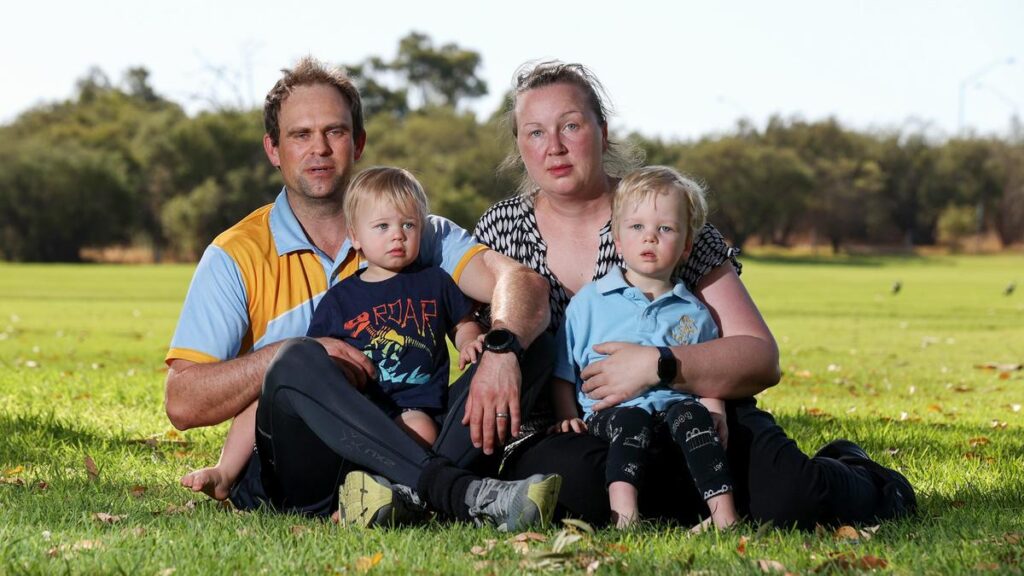
The Reserve Bank of Australia (RBA) raised the official cash interest rate to 3.85 percent today, intensifying financial pressures on households already grappling with increasing costs for groceries, rent, and overall living expenses. This decision marks yet another challenge for families like that of Jason Hunt, a stay-at-home father navigating the complexities of family finances while considering long-term implications for his children and their future.
As the Hunts prepare to sell an investment property, Mr. Hunt emphasizes the need for flexibility in their financial planning. “We’re selling to give us flexibility,” he stated, highlighting the balance between managing family needs and market uncertainties. His wife, Deborah Hunt, a chartered accountant, is also feeling the weight of rising interest rates, which contribute to concerns about buyer demand in a fluctuating real estate market.
Mr. Hunt’s role as a landlord adds another layer of complexity to their situation. He expresses deep concerns for his long-term tenants, who are also feeling the impact of increased rates. “They’ve been good to us, and we want to be good to them,” he explained. “But higher rates make that harder. You’re trying to absorb costs without passing everything on.” This sentiment reflects a broader anxiety among landlords as they face the dual pressures of maintaining tenant relationships while managing financial sustainability.
The implications of the RBA’s decision extend beyond mortgage repayments. Mr. Hunt notes how financial strain influences everyday choices, stating, “You go to buy fresh fruit for your kids and realise it’s too expensive, so you buy frozen instead.” These adjustments may seem minor, yet they signify a shift in family dynamics as households adapt to economic pressures.
While the Hunts consider themselves fortunate compared to more recent home buyers, the prospect of additional rate hikes looms large. Mr. Hunt acknowledges that the potential for up to four rate increases this year could significantly affect their ability to ensure a stable future for their children. “We’ve lived through higher rates before,” he remarked. “But if they climb too far, it becomes impossible and not just for investors, but for families like ours trying to give their kids a fair start.”
The RBA’s decision to raise interest rates reflects a broader trend affecting many Australian households. Rising costs of living coupled with increasing interest rates create a challenging environment for families striving to maintain financial stability. As these dynamics unfold, the long-term impact on the rental market, family budgets, and overall economic health will become increasingly evident.