




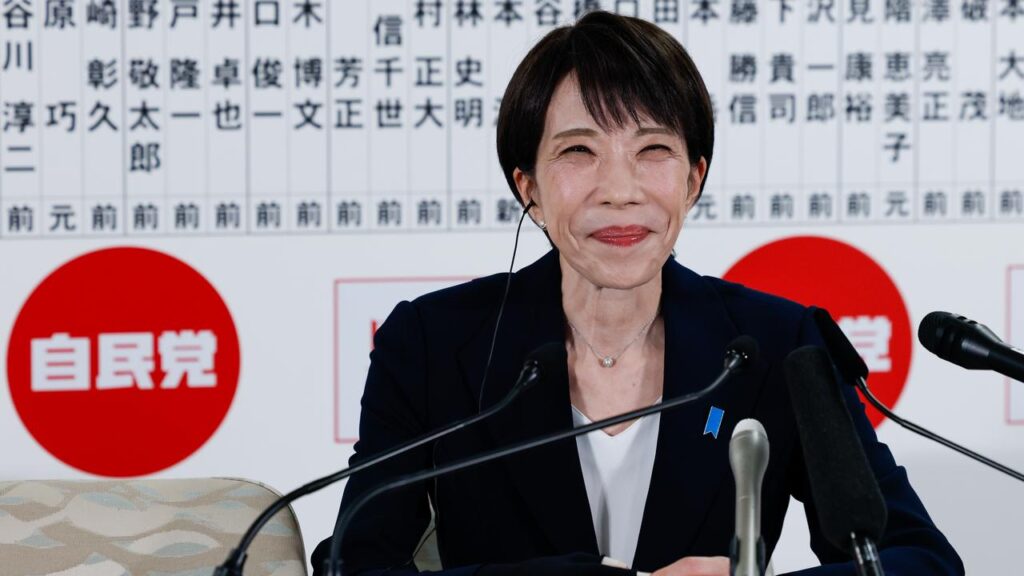
UPDATE: Japanese Prime Minister Sanae Takaichi has achieved a stunning victory in the recent election, positioning her coalition for a commanding supermajority in the National Diet. Takaichi’s Liberal Democratic Party (LDP) is projected to capture as many as 328 of the 465 seats in the lower house, solidifying her power and paving the way for controversial tax cuts and increased military spending aimed at countering China.
Polls closed just hours ago, and results show the LDP has already surpassed the 233 seats required for a majority. With coalition partner Japan Innovation Party (Ishin), Takaichi is set to push her legislative agenda forward with unprecedented support, according to projections by public broadcaster NHK.
“This election involved major policy shifts – particularly a major shift in economic and fiscal policy, as well as strengthening security policy,” Takaichi stated during a live television interview as results emerged. She emphasized the need to tackle these challenges head-on, framing the election as a referendum on her mandate.
Takaichi, the first female Prime Minister of Japan, called for this unusual winter snap election to leverage her high approval ratings since taking office in October 2022. Voters have responded positively to her direct approach and work ethic, although her nationalistic policies have strained relations with China. Her proposed tax cuts have also triggered concern among financial markets.
In a bold move, Takaichi pledged to resign if her coalition failed to secure an absolute majority, underscoring the high stakes of this election. Meanwhile, the new opposition alliance, which includes the Komeito party and the progressive Constitutional Democratic Party of Japan, is projected to suffer significant losses, possibly halving their combined seats from 167 pre-election to just over 80.
Voter turnout was impacted by severe winter weather, with record snowfall disrupting traffic and forcing some polling stations in Niigata Prefecture to close early. Despite the challenging conditions, residents turned out to cast their votes. One voter, Kazushige Cho, a 54-year-old teacher, braved the cold to support Takaichi, stating, “It feels like she’s creating a sense of direction – like the whole country pulling together and moving forward.”
Takaichi’s commitment to suspend the 8 percent sales tax on food to alleviate rising prices for households has raised eyebrows among investors, who worry about financing the plan in a nation with the highest debt burden among advanced economies. In response to these concerns, Takaichi assured that she would accelerate discussions on the tax cut while maintaining fiscal sustainability.
Chris Scicluna, head of research at Daiwa Capital Markets Europe, cautioned, “Her plans for the cut in the consumption tax leave open big question marks about funding and how she’s going to go about making the arithmetic add up.”
The head of Japan’s leading business lobby, Keidanren, welcomed Takaichi’s victory, signaling a restoration of political stability at a critical juncture for Japan’s economy. “Japan’s economy is now at a critical juncture for achieving sustainable and strong growth,” said Yoshinobu Tsutsui.
As the dust settles from this decisive election, all eyes will be on Takaichi as she prepares to implement her ambitious agenda, respond to public expectations, and navigate the challenges posed by both domestic and international pressures. Stay tuned for further developments as this story unfolds.
