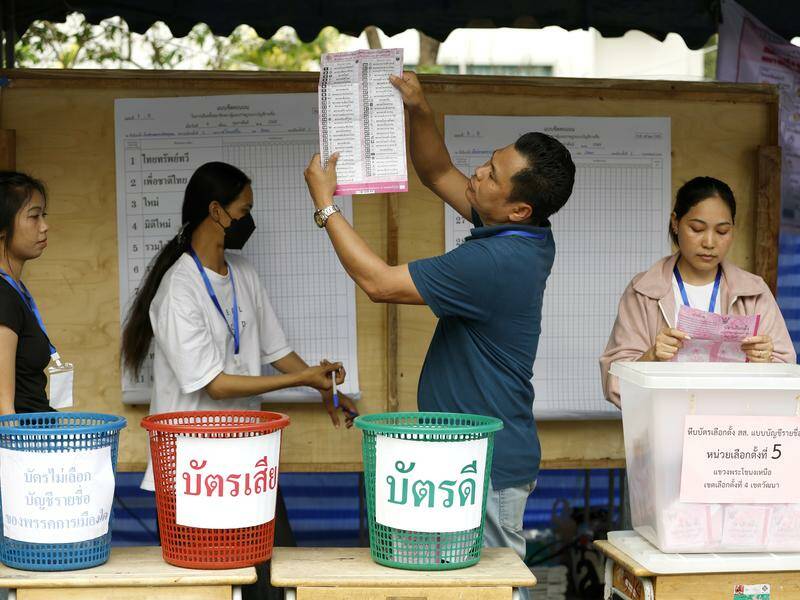
Vote counting is currently underway in Thailand’s early general election, which has emerged as a contest among three major parties, each presenting distinct political visions. With over 53 million registered voters participating, the election reflects a backdrop of slow economic growth and an increase in nationalist sentiments. While more than 50 parties have contested the polls, only the People’s Party, Bhumjaithai, and Pheu Thai are poised to secure substantial support based on their national organization and popularity.
Political Landscape and Key Players
A simple majority of the 500 elected lawmakers will determine the next prime minister. Current local polls indicate that no single party is likely to achieve a majority, necessitating the formation of a coalition government. The People’s Party, led by Natthaphong Ruengpanyawut, is projected to win a plurality. However, its reformist agenda may not resonate with its leading rivals, potentially leading to a coalition that excludes it from power.
The People’s Party is the successor to the Move Forward Party, which won the most House seats in 2023 but was prevented from forming a government by conservative lawmakers, ultimately leading to its dissolution. Natthaphong’s party continues to advocate for sweeping reforms in the military, police, and judiciary, appealing particularly to youth and urban voters. Nonetheless, legal constraints have compelled the party to downplay calls for reform concerning laws that impose severe penalties for criticizing the monarchy, while placing greater emphasis on economic issues.
As conditions have changed since the last election, the party’s position as the alternative to nearly nine years of military-led government is less effective. Additionally, the surge of patriotism following border clashes with Cambodia in 2025 may pose a challenge for the party, as noted by Napon Jatusripitak, director of the Center for Politics and Geopolitics at the Bangkok-based think tank, Thailand Future.
Competitors in the Race
The Bhumjaithai Party, led by incumbent Prime Minister Anutin Charnvirakul, is viewed as the primary defender of the royalist-military establishment. Anutin, who has been prime minister since September, previously served in the cabinet of former Prime Minister Paetongtarn Shinawatra. He dissolved parliament in December to facilitate the new election amid the threat of a no-confidence vote. Following recent border skirmishes with Cambodia, Anutin has repositioned himself as a wartime leader, a shift that has boosted his popularity following earlier declines due to floods and financial scandals. His campaign emphasizes national security and economic stimulus.
Additionally, the Pheu Thai Party serves as the latest political vehicle for billionaire former Prime Minister Thaksin Shinawatra. Historically, Thaksin-backed parties have made several electoral comebacks only to be ousted by conservative courts and state institutions. In the 2023 election, Pheu Thai moderated its political stance sufficiently to be perceived as an acceptable alternative to the progressive Move Forward Party, despite facing a judiciary that has previously acted against it. The party now promotes economic recovery and populist policies, including cash handouts, nominating Thaksin’s nephew, Yodchanan Wongsawat, as its candidate for prime minister.
As part of the election, voters were also asked to participate in a referendum regarding the potential replacement of Thailand’s 2017 military-drafted constitution. The issue at stake is not a specific proposed draft but rather whether to grant parliament the authority to initiate a formal drafting process. Pro-democracy advocates assert that a new constitution is vital for diminishing the influence of unelected institutions, such as the military and judiciary, while conservatives caution against the potential for instability.
The outcome of this election will significantly shape Thailand’s political landscape for years to come, revealing the electorate’s stance on the competing ideologies of reform, populism, and traditional power structures.