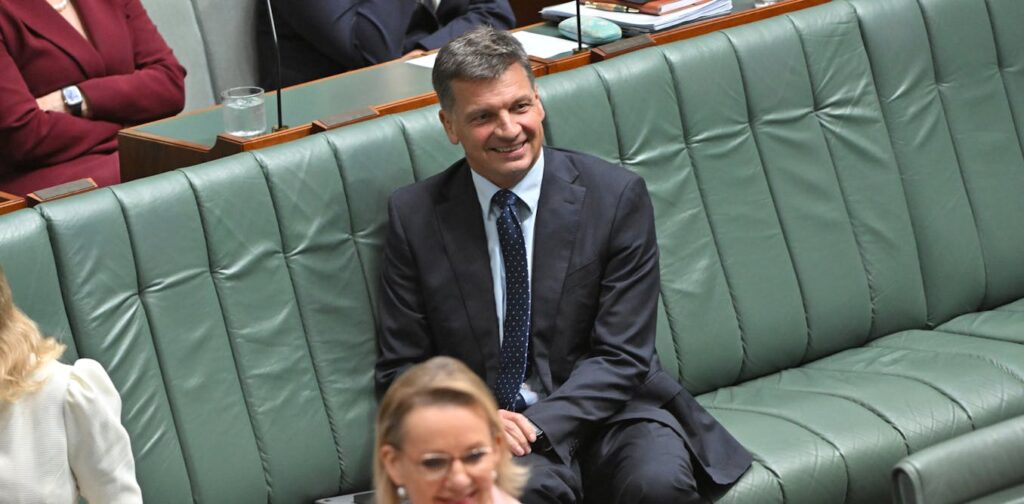
The Australian Liberal Party is experiencing a leadership crisis following a troubling Newspoll that revealed the party’s primary vote has plummeted to just 15%, with the Nationals at 3%. As dissatisfaction with current leader Sussan Ley reaches a new low, calls for change are growing louder within the party ranks. The Albanese government, during question time on Monday, signaled an interest in Angus Taylor as a potential leader, while supporters of Taylor begin strategizing a challenge against Ley.
Liberal backbencher Jane Hume, who previously supported Taylor, expressed her alarm over the party’s dire situation. “This is disastrous for the Liberal Party. It’s disastrous for the Coalition,” she remarked. Hume emphasized that without significant changes, the party risks losing all representation in key states like Victoria and New South Wales. She noted that the party’s primary vote has nearly halved since the last election, making it imperative for the party to regain favor with voters ahead of the next election, anticipated in about 18 months.
Hume’s urgent message to party leaders indicates a critical moment for the Liberals: “If you have a rabbit in your hat, it’s time to reach for that bunny, because we cannot continue this way.” Despite the gravity of the situation, prospects for a leadership spill appear complicated. Ley has remained active in the media, conducting several interviews, even as the pressure mounts from within her party.
Supporters of Taylor believe they may have enough backing to challenge Ley’s leadership soon. Victorian senator Sarah Henderson, a Taylor supporter, stated that the leadership question needs resolution “this week, preferably.” However, the logistics of organizing a meeting are fraught with difficulty. A standard Liberal party meeting is scheduled for Tuesday morning, but due to Senate estimates week, many Liberal senators will be absent, which could hinder any potential spill motion.
The Taylor camp is advocating for a special meeting on Friday, but Ley’s ability to facilitate this is uncertain. Concerns have been raised that Ley might postpone discussions until the parliament resumes in early March, which could further jeopardize her leadership position.
Another major consideration for the potential new leadership team is the selection of a deputy. The deputy position is critical for maintaining party unity and strategy, particularly in opposition. Current deputy Ted O’Brien is expected to seek re-election, but there is discussion about the need for female representation in the leadership team. Potential female candidates include Zoe McKenzie from Victoria, Melissa McIntosh from New South Wales, and Angie Bell from Queensland, although none have emerged as standout choices.
The dynamics of leadership within the Liberal Party are pivotal not only for the party’s future but also for its ability to effectively challenge the Albanese government. As the pressure mounts, the need for decisive action has never been clearer. With the next election looming, the decisions made in the coming days could determine the party’s survival in the competitive political landscape of Australia.
This article is written by Michelle Grattan, who has no affiliations that could benefit from the content discussed herein.