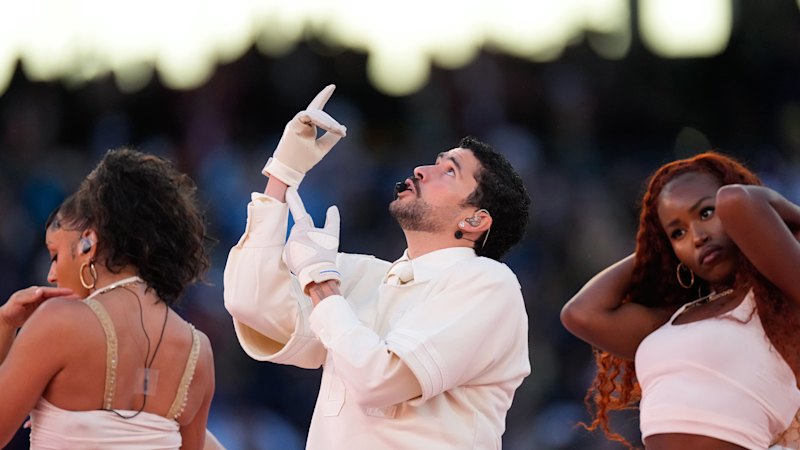
Bad Bunny’s performance during the Super Bowl halftime show on February 12, 2023, celebrated Latino culture and conveyed a powerful message of unity. The Puerto Rican artist captivated audiences with an energetic display that resonated with themes of inclusivity. In stark contrast, former President Donald Trump criticized the show, labeling it as “absolutely terrible” on his social media platform, Truth Social.
Trump’s remarks were emphatic: “It makes no sense, is an affront to the greatness of America, and doesn’t represent our standards of success, creativity, or excellence.” He further expressed disdain for the performance, calling it “a slap in the face” to the nation. This reaction was not entirely unexpected, as Bad Bunny has been vocal in his opposition to Trump’s policies, particularly those affecting Latino communities.
The choice of Bad Bunny as a headliner for the Super Bowl was strategic for the NFL, aimed at expanding its reach into both international markets and the Latino demographic. The artist’s involvement came after he prominently highlighted issues such as the need to end Immigration and Customs Enforcement (ICE) raids on Latino communities. During the halftime show, he made a notable statement by naming every country in South, Central, and North America, culminating in a visual message of solidarity by holding a football inscribed with “Together, we are America.”
Political Reactions and Cultural Divide
While Bad Bunny’s performance was meant to be entertaining, it also served as a subtle political commentary. The Levi’s Stadium scoreboard echoed the sentiment from his Grammy performance, stating, “The only thing more powerful than hate is love.” This message, while relatively innocuous, contrasted sharply with Trump’s history of promoting division.
Trump’s comments focused on language, claiming, “nobody understands a word this guy is saying,” referring to Bad Bunny’s use of Spanish. This overlooks the fact that approximately 18% of U.S. citizens speak Spanish, reflecting the artist’s widespread appeal. Trump’s disapproval extended to the performance itself, as he criticized the “disgusting dancing” that accompanied the show.
On the other side of the spectrum, Trump supporters organized a counter-event featuring conservative performers such as Brantley Gilbert and Kid Rock. This juxtaposition highlights the growing divide within American society, where even entertainment choices are influenced by political affiliations.
Wider Implications and Athlete Sentiments
The backlash from Trump’s supporters has extended beyond the Super Bowl, with athletes at the recent Winter Olympics expressing mixed feelings about representing the United States. Freestyle skier Hunter Hess articulated his concerns, stating, “Just because I’m wearing the flag doesn’t mean I represent everything that’s going on in the US.” These sentiments resonate with many who feel disillusioned by current events.
Lindsey Vonn, a three-time Olympic medalist, echoed similar thoughts, emphasizing a connection to her roots in Minnesota, a state that has seen significant protests against police violence. These athletes’ comments have drawn criticism from some who label them as unpatriotic.
The cultural landscape is shifting, and the divide between those in power and artists who speak out is becoming more pronounced. Bad Bunny’s influence as a pop star has the potential to shape public opinion, reflecting a broader unease with the current political climate. As the dialogue continues, the contrasting reactions to his Super Bowl performance signify a pivotal moment in how entertainment intersects with politics in the United States.