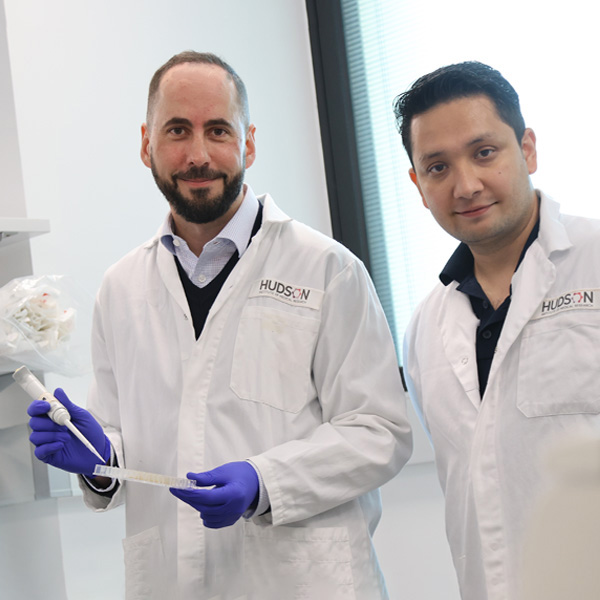
A groundbreaking discovery by an international team of researchers has revealed that extremely short RNA fragments possess significant anti-inflammatory properties, offering new potential for treating autoimmune diseases. Led by Professor Michael Gantier at the Hudson Institute of Medical Research in Melbourne, the findings were published in Nature Immunology in March 2024.
These tiny RNA molecules, which can be as short as 1-3 bases, differ from previously known microRNAs and small interfering RNAs (siRNAs) that typically contain around 20 bases. Professor Gantier emphasized their importance, stating, “This is the shortest class of RNAs ever reported to have a biological function, around six times shorter than Nobel Prize-winning microRNAs.”
Through systematic screening of hundreds of synthetic RNA molecules, the researchers discovered that these fragments can bind to specific sensors within the immune system, effectively blocking their activation. This mechanism is crucial for controlling dangerous inflammation, particularly in autoimmune conditions such as lupus, psoriasis, and rheumatoid arthritis.
Uncovering the Molecular Mechanism
The research team, which included experts from Australia, Japan, the UK, and the USA, not only identified the binding of RNA fragments to immune receptors but also elucidated how this interaction occurs at the molecular level. Notably, they found that the binding happens in a newly identified pocket of one of the receptors, which subsequently blocks its activity.
In a pivotal discovery, the team linked a rare mutation in this pocket to systemic autoimmunity, specifically lupus. Published in a previous study in Nature in 2022, this mutation prevents the binding of the short RNA fragments, leading to uncontrolled receptor activation. This suggests that autoimmunity in patients with this mutation arises from the receptor’s inability to be inhibited by the protective RNA fragments.
“Our discovery shows that selected RNA fragments of only 1-3 bases help protect our bodies against misfiring of the immune system which mistakenly attacks the body, leading to autoimmunity,” Professor Gantier explained. He added that these findings illustrate a previously unknown mechanism of how chronic inflammation is initiated and maintained.
Therapeutic Implications
The implications of this research extend beyond basic science, presenting direct therapeutic applications for managing autoimmune diseases. The team aims to manufacture synthetic versions of these tiny RNA fragments to mimic their natural counterparts, thus preventing the aberrant activation of immune receptors.
Currently, the research focuses on autoimmune diseases like lupus, particularly its skin manifestation known as cutaneous lupus. Professor Gantier expressed confidence in their approach, stating, “We have reason to believe that our method using short synthetic RNAs could work for many other skin diseases, including psoriasis.”
The team is prioritizing skin applications due to the ease of using 3-base RNA fragments in this tissue. However, they are also collaborating with other companies to develop technologies that will target additional tissues where autoimmunity is prevalent.
As this research continues to unfold, it holds promise for transforming the landscape of autoimmune disease treatment, underscoring the importance of these tiny RNA fragments in maintaining health and preventing disease.