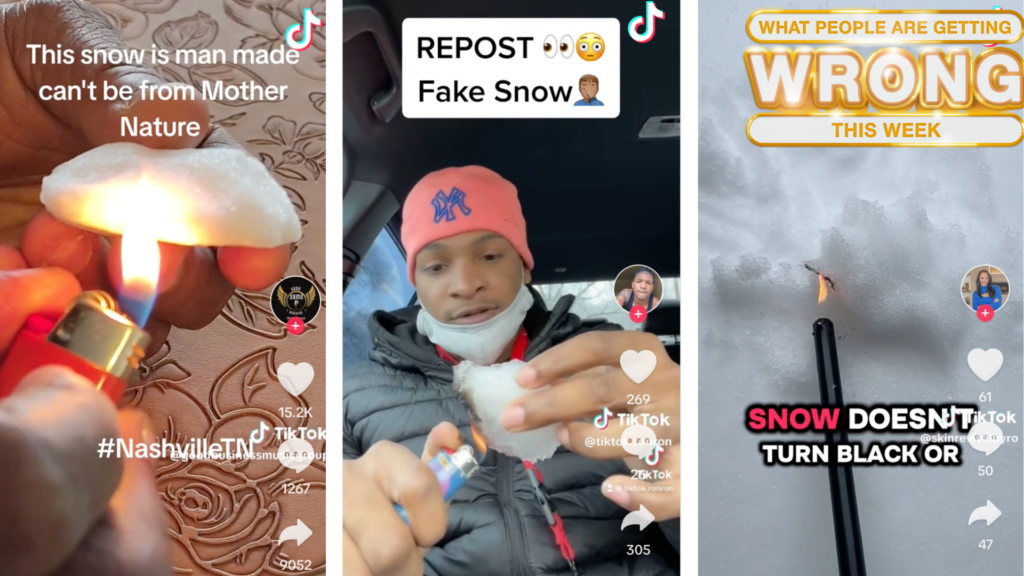
A conspiracy theory suggesting that snow is not real has gained traction in Memphis, igniting a debate among city officials and residents. City council members Pearl Eva Walker and Yolanda Cooper Sutton are at the forefront of this discussion, with Sutton recently sharing a video on her Facebook page to illustrate her claims about artificial snow.
The video, which has circulated widely online, shows Sutton’s husband attempting to ignite snow with a lighter, asserting that the snow does not melt as expected. Sutton suggests that this indicates the snow is not natural but rather a manufactured substance. Her post has sparked conversations among residents, prompting questions about the authenticity of weather phenomena.
While this theory may seem unusual, it reflects a larger trend where individuals question the validity of scientific explanations. Conspiracy theories often thrive in times of uncertainty, and the ongoing effects of climate change and extreme weather may amplify these doubts. As such, it is crucial to address the science behind snowfall to clarify misunderstandings.
Understanding the Science of Snow
Snow forms when water vapor in the atmosphere cools and crystallizes, creating ice particles that cluster together. This natural process is well-documented and has been studied extensively by meteorologists. According to the National Weather Service, the characteristics of snow can vary greatly based on temperature, humidity, and atmospheric pressure.
The notion that snow could be artificial often arises from misconceptions about its properties. For example, some people might notice that certain snow appears granular or compact, leading to claims that it has been manufactured. However, these variations can easily be explained by environmental factors.
Impact of Misinformation
The spread of misinformation can have real-world consequences, from influencing public perception to impacting policies related to climate and environmental issues. Individuals like Walker and Sutton, who hold public office, have a significant platform that can sway community beliefs. Their assertions about fake snow could lead to a broader skepticism toward scientific institutions and practices, potentially hindering progress on critical issues like climate change.
In addressing these claims, experts emphasize the importance of scientific literacy. Understanding the basics of meteorology and the natural processes that govern weather can help dispel myths. Dr. Jennifer Francis, a senior scientist at the Woodwell Climate Research Center, states, “It is essential to rely on credible scientific evidence and educate the public about the realities of weather phenomena.”
As the conversation around snow authenticity continues, it becomes clear that a more significant dialogue about scientific understanding and trust in expert information is needed. Community leaders and educators must work together to foster a more informed public, capable of distinguishing between fact and fiction in weather-related discussions.
The ongoing debate in Memphis showcases the complex interplay between science, perception, and social media. As more individuals engage with these discussions, the potential for misinformation to take root remains a pressing concern. Authorities must address these misconceptions openly and honestly to maintain public trust in scientific processes and findings.