




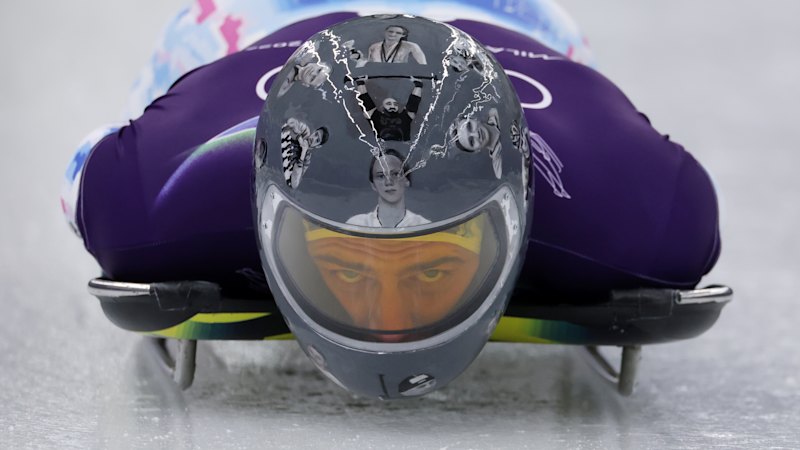
BREAKING NEWS: Ukrainian athlete Vladyslav Heraskevych has been disqualified from the skeleton competition at the Winter Games, just moments before the event was set to begin. This shocking decision has triggered widespread outrage as Heraskevych wore a helmet honoring over two dozen Ukrainian athletes killed in the ongoing war.
The incident unfolded on October 26, 2023, when Heraskevych was informed he would be stripped of his accreditation at the sliding venue in a dramatic turn of events, despite a personal plea from a visibly emotional IOC President Kirsty Coventry. Initially banned from competition, Heraskevych’s credentials were eventually allowed to remain active after Coventry urged the IOC’s Disciplinary Commission to reconsider.
“I am disqualified from the race. I will not get my Olympic moment,” Heraskevych stated, expressing deep disappointment. The IOC cited a breach of rules designed to maintain a politically neutral environment in sports. “They [Ukrainian athletes] were killed, but their voice is so loud that the IOC is afraid of them,” he added.
Heraskevych’s team plans to challenge the IOC’s decision at the Court of Arbitration for Sport. Coventry met with the athlete just before the decision and fought back tears while discussing her inability to resolve the situation. “No one, especially me, is disagreeing with the messaging. It’s a powerful message, it’s a message of remembrance,” she stated.
Despite suggestions from the IOC for compromises—such as wearing a black armband or showcasing the helmet before and after the race—no solution was reached. Coventry lamented, “It’s been an emotional morning,” emphasizing the need for maintaining a safe environment for all athletes.
This isn’t the first political sanction by the IOC; a notable example includes the expulsion of U.S. sprinters Tommie Smith and John Carlos for their protest during the 1968 Mexico City Olympics. IOC spokesperson Mark Adams defended the regulations, stating, “If we allow one athlete this expression… it will lead to chaos.”
In a powerful statement, Ukrainian President Volodymyr Zelensky commented, “Sport shouldn’t mean amnesia, and the Olympic movement should help stop wars.” He noted that approximately 660 Ukrainian athletes and coaches have lost their lives due to the conflict. Ukraine’s Youth and Sports Minister Matvii Bidnyi vowed to rectify the situation through legal channels, asserting, “Vladyslav, you acted with dignity. This story will definitely continue.”
The emotional fallout from the decision was palpable, with Ukrainian team members visibly distressed. Heraskevych’s father and coach, Mikhailo Geraskevych, was seen in despair, sitting on a snowbank, face buried in hands. “Even though the IOC wants to betray the memory of these athletes, I will not betray them,” he declared.
American skeleton athlete Daniel Barefoot praised Heraskevych’s courage, stating, “He stands by whatever he believes in… he’s telling the truth.” His sentiments reflect the broader sentiment among athletes regarding the politicization of sport.
As the situation unfolds, the international sports community watches closely. The skeleton event commenced shortly after the disqualification, with the debate over politics in sports intensifying. The IOC continues to face scrutiny for its handling of such matters, especially as athletes from Russia and Belarus have been allowed back into competition under strict conditions since the invasion of Ukraine in 2022.
This developing story underscores the intersection of sports and politics and raises critical questions about the rights of athletes to express their beliefs during major international competitions. The eyes of the world remain on the Olympic Games as this saga continues to unfold.
