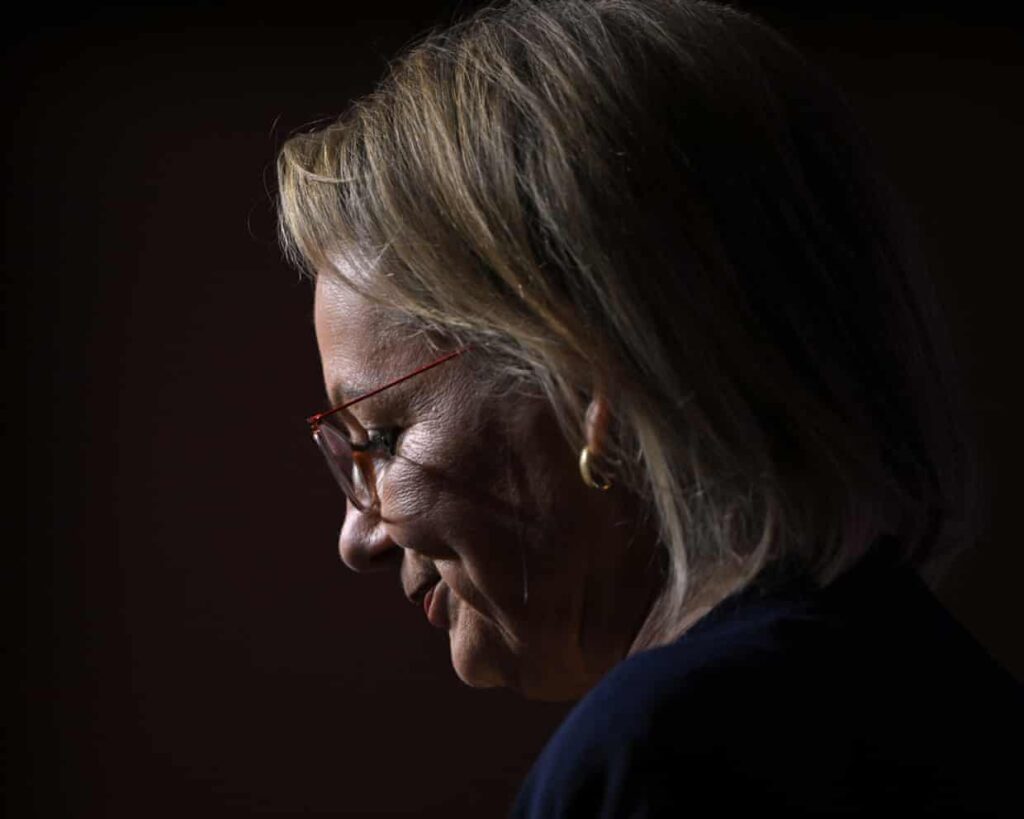
Sussan Ley’s tenure as leader of the Liberal Party has come to an abrupt end after just 276 days, marked by internal strife and a significant loss of support. Ley, who made history as the party’s first female leader following her victory over Angus Taylor on May 13, 2025, faced immense challenges in her attempts to reposition the Liberals in the political landscape.
In her initial remarks after taking the helm, Ley articulated a vision of a party that resonates with the realities of modern Australia. “We have to have a Liberal party that respects modern Australia, that reflects modern Australia, and that represents modern Australia,” she stated. Ley’s optimism was palpable as she sought to engage with voters who felt alienated under previous leaderships, specifically during the tenures of Scott Morrison and Peter Dutton.
Despite her aspirations, Ley’s leadership has been marred by a rapid decline in party support. Following the 2022 elections, the Liberals lost significant ground to teal independents in what were traditionally strongholds. In the wake of these losses, the party has seen a troubling shift towards the right, with many supporters gravitating towards the populist One Nation party. Senator James Paterson voiced concerns, stating, “This cannot go on. If it goes on, there’ll be nothing left of the Liberal party by the next election.”
Ley’s leadership challenges were exacerbated by persistent undermining from within her party. Critics argued that she faced relentless opposition from conservative factions, as well as pressure from the Nationals and elements of the media, demanding a shift to more hardline positions. “I think there’s a lot of people who have not helped her to succeed,” said Liberal MP Melissa Price, highlighting the internal discord that plagued Ley’s leadership.
The roots of Ley’s downfall can be traced back to her initial leadership decisions, including a controversial reshuffle that alienated many within the party. Her move to promote moderates while demoting right-wing figures drew ire from conservative factions, intensifying existing tensions. One Liberal member remarked, “The right of the party were never going to accept Sussan as the leader,” underscoring the resistance she faced from within.
Ley’s approach to leadership also included a promise of consultation and collaboration, a stark contrast to her predecessor’s style. However, her decision to initiate an open review of the party’s climate policies was perceived as a tactical error, allowing critics to undermine the established commitments. Following pressure from conservative members, Ley ultimately capitulated to calls for abandoning the net zero emissions target, further weakening her position.
The internal conflicts intensified, culminating in a series of public confrontations that showcased the fractures within the party. On one notable occasion, Ley faced backlash after she criticized Prime Minister Anthony Albanese for a perceived lack of emotional response following a national tragedy, drawing attention to her difficulties in navigating public relations.
As the political landscape shifted, Ley’s leadership was increasingly characterized by chaos and discontent. A significant turning point occurred when Newspoll revealed a dramatic drop in the Coalition’s primary vote to just 18%, prompting Taylor to challenge her leadership. The subsequent resignation of several shadow cabinet members marked the final unraveling of her authority.
Ley’s attempts to forge alliances and maintain party unity ultimately proved insufficient to quell the growing dissent. Following a tumultuous period, she was unable to stave off the leadership challenge that had been brewing amid discontent. Less than a week after the dismal poll results, Taylor formally resigned from his position, leading to the request for a leadership change.
Reflecting on Ley’s time as leader, it is evident that her efforts to modernize the Liberal Party faced insurmountable obstacles. The combination of internal opposition, strategic missteps, and a failure to connect with the electorate led to a swift downfall. History may remember Ley’s brief leadership as a cautionary tale of the challenges faced by political figures attempting to navigate complex party dynamics in a rapidly changing political landscape.