The Trump administration has taken a significant step in environmental policy by revoking a crucial scientific finding that has underpinned U.S. regulations on greenhouse gas emissions. This decision, announced on March 31, 2023, marks one of the most aggressive moves by President Donald Trump to roll back climate regulations established under the previous administration.
The Environmental Protection Agency (EPA) has rescinded the endangerment finding, a declaration made in 2009 during the Obama administration. This finding determined that carbon dioxide and other greenhouse gases pose a threat to public health and welfare. It has served as the legal basis for a wide range of climate regulations under the Clean Air Act, affecting motor vehicles, power plants, and various pollution sources responsible for climate change.
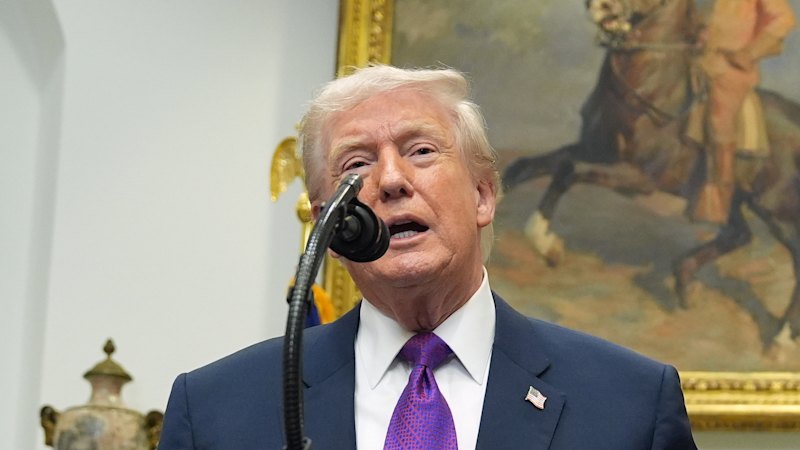
President Trump characterized this action as “the single largest deregulatory action in American history.” He referred to the endangerment finding as “one of the greatest scams in history,” arguing that it lacked factual and legal support. Trump emphasized the benefits of fossil fuels, stating, “over the generations, fossil fuels have saved millions of lives and lifted billions of people out of poverty all over the world.”
Implications for Environmental Regulations
Legal challenges are anticipated in response to this repeal, which eliminates standards for cars and trucks. Experts warn that this move could lead to a broader dismantling of climate regulations affecting stationary sources like power plants and oil facilities. Ann Carlson, an environmental law professor at the UCLA School of Law, noted that overturning the endangerment finding could “raise more havoc” than previous actions taken by the Trump administration to roll back environmental protections.
Environmental groups have expressed alarm, describing the repeal as the biggest attack on federal authority to address climate change in U.S. history. They argue that evidence supporting the endangerment finding has only strengthened over the past 17 years.
In conjunction with the repeal, the EPA announced plans to propose a two-year delay on a Biden-era rule aimed at restricting greenhouse gas emissions from cars and light trucks. The agency will also discontinue tax credits for automakers who incorporate automatic start-stop ignition systems in their vehicles. Lee Zeldin, the current EPA Administrator, dismissed the system, claiming “everyone hates” it.
Zeldin has been critical of prior Democratic administrations, asserting that they pursued climate policies that jeopardized the economy. He claimed the endangerment finding resulted in “trillions of dollars in regulations that strangled entire sectors of the United States economy,” particularly the automotive industry.
Future of U.S. Climate Policy
David Doniger, a climate expert at the Natural Resources Defence Council, expressed concern that the repeal of the endangerment finding could invalidate nearly all climate regulations. This could lead to the elimination of current limits on greenhouse gas emissions from various sources and potentially hinder future administrations from implementing new regulations.
Myron Ebell, a conservative activist, supported the repeal, calling it “the most important step taken by the Trump administration so far to return to energy and economic sanity.”
The rollback of these regulations has raised significant concerns among environmental advocates. They argue that the new approach would prolong the use of gas-burning vehicles, adversely affecting air quality and public health, particularly for vulnerable populations such as children and the elderly.
As the Biden administration prepares to respond to these changes, the future of U.S. climate policy hangs in a delicate balance, with implications that could resonate for years to come.