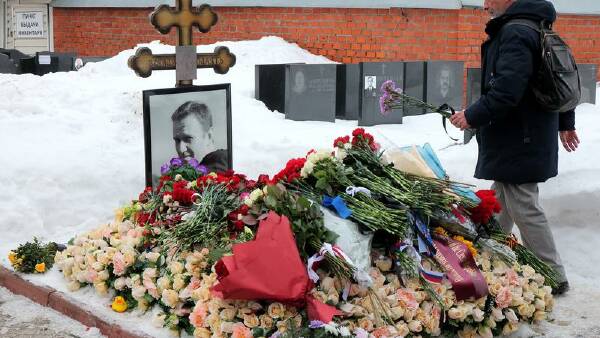
The Kremlin has categorically denied accusations from five European nations that the Russian state was involved in the poisoning of prominent dissident Alexei Navalny with a toxin derived from poison dart frogs. This claim follows Navalny’s death on February 16, 2024, in a penal colony located approximately 1,900 kilometers northeast of Moscow. His widow, Yulia Navalnaya, asserts that recent findings have validated her long-held belief that her husband was murdered.
Navalny, a leading critic of President Vladimir Putin, died at the age of 47. The Russian government has maintained that his death resulted from natural causes. This incident occurred just one month prior to Putin’s re-election for a fifth term, an election characterized by allegations of censorship and suppression of dissenting voices by Western governments.
A joint statement from Britain, France, Germany, Sweden, and the Netherlands indicated that analyses of samples from Navalny’s body confirmed the presence of epibatidine, a toxin not naturally found in Russia but sourced from South American poison dart frogs. The countries asserted, “Navalny died while held in prison, meaning Russia had the means, motive and opportunity to administer this poison to him.”
In response, Kremlin spokesman Dmitry Peskov rejected these allegations. “Naturally, we do not accept such accusations. We disagree with them. We consider them biased and not based on anything. And we strongly reject them,” he stated during a press briefing.
The controversy surrounding Navalny’s death echoes previous incidents involving alleged poisonings linked to the Russian state. For instance, the 2018 poisoning of former Russian agent Sergei Skripal in Salisbury, England, and the assassination of dissident Alexander Litvinenko in London in 2006 have also raised serious concerns about Russia’s use of lethal substances against its adversaries. Russia has consistently denied involvement in these cases.
Statements from the Russian Foreign Ministry indicate a desire for transparency from the accusing nations. Maria Zakharova, a spokesperson for the ministry, stated that Moscow would respond appropriately once the countries released detailed test results. Until that point, she characterized the allegations as “merely propaganda aimed at diverting attention from pressing Western issues.”
On Monday, a coalition of 15 countries, including Australia, New Zealand, and Canada, reiterated their calls for Russia to conduct a transparent investigation into Navalny’s death. The statement, published on the German Foreign Ministry’s website, emphasized the ongoing efforts of Russian human rights defenders to uphold Navalny’s legacy and called for the release of all political prisoners in Russia.
Yulia Navalnaya expressed her conviction that the findings regarding the toxin provide a basis for seeking justice. “Two years. We have attained the truth, and we will also attain justice one day,” she wrote on social media, accompanied by a photograph of her late husband.
As the second anniversary of Navalny’s death approaches, the international community remains watchful of Russia’s response and the implications of these allegations on diplomatic relations. The situation continues to evoke strong reactions as advocates push for accountability and transparency in the investigation of his untimely demise.