




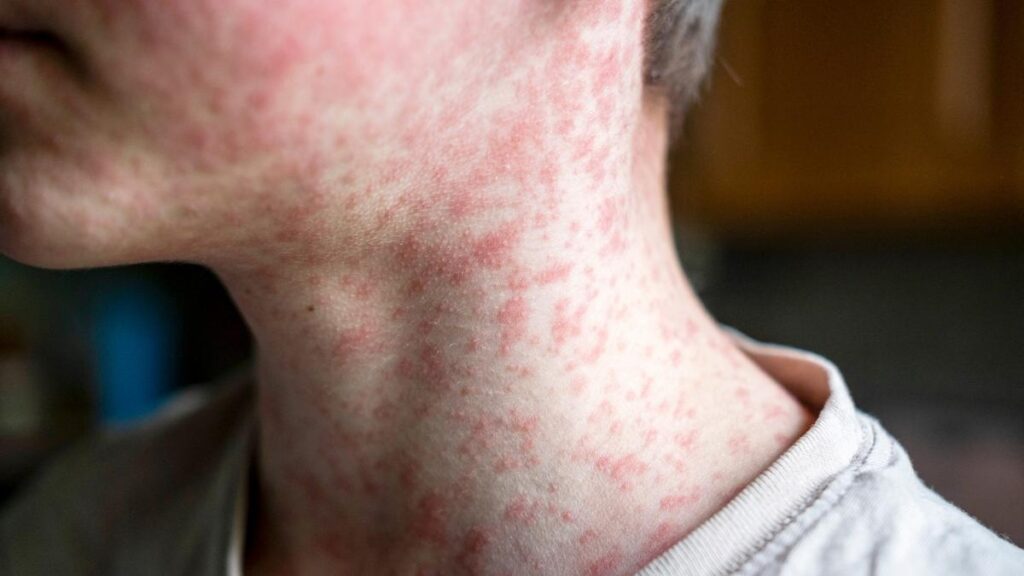
Measles viral disease, human skin covered with measles rash, vaccination concept
Australia’s long-standing success in eliminating measles is under threat as vaccination rates stagnate. Recent notices from health authorities in Victoria and New South Wales highlight a renewed risk of measles linked to international travel and mobility between states. Experts emphasize that increased vigilance is essential to prevent outbreaks, especially among children, as vaccination coverage has dipped below the 95 percent target over the past three years.
The decline in vaccination rates can be attributed to various factors, including increased travel following the lifting of pandemic restrictions, rising living costs, and historical resistance to vaccinations. Meru Sheel, a professor of infectious diseases at the University of Sydney, noted, “We’ve had ongoing issues with our vaccination coverage, and it mostly has to do with access, not so much disinformation.” Although the vaccine is provided free of charge, associated costs, such as travel to clinics and medical consultations, can create barriers for families. Additionally, misinformation regarding vaccine safety proliferates on social media, further complicating efforts to improve vaccination rates.
Measles, a highly contagious viral illness, has seen a resurgence globally. In the United States, cases reached record highs in 2025, with over 900 confirmed cases reported in 2026 alone. The World Health Organization estimates that measles is 12 times more contagious than influenza, with symptoms that can lead to severe complications, including pneumonia and encephalitis.
The situation in Australia reflects a broader trend, with the National Notifiable Disease Surveillance System reporting an increase in measles cases from zero in 2021—when strict COVID-19 lockdowns were in place—to 181 cases in 2025. The National Centre for Immunisation Research and Surveillance has indicated that childhood vaccination rates have not returned to pre-pandemic levels. In 2024, one in three children received the first dose of the measles-mumps-rubella (MMR) vaccine late, while one in five delayed their second dose of the diphtheria-tetanus-pertussis (DTP) vaccine.
Epidemiologist Martyn Kirk from the Australian National University emphasized that misinformation affects parents’ perceptions of vaccine safety, contributing to declining rates. “In general, we have seen a decline in childhood vaccination rates, but governments have been working very strongly to promote it as a healthy and safe way of controlling diseases,” he stated.
The implications of measles infections can be dire, particularly for young children, pregnant women, and those with compromised immune systems. Kirk noted, “It’s more infectious even than COVID.” As such, health authorities are calling for renewed efforts to educate the public about the benefits of vaccination and to address the logistical barriers that prevent families from accessing these essential medical services.
As Australia faces this challenge, the importance of maintaining high vaccination coverage cannot be overstated. The ripple effects of outbreaks in one region can impact global health, highlighting the interconnectedness of public health efforts. Dr. Sheel concluded, “What happens in one part of the world impacts many parts of the world.” Ensuring that policies align with scientific evidence will be crucial in safeguarding public health against the resurgence of measles and other preventable diseases.
