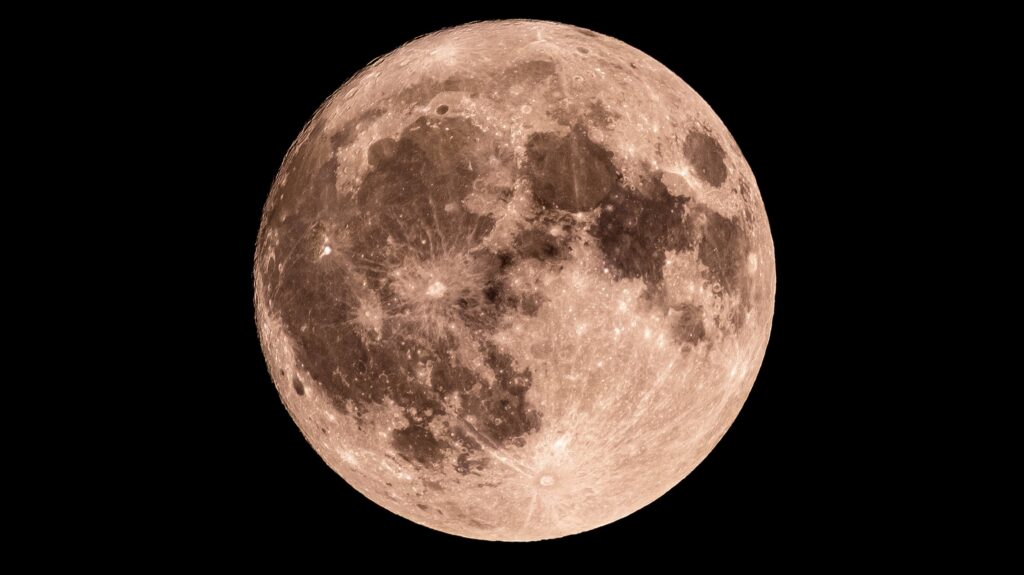
The Moon’s illumination increases as it enters the Waxing Crescent phase on February 21, 2024. As of this evening, approximately 16% of the Moon’s surface will be visible, providing a great opportunity for skywatchers to observe its features without requiring specialized equipment.
For those looking to explore the Moon tonight, notable surface features include the Mares Crisium and Fecunditatis. These expansive lunar plains are easily distinguishable to the naked eye. If you have access to binoculars or a telescope, you can spot the Endymion Crater, an impressive geological formation on the Moon’s surface.
Understanding Moon Phases
The Moon orbits Earth approximately every 29.5 days, cycling through eight distinct phases. Each phase results from the changing angle of sunlight reflecting off the Moon as it travels. Even though we consistently see the same side of the Moon, the illuminated portion shifts, creating the visual variations we observe.
The eight phases of the lunar cycle are as follows:
– **New Moon**: The Moon is positioned between Earth and the Sun, rendering it invisible.
– **Waxing Crescent**: A small sliver of light appears on the right side (in the Northern Hemisphere).
– **First Quarter**: Half of the Moon is illuminated on the right side, resembling a half-Moon.
– **Waxing Gibbous**: More than half of the Moon is lit but not fully illuminated.
– **Full Moon**: The entire face of the Moon is visible.
– **Waning Gibbous**: The Moon begins to lose illumination on the right side.
– **Third Quarter (or Last Quarter)**: Again, half of the Moon is visible, but this time the left side is lit.
– **Waning Crescent**: A thin sliver of light remains on the left side before transitioning back to darkness.
Upcoming Full Moon
The next Full Moon will occur on March 3, 2024, following the previous Full Moon on February 1, 2024. Observers can take advantage of these lunar events to enhance their understanding of the Moon’s phases and surface features.
For those interested in astronomy, nights like this provide a perfect chance to engage with the cosmos. Whether using the naked eye or telescopic equipment, the Waxing Crescent Moon offers an accessible glimpse into our celestial neighbor.