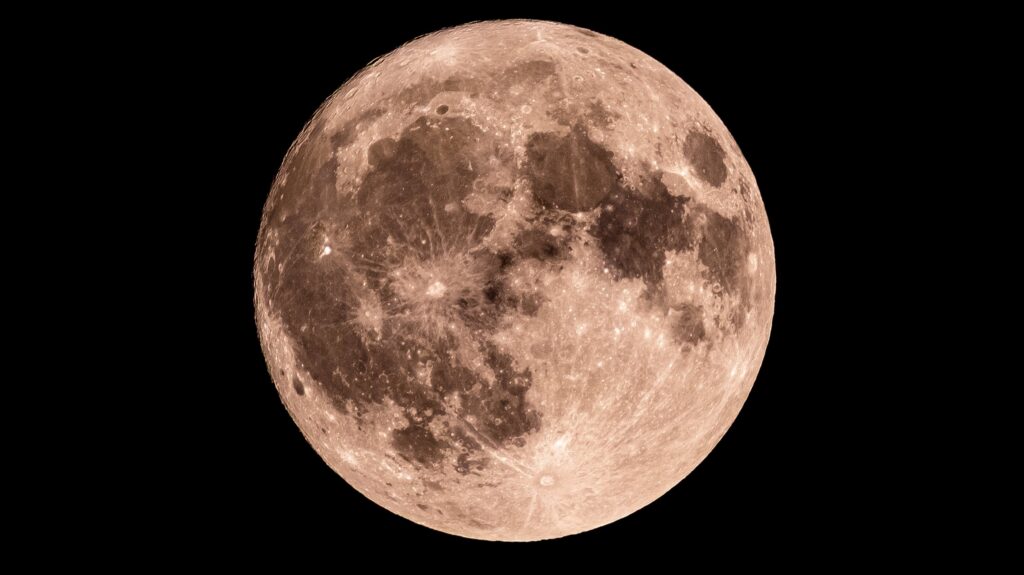
The Moon is currently in the Waxing Crescent phase, with approximately 26% of its surface illuminated as of February 22, 2024. This phase offers a great opportunity for stargazers to observe various features on the lunar surface. Tonight, those looking up will see highlights such as the Mare Crisium and Mare Fecunditatis clearly visible to the naked eye. For those equipped with binoculars, the Endymion Crater becomes an interesting sight, while a telescope reveals the historic landing site of the Apollo 17 mission.
Understanding the Moon’s phases is essential for appreciating its changing appearance. According to NASA, the Moon completes a full orbit around Earth in roughly 29.5 days. During this period, it progresses through eight distinct phases, each characterized by the varying angles of sunlight illuminating its surface.
Exploring the Eight Moon Phases
The eight phases of the Moon include:
– **New Moon**: The Moon is positioned between Earth and the Sun, resulting in a dark face invisible to the eye.
– **Waxing Crescent**: A small sliver of light appears on the right side, marking the current phase.
– **First Quarter**: Half of the Moon is illuminated on the right side, resembling a half-Moon.
– **Waxing Gibbous**: More than half of the Moon is lit, approaching fullness.
– **Full Moon**: The entire face of the Moon is illuminated, fully visible.
– **Waning Gibbous**: The Moon begins to lose light on the right side.
– **Third Quarter (or Last Quarter)**: The left side of the Moon is illuminated, creating another half-Moon appearance.
– **Waning Crescent**: A thin sliver of light remains on the left side before the Moon becomes dark again.
The next Full Moon will occur on March 3, 2024, following the last Full Moon on February 1, 2024. As the Moon transitions through these phases, it captivates observers and invites them to explore its beauty across the night sky.
Tonight’s Waxing Crescent provides a perfect chance for both amateur and seasoned astronomers to engage with the Moon’s features, whether with the naked eye or through the lens of a telescope. The changing illumination not only enhances the lunar landscape but also connects us to the celestial mechanics that govern our night sky.