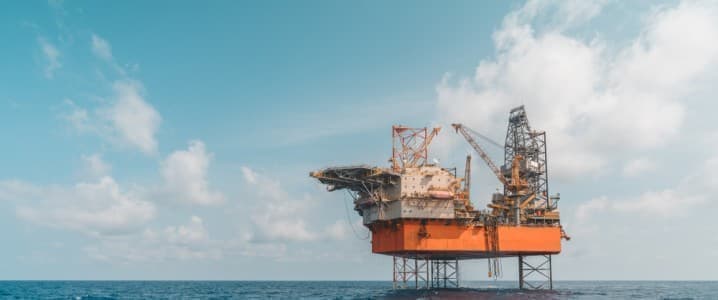
The European Union (EU) is revisiting its Arctic policy, a move that could potentially unlock approximately 22 trillion cubic feet of natural gas from Norway’s Barents Sea. Research from Rystad Energy indicates that this gas could serve as a crucial, low-emission supply option for Europe as its dependence on the global liquefied natural gas (LNG) market increases. The European Commission is currently conducting a public consultation, which will remain open until March 16, 2026, allowing stakeholders to voice their opinions on the future direction of Arctic energy policy.
The Barents Sea holds significant potential for natural gas production, but projects typically require five to ten years to move from discovery to consistent output. The EU’s decisions in the coming months will significantly influence whether additional gas volumes from already-explored Norwegian acreage can be tapped by the mid-2030s or if Europe will have to rely more heavily on global LNG supplies in the near future.
Rystad Energy emphasizes that by refining the definition of what constitutes the “Arctic,” the EU can promote production in the Barents Sea without compromising its climate objectives. Narrowing the geographical scope and establishing clear emissions and environmental criteria could help differentiate Norway’s already-explored areas from more sensitive frontier zones. While this approach may face opposition from environmental groups, it aims to reshape how buyers and policymakers evaluate gas supply options throughout the next decade.
According to Rystad Energy’s analysis, Norway could satisfy about 20-30% of gas demand in the EU27 plus the UK through 2050, with LNG’s share increasing from 30% to 50% during the same period. The Barents Sea, already open to exploration, is estimated to contain around 3.5 billion barrels of oil equivalent (boe) in natural gas, translating to about 22 trillion cubic feet.
Delivering this resource to market, however, poses challenges. Rystad Energy predicts that gas fields and projects sanctioned by 2030 could yield a combined output of approximately 2.25 billion boe by 2050. Future production will depend on new discoveries and coordinated development across multiple fields, as well as critical export capacity. Infrastructure plays a pivotal role in determining the long-term scalability of these projects.
A study conducted in 2023 by Gassco and the Norwegian Offshore Directorate suggests that new export capacity in the Barents Sea can be economically viable if sufficient gas volumes are confirmed. Currently, the primary export outlet is Hammerfest LNG, which is primarily linked to the Snøhvit field, limiting its ability to absorb additional gas supplies. Developing a pipeline connection to the Norwegian Sea network could provide a viable route, but achieving the necessary scale and synchronized timelines across projects will be essential for financing.
The long lead times associated with Barents Sea projects underscore the importance of clear policy frameworks. If the EU establishes well-defined guidelines and mandates data-backed verification, it can keep near-term supply options viable without undermining its climate standards.
Tore Guldbrandsøy, Partner and Oil & Gas Analyst at Rystad Energy, points out that emissions are a critical concern for policymakers during this consultation phase. Norway is recognized for its low-emission upstream production, and gas delivered via pipeline from Norway is generally considered a lower-emission option for Europe. At the Snøhvit field, carbon dioxide (CO2) extracted from produced gas is reinjected offshore, and plans for electrification of the Snøhvit-Hammerfest LNG facilities are expected to further reduce the project’s carbon footprint.
Environmental advocates caution that while lower emissions intensity is significant, the combustion of gas still contributes CO2 to the atmosphere. However, as methane leakage and carbon intensity become increasingly important metrics in policy and procurement, they could help differentiate among various supply sources as Europe transitions to greener energy options.
While fully opening the Barents Sea to exploration is unrealistic for the EU, a structured framework with strict definitions could keep sensitive northern areas protected while allowing for the exploitation of already-open Norwegian zones. Eligibility for gas extraction could be tied to measurable thresholds for methane and CO2 intensity, deadlines for ceasing routine flaring, electrification efforts, and independent verification processes with transparent reporting.
Beyond emissions, it is imperative to consider other environmental protections, such as safeguarding sensitive ecosystems, establishing seasonal operational limits, and engaging in structured consultations with the Sámi people, coastal communities, and fisheries.
The EU must also assess demand risk when reviewing its gas policies. Should gas consumption decline faster than anticipated, more regular policy assessments could mitigate the risk of stranded resources by tightening eligibility or re-evaluating infrastructure needs. Europe is shifting towards comparing marginal gas supplies rather than adding substantial new volumes.
Utilizing lifecycle emissions and methane performance as decision-making criteria will not resolve broader climate issues, but it will direct remaining demand toward lower-impact sources. A clearly articulated and structured Arctic policy could guide the EU in this direction, balancing energy needs with environmental responsibilities.
Emil Varré Sandøy, Vice President for Oil & Gas Research at Rystad Energy, highlights that this review could significantly influence the landscape of European gas supply, setting the stage for future energy strategies in a changing climate.