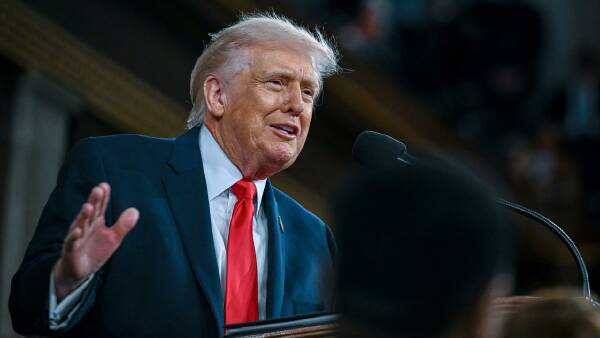
Iran has firmly responded to pressure from US President Donald Trump in the lead-up to important nuclear negotiations scheduled for Thursday, March 15, 2024, in Geneva. Iranian officials have dismissed Trump’s statements as “big lies” while expressing hope that the talks might lead to a resolution through “honourable diplomacy.”
This diplomatic exchange occurs as the United States is mobilizing its largest deployment of aircraft and warships to the Middle East in decades. Trump’s strategy aims to secure a deal with Iran, which faces mounting unrest at home following nationwide protests earlier in January. The potential for military action looms large, with Trump threatening strikes should negotiations falter. Such a move raises concerns among Middle Eastern nations about a renewed regional conflict, especially as tensions from the ongoing Israel-Hamas war persist.
Iran has already declared that all US military bases in the Middle East would be considered legitimate targets. This statement heightens the stakes for the approximately 70,000 American service members stationed in the region. In his recent State of the Union address, Trump stated, “They’ve already developed missiles that can threaten Europe and our bases overseas.” He accused Iran of rebuilding its nuclear weapons program, despite Tehran’s insistence that its nuclear activities are peaceful.
Responding to Trump’s remarks, Iranian foreign ministry spokesman Esmail Baghaei characterized the US administration’s claims as a “disinformation and misinformation campaign.” He drew a controversial parallel between Trump and Joseph Goebbels, the propaganda minister under Adolf Hitler. Baghaei wrote on X, “Whatever they’re alleging in regards to Iran’s nuclear program… is simply the repetition of ‘big lies.'”
Iran’s parliament speaker, Mohammad Bagher Qalibaf, reinforced this sentiment, emphasizing that the US had a choice between diplomacy and confrontation. “If you choose the table of diplomacy – a diplomacy in which the dignity of the Iranian nation and mutual interests are respected – we will also be at that table,” Qalibaf stated, as reported by the semi-official Student News Network. He warned that any attempts to deceive or attack during negotiations would elicit a strong response from Iran.
The upcoming talks in Geneva mark the third round of negotiations mediated by Oman. If these discussions fail, questions remain regarding the timing and objectives of any potential military action. Should the goal be to force Iran into concessions, the effectiveness of limited strikes is uncertain. On the other hand, if the objective shifts to regime change, the US could find itself entangled in a prolonged military campaign.
The status of Iran’s nuclear program remains ambiguous. Trump previously claimed that American strikes had “obliterated” it, yet dismantling any remnants of the program appears to be back on the US agenda. The International Atomic Energy Agency (IAEA) has not been granted access to inspect various sites to verify the current state of Iran’s nuclear capabilities.
As the situation unfolds, the ramifications of these negotiations will be closely monitored not only for their impact on US-Iran relations but also for the broader stability of the Middle East. The world awaits the outcome of the Geneva talks and the potential consequences that may arise from either diplomacy or conflict.