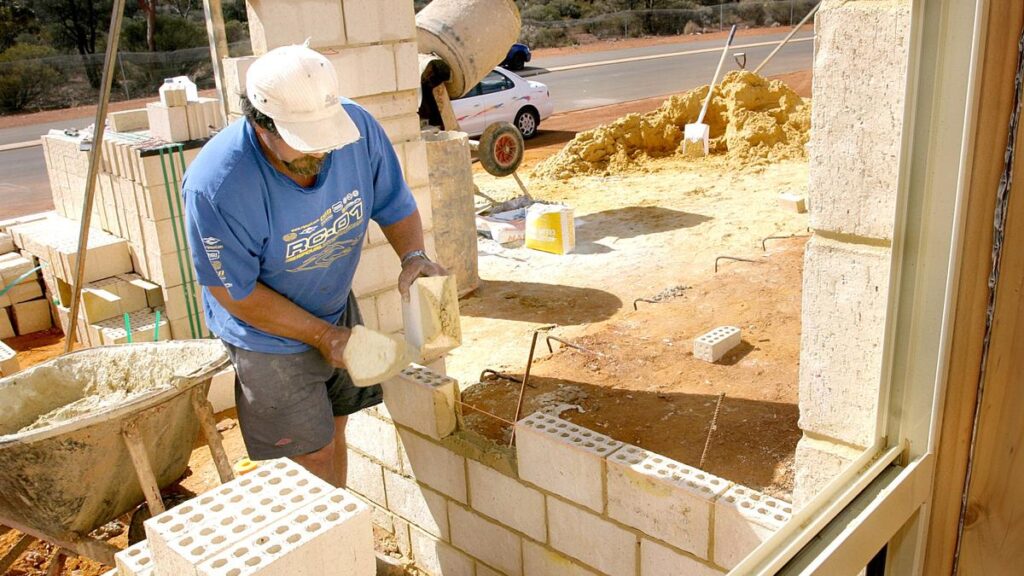
Construction pic for story on building approvals. Rene Moran of Rene Moran Bricklaying.
West Australians are grappling with the highest levels of housing stress in Australia, as new data reveals that a staggering 71 per cent of households are allocating more than 30 per cent of their income towards housing costs. This figure, defined as housing stress, highlights a growing concern for many residents in the region, according to the latest report from the registered charity Amplify.
The report, which surveyed over 4,000 Australians, indicates that one-third of West Australians have made significant sacrifices to maintain their housing. Only 56 per cent of respondents expressed confidence about their housing situation over the next 12 months. Amplify’s chief executive, Georgina Harrisson, emphasized the urgency of the situation, stating, “It is a clear sign the great Australian dream of secure housing is at risk. We clearly aren’t doing enough to solve this housing crisis.”
Government Targets and Public Sentiment
The Federal Government has set an ambitious target of building 1.2 million new homes by 2029 under its National Housing Accord. Western Australia is projected to contribute significantly, aiming for 124,266 new dwellings, which represents approximately 86.5 per cent of the state’s goal. This performance ranks WA third nationally, behind Victoria and the smaller Australian Capital Territory (ACT).
Despite these targets, concerns about the cost of living are prevalent in WA. A notable 73 per cent of respondents reported that their dollar does not stretch as far as it did a year ago, the second-highest level across the nation. Alarmingly, these figures were collected before the recent interest rate hike by the Reserve Bank of Australia, which raised rates to 4.1 per cent. Following this, the ANZ Bank also forecasted further increases in May due to rising inflation.
Trust in the State Government appears to be waning, with confidence dropping from 50 per cent to 40 per cent in just three months. Harrisson commented on this decline, noting, “Too many Western Australians are losing confidence in the prospect of them or their kids ever owning their own home.” She called for more decisive action from the government, urging that “now is the time for bigger, bolder action on housing, and Australians are watching.”
Public Support for Increased Housing Development
The report from Amplify indicates a strong public consensus on the need for expanded housing options. Almost half of the respondents strongly agreed that more housing must be built to address current and future needs, placing WA second nationally, just behind the Northern Territory (NT).
Amplify, founded by Paul Bassat, aims to remain politically neutral while advocating for housing solutions. As the government prepares for the upcoming budget in May, there are discussions regarding potential reforms in tax breaks for landlords, including limiting negative gearing to two investment properties and adjusting the existing capital gains tax discount from 50 per cent to 33 per cent. When questioned about these potential changes, Treasurer Jim Chalmers acknowledged that it is not unusual for Treasury to explore various options, stating, “Any further steps along those lines would be a matter for Cabinet.”
The ongoing housing crisis in Western Australia necessitates urgent attention, with many residents feeling the pressure of rising costs and diminishing trust in public institutions. As the government navigates its housing targets and potential reforms, the need for transparent and effective solutions remains paramount.