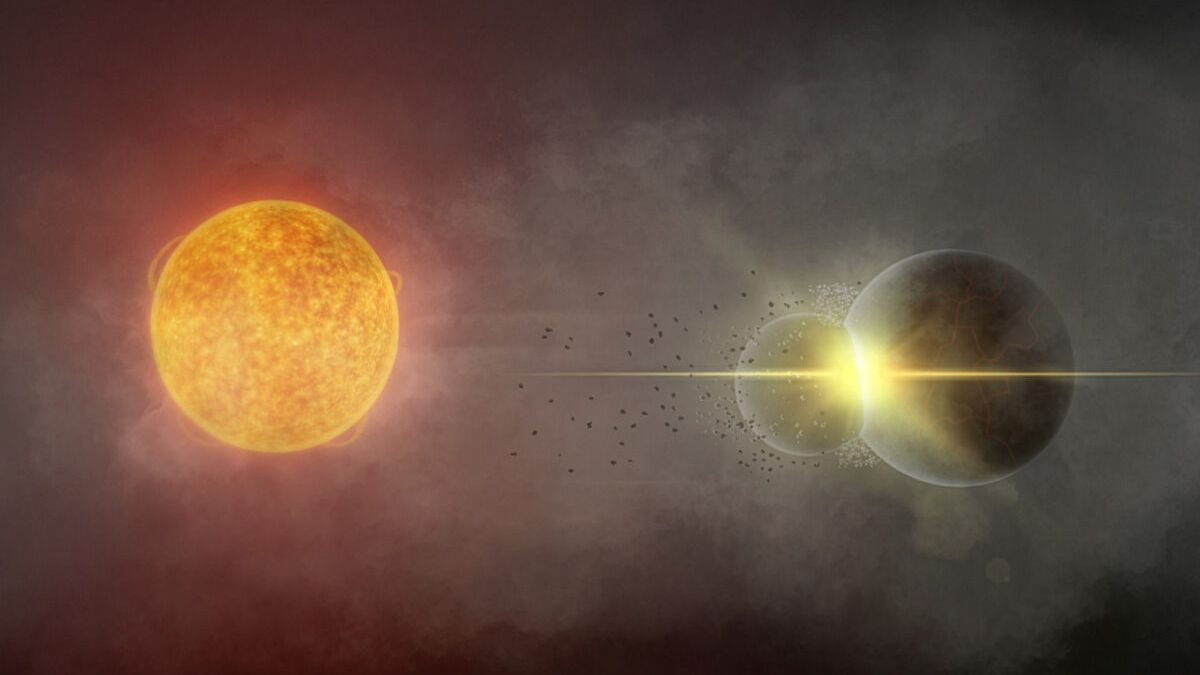
Recent images from NASA’s Double Asteroid Redirection Test (DART) mission have revealed that asteroids can effectively transfer slow-moving cosmic snowballs between their moons. This discovery sheds light on the dynamic interactions occurring within binary asteroid systems, which are more common than previously thought in our solar neighborhood.
Approximately 15% of asteroids near Earth are known to have small moons orbiting them, classifying them as binary systems. These systems can engage in complex gravitational interactions, allowing them to exchange materials, including these icy bodies referred to as cosmic snowballs.
Understanding the Dynamics of Binary Asteroid Systems
The findings from the DART mission highlight the potential for asteroids to act as carriers of these cosmic snowballs, which are made predominantly of water ice and other volatile compounds. The mechanics behind this phenomenon involve the gravitational pull exerted by a moon on a nearby snowball. When conditions permit, the moon can dislodge the snowball from its orbit, enabling it to drift toward another asteroid or moon.
This process is not merely theoretical. Observations have confirmed that such interactions occur frequently in our solar system. The DART mission, which launched in November 2021 and successfully impacted the asteroid Dimorphos in September 2022, aimed to demonstrate a method of planetary defense. However, it has also provided invaluable data on the behavior of binary asteroid systems.
Scientists from NASA and various international space agencies are particularly excited about the implications of these findings. The ability of asteroids to transfer materials between their moons could enhance our understanding of how water and other essential resources might be distributed across the solar system, potentially influencing future exploration and colonization efforts.
Implications for Future Space Exploration
The research team is now analyzing the data collected during the DART mission to explore the broader implications of these interactions. The transfer of cosmic snowballs could be crucial for understanding the origins of water on Earth and other celestial bodies.
The findings may also provide insight into how asteroid impacts could deliver water and organic compounds to planets, fostering conditions for life. As space agencies prepare for upcoming missions to asteroids and moons, this new knowledge could shape their strategies.
In summary, the DART mission has not only advanced our capabilities in planetary defense but has also opened new avenues for research into the dynamic processes of our solar system. The interaction between asteroids and their moons presents a fascinating area of study that could yield significant discoveries in the coming years.