




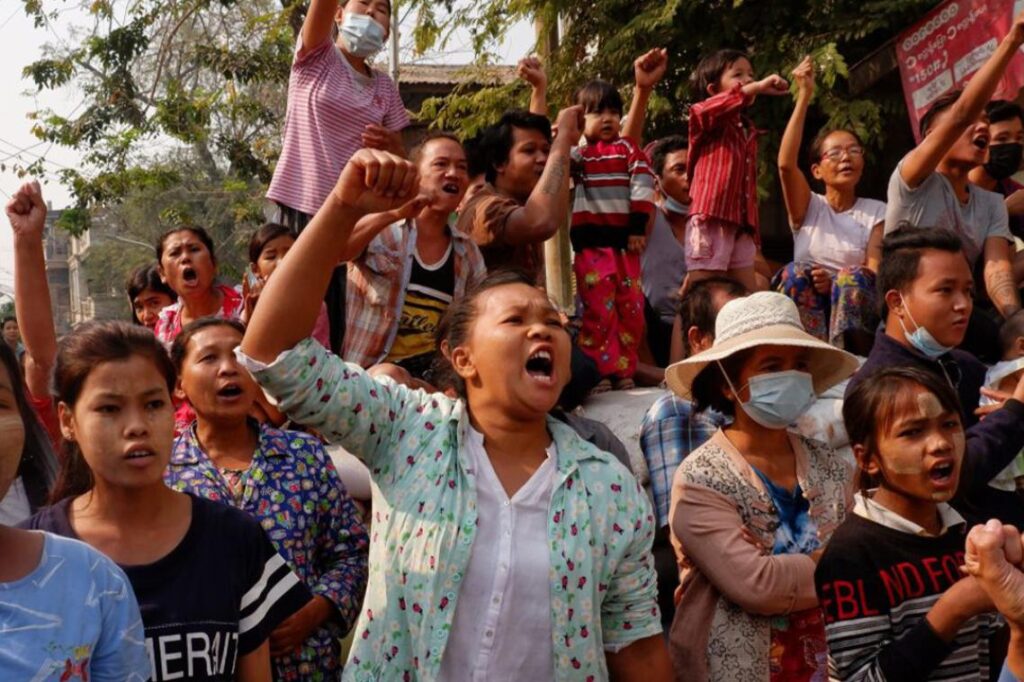
Myanmar is in the grip of a profound crisis that has destabilized the lives of its citizens. Since the military coup in February 2021, the nation has faced an alarming combination of ethnic conflict, economic turmoil, and environmental degradation. The situation has left many citizens, particularly women, struggling to navigate a landscape of violence and political oppression. Research conducted by a team of 24 female citizen researchers highlights the daily challenges faced by women in this environment.
Insecure Living Conditions
The United Nations High Commissioner for Refugees reports that there are approximately 3.7 million internally displaced people in Myanmar, many of whom reside in overcrowded camps. These camps often lack adequate sanitation and privacy, leading to a rise in crime and gender-based violence. One woman described her existence as living “in a state of constant fear,” reflecting the pervasive insecurity that characterizes daily life for many. Women living near conflict zones or the epicenter of the 2024 Sagaing earthquake express heightened concerns about their safety.
The military regime has intensified its grip on power through tactics such as detentions and forced conscription. By September 2025, nearly 30,000 people had been detained for political reasons, with female detainees often subjected to gendered abuses, including invasive searches. There is growing concern that women are increasingly targeted for forced conscription, as the military seeks to bolster its ranks.
Economic Hardships and Rising Violence
Employment opportunities for women in Myanmar have dwindled significantly since the coup. Many female government workers, including nurses and teachers who opposed the military takeover, have lost their jobs and struggle to find new employment. The country’s garment industry, once a vital source of income for women, has seen many businesses exit, further limiting options. As a result, some women have resorted to transactional sex as a means of survival.
Inflation exacerbates these economic challenges. The ongoing crisis has led to a dramatic increase in the prices of essential goods. In 2025, inflation rates for food averaged 29.5 percent, with essential items in conflict-affected areas soaring by 50-80 percent. Many women report skipping meals to provide for their dependents, with one individual stating, “It’s less about the economic situation and more that we are just working to avoid starvation.”
The prevalence of gender-based violence has also surged in this chaotic environment. Reports indicate that military forces have used rape, gang rape, and forced marriage as tools of intimidation against the families of resistance fighters. In these precarious conditions, fleeing can heighten the risk of sexual violence, as one woman remarked, “there is no safety in travel.”
Community Resilience Amid Challenges
Despite these dire circumstances, there are signs of resilience among women in Myanmar. Local researchers have documented grassroots initiatives aimed at empowering women and providing support against gender violence. While these efforts showcase the capacity for resistance, they also attract scrutiny and repression from the authorities.
As International Women’s Day approaches, it is crucial to address the “existential” challenges faced by women in Myanmar’s ongoing crisis. The joint report by P.P.K Mynt, Khin Thazin, Dr. Melissa Johnston, Associate Professor Nicole George, and Lal Ram Muani aims to shed light on these issues and calls for increased international attention. The full report is available on the School of Political Science and International Studies website and was funded by the Government of Canada.
The situation in Myanmar demands urgent action and greater awareness as the struggles of its women continue to unfold in a landscape marked by instability and fear.
